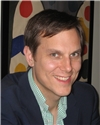
Event: IWM Lecture “‘Russia Beyond Belief’ Living in a Post-Modern Dictatorship”

Tuesday, February 26 2013, 6:00pm – 7:30pm
IWM library

Institut für die Wissenschaften vom Menschen
Spittelauer Lände
31090 Wien
Austria
 

Speaker: Peter Pomeranzev
´Russia beyond Belief´:
Living in a Post-Modern Dictatorship

Lecture Series: Russia in Global Dialogue

Communism, liberal euphoria, hyper-inflation, mafia state, oligarchy, oil boom: since 1989 Russia has experienced so many different realities at such blistering speed that by the start of the Putin era many Russians believed they could master all of them and live ‘beyond belief’. During the oil boom of the past decade, Moscow became a decadent, brilliant whirligig of a city, led by a generation of triumphant cynics who developed a new form of authoritarianism far subtler than the types familiar from the 20th century – a model I call ‘post-modern dictatorship’. In this lecture, Peter Pomeranzev will look at how this sense of being ‘beyond belief’ shapes contemporary life in Russia, and how the current protest movement can be seen as reflecting a conflict between the triumphant cynicism of the noughties and the desire to live in a value-driven society.

Peter Pomeranzev is a British television producer and non-fiction writer of Russian origin. He is also contributor to theLondon Review of Books and Newsweek Magazine (London). Currently he is Guest at the IWM in the framework of the “Russia in Global Dialogue” Fellowship program.

More information here:

http://www.iwm.at/index.php?option=com_events&task=view_detail&Itemid=&agid=359&year=2013&month=02&day=26

And the winner is….’Non-Religion and Secularity’ from Journal of Contemporary Religion

We have received the news that the NSRN’s special issue of Journal of Contemporary Religion has topped the list of ‘most wanted’ of special issues published by Routledge! We are also pleased to note that the list in general shows and interest in the secular and the nonreligious. Thank you to everyone who voted!

Free Access to the Top 3 Most Wanted Special Issues

These issues are now available for you to read for free
online until 28th Febuary 2013.

In first place with the most overall votes.

‘Non-Religion and Secularity’ from Journal of Contemporary Religion

A close runner up in second place.

‘Mindfulness: diverse perspective on its meaning, origins and
multiple applications at the intersection of science and dharma’ from
Contemporary Buddhism

and finally, in third place.

‘Post-Secular Trends: Issues in Education and Faith’ from Journal of
Beliefs & Values: Studies in Religion and Education

Read these articles for free today at
http://tandf.msgfocus.com/c/1duaF7xlTqaaDmZRuCyaW6DAm

58 New Additions to the NSRN Bibliography

It may be Christmas Eve, but we have just added 58 new items to our ever-growing bibliography. They are pasted in below for your perusal.

If you notice any omissions or errors in the bibliography, please do not hesitate to get in touch with Chris.

  • Alicino, F. “Western Secularism in an Age of Religious Diversity.” International Review of Sociology 22, no. 2 (2012): 305–322.
  • Ardagh, D. “Secular, Theistic and Religious Ethical Rationales for the Relief of Extreme Poverty.” Australian Journal of Professional and Applied Ethics 12, no. 1; /2 (2010): 40–54.
  • Bekke-Hansen, S., C.G. Pedersen, K. Thygesen, S. Christensen, L.C. Waelde, and R. Zachariae. “Faith and Use of Complementary and Alternative Medicine Among Heart Attack Patients in a Secular Society.” Complementary Therapies in Medicine 20, no. 5 (2012): 306–315.
  • Billig, Michael. Banal Nationalism. London: SAGE, 1995.
  • Boeve, L. “Religious Education in a Post-secular and post-Christian Context.” Journal of Beliefs and Values 33, no. 2 (2012): 143–156.
  • Bowie, B. “Human Rights Education and the Post Secular Turn.” Journal of Beliefs and Values 33, no. 2 (2012): 195–205.
  • Bowie, B., A. Peterson, and L. Revell. “Editorial : Post-secular Trends: Issues in Education and Faith.” Journal of Beliefs and Values 33, no. 2 (2012): 139–141.
  • Bronk, A. “Secular, Secularization, and Secularism. A Review Article.” Anthropos 107, no. 2 (2012): 578–582.
  • Brown, Callum G. “Podcast: The People of No Religion.” The Religious Studies Project, December 19, 2012. http://www.religiousstudiesproject.com/brown/.
  • Bryan, H. “Reconstructing the Teacher as a Post Secular Pedagogue : a Consideration of the New Teachers’ Standards.” Journal of Beliefs and Values 33, no. 2 (2012): 217–228.
  • Burley, M. “Atheism and the Gift of Death.” Religious Studies 48, no. 4 (2012): 533–546.
  • Cahaner, L., and Y. Mansfield. “A Voyage from Religiousness to Secularity and Back : a Glimpse into `Haredi’ Tourists.” Journal of Heritage Tourism 7, no. 4 (2012): 301–321.
  • Carr, D. “Post-secularism, Religious Knowledge and Religious Education.” Journal of Beliefs and Values 33, no. 2 (2012): 157–168.
  • Castelli, M. “Faith Dialogue as a Pedagogy for a Post Secular Religious Education.” Journal of Beliefs and Values 33, no. 2 (2012): 207–216.
  • Connelly, Louise, Christopher R. Cotter, Frans Jespers, Ethan Gjerset Quillen, Steven J. Sutcliffe, and Teemu Taira. “Podcast: Studying Nonreligion Within Religious Studies.” The Religious Studies Project, December 17, 2012. http://www.religiousstudiesproject.com/2012/12/17/podcast-studying-nonreligion-within-religious-studies/.
  • Cornelissen, T., and U. Jirjahn. “Religion and Earnings : Is It Good to Be an Atheist with Religious Parental Background?” Economics Letters 117, no. 3 (2012): 905–908.
  • Cotter, Christopher R. “Secular Sacreds and the Sacred Secular.” The Religious Studies Project (November 7, 2012). http://www.religiousstudiesproject.com/2012/11/07/christopher-r-cotter-secular-sacreds/.
  • La Cour, P., and P. Gotke. “Understanding of the Word “Spirituality’’ by Theologians Compared to Lay People : An Empirical Study from a Secular Region.” Journal of Health Care Chaplaincy 18, no. 3–4 (2012): 97–109.
  • Daly, E. “The Ambiguous Reach of Constitutional Secularism in Republican France : Revisiting the Idea of Laicite and Political Liberalism as Alternatives.” Oxford Journal of Legal Studies 32, no. 3 (2012): 583–608.
  • Davie, Grace. “Podcast: Belief and Unbelief: Two Sides of a Coin.” The Religious Studies Project, December 19, 2012. http://www.religiousstudiesproject.com/davie/.
  • Van Die, M. “Secularism and Freedom of Conscience.” Journal of Church and State 54, no. 4 (2012): 648–650.
  • Eccles, Janet. “The Religious and Non-Religious Commitments of Older Women in the UK: Towards a New Typology.” Journal of Contemporary Religion 27, no. 3 (2012): 469–484. doi:10.1080/13537903.2012.722296.
  • Forbes, K.F., and E.M. Zampelli. “The Impacts of Religion, Political Ideology, and Social Capital on Religious and Secular Giving : Evidence from the 2006 Social Capital Community Survey.” Applied Economics 45, no. 17 (2013): 2481–2490.
  • Fox, J. “The Last Bastion of Secularism? Government Religion Policy in Western Democracies, 1990 to 2008.” Journal of Contemporary European Studies 20, no. 2 (2012): 161–180.
  • Francis, L.J., G. Penny, and S. Baker. “Defining and Assessing Spiritual Health : A Comparative Study Among 13- to 15-Year-Old Pupils Attending Secular Schools, Anglican Schools, and Private Christian Schools in England and Wales.” Peabody Journal of Education 87, no. 3 (2012): 351–367.
  • Garral, M.D. “The Possibility of Agnosticism : Russell’s Retreat from Atheism.” International Philosophical Quarterly 52, no. 3(207) (2012): 355–372.
  • Georgellis, Y., and T. Lange. “Traditional Versus Secular Values and the Job-Life Satisfaction Relationship Across Europe.” British Journal of Management 23, no. 4 (2012): 437–454.
  • Gul, A. “Egyptian Muslims Should Embrace Secularism.” New Perspectives Quarterly 29, no. 3 (2012): 48–51.
  • Gutkowski, Stacey. “Secularism and the Politics of Risk: Britain’s Prevent Agenda, 2005-8.” International Relations 25, no. 3 (2011): 346–362.
  • Haldane, J. “Scientism and Its Challenge to Humanism.” New Blackfriars 93, no. 1048 (2012): 671–686.
  • Hunter, I. “Charles Taylor’s A Secular Age and Secularization in Early Modern Germany.” Modern Intellectual History 8, no. 3 (2011): 621–646.
  • Iqtidar, Humeira. “Podcast: Secularization and Non-religion in Non-Western Contexts.” The Religious Studies Project, December 19, 2012. http://www.religiousstudiesproject.com/iqtidar/.
  • ———. “Secularism and Secularisation : Untying the Knots.” Economic and Political Weekly 47, no. 35 (2012): 50–58.
  • Joukovsky, N.A. “Robert Parker’s `Letters on Atheism’ : An Early Response to Shelley’s The Necessity of Atheism.” Review of English Studies 63, no. 261 (2012): 608–633.
  • Kim, D., D. McCalman, and D. Fisher. “The Sacred/Secular Divide and the Christian Worldview.” Journal of Business Ethics 109, no. 2 (2012): 203–208.
  • Kim, Y.I., and W.B. Wilcox. “Bonding Alone : Familism, Religion, and Secular Civic Participation.” Social Science Research 42, no. 1 (2013): 31–45.
  • Lanman, Jonathan. “Podcast: Atheism Explained: The Evolutionary Origins of Atheistic Thought.” The Religious Studies Project, December 19, 2012. http://www.religiousstudiesproject.com/lanman/.
  • Lee, Lois. “Being Secular: Toward Separate Sociologies of Secularity, Nonreligion and Epistemological Culture.” Unpublished PhD Thesis, University of Cambridge, 2012.
  • ———. “Podcast: Lois Lee on Nonreligion.” The Religious Studies Project, October 8, 2012. http://www.religiousstudiesproject.com/2012/10/08/podcast-lois-lee-on-non-religion/.
  • Leurs, R. “Are Faith-based Organisations Distinctive? Comparing Religious and Secular NGOs in Nigeria.” Development in Practice 22, no. 5; /6 (2012): 704–720.
  • Lust, E., G. Soltan, and J. Wichmann. “After the Arab Spring : Islamism, Secularism, and Democracy.” CURRENT HISTORY -NEW YORK THEN PHILADELPHIA- 111, no. 749 (2012): 362–364.
  • Majeed, J. “THE CRISIS OF SECULARISM IN INDIA.” Modern Intellectual History 7, no. 3 (2010): 653–666.
  • Martinez-Taboas, A., N. Varas-Diaz, D. Lopez-Garay, and L. Hernandez-Pereiera. “What Every Psychologists Practitioner Should Know About Atheist People and Atheism.” Interamerican Journal of Psychology 45, no. 2 (2011): 203–210.
  • Mirman, M.C. “An Atheist’s Guide to the Divine : Throwing Out the Bathwater but Keeping the Baby.” Research in the Social Scientific Study of Religion 23 (2012): 171–190.
  • Moser, P.K. “Undermining the Case for Evidential Atheism.” Religious Studies 48, no. 1 (2012): 83–93.
  • Osuri, G. “Secular Interventions/Hinduized Sovereignty : (Anti) Conversion and Religious Pluralism in Jodhaa Akbar.” Cultural Critique no. 81 (2012): 70–102.
  • Petersen, J.A. “Religion and Popular Music in Europe : New Expressions of Sacred and Secular Identity.” Culture and Religion 13, no. 3 (2012): 393–395.
  • Pingle, M., and T. Melkonyan. “To Believe or Not Believe…or Not Decide : A Decision-theoretic Model of Agnosticism.” Rationality and Society 24, no. 4 (2012): 408–441.
  • Quack, Johannes. “Is to Ignore to Deny? Säkularisierung, Säkularität Und Säkularismus in Indien.” In Religionspolitik, Öffentlichkeit, Wissenschaft: Studien Zur Neuformierung Von Religion in Der Gegenwart, edited by Martin Bauman and Frank Neubert, 291–317. Zürich: PANO-Verlag, 2010.
  • Radford, M. “Faith and Reason in a Post Secular Age.” Journal of Beliefs and Values 33, no. 2 (2012): 229–240.
  • Rectenwald, Michael. “Secularism and the Cultures of Nineteenth-century Scientific Naturalism.” The British Journal for the History of Science FirstView (2012): 1–24. doi:10.1017/S0007087412000738.
  • Shneer, D., and B. Springer. “Russian Jewish Intellectual History and the Making of Secular Jewish Culture.” Modern Intellectual History 9, no. 2 (2012): 435–449.
  • Siegler, E. “David Cronenberg : The Secular Auteur as Critic of Religion.” Journal of the American Academy of Religion 80, no. 4 (2012): 1098–1112.
  • Tonti-Filippini, N. “Religious and Secular Death: A Parting of the Ways.” Bioethics 26, no. 8 (2012): 410–421.
  • West, J.A. “The Post-Secular in Question : Religion in Contemporary Society.” Sociology of Religion 73, no. 3 (2012): 352–354.
  • Wilcox, M.M. ““Spiritual Sluts’’ : Uncovering Gender, Ethnicity, and Sexuality in the Post-Secular.” Womens Studies 41, no. 6 (2012): 639–659.
  • Wohlrab-Sahr, Monika. “Podcast: Multiple Secularities: Toward a Cultural Sociology of Secular-Religious Distinctions.” The Religious Studies Project, December 19, 2012. http://www.religiousstudiesproject.com/iqtidar/.
  • Woodhead, Linda. “Podcast: The Secularization Thesis.” The Religious Studies Project, April 16, 2012. http://www.religiousstudiesproject.com/2012/04/16/podcast-linda-woodhead-on-the-secularisation-thesis/.

Five Podcasts of NSRN Lectures now available

600x600_square_logoIn partnership with the Religious Studies Project (RSP) it is our pleasure to bring you the audio recordings of five very important lectures, hosted on the RSP website.

The first is the NSRN Annual Lecture from April 2011, recorded at St Mary’s University College in Twickenham:

The other four are the keynote lectures from the NSRN’s Biennial Conference, recorded at Goldsmiths University, London, in July 2012:

Chris, the managing editor of the NSRN website, is also one of the Religious Studies Project’s ‘editors-in-chief’ and therefore, when the NSRN wanted to make available some podcasts from recent events, it seemed like a win-win situation for both organizations for the RSP to host and disseminate these podcasts on behalf of the NSRN. These lectures come as part of an extensive series of podcasts from the RSP which touch on the study of non-religion – from a recent roundtable discussion on Studying Nonreligion within Religious Studies, to interviews with Linda Woodhead, Callum Brown, and Lois Lee.

For those of you who don’t know the RSP, please take a moment to survey religiousstudiesproject.com which features a few dozen of their weekly podcasts with leading international scholars on exciting developments in theory, method and empirical study within the social-scientific study of religion, in addition to roundtable discussions, book reviews, feature essays, opportunities digests, and more. The RSP is presented with generous support from the British Association for the Study of Religions.

As the RSP has a wider remit than the NSRN, they did not wish to fill all of their listeners inboxes with five quite lengthy podcasts and, therefore, have not made these podcasts available though their iTunes channel. However, they are all available on the RSP website and shall be linked to from the NSRN website. Due to the lecture style of these recordings, it is somewhat inevitable that the audio quality will be lower than we would like, and that there might be references to PowerPoint presentations or other events happening in the room. However, we know that these will be minor irritations when compared with the stimulating scholarship that you are about to hear, and we are very grateful to the RSP for working with us to bring you these lectures.

New Book Series: Histories of the Sacred and the Secular, 1700 – 2000

Histories of the Sacred and the Secular, 1700 – 2000. Edited by David Nash, Oxford Brookes University, UK

Histories of the Sacred and the Secular (pdf flyer)

Histories of the Sacred and the Secular 1700 – 2000 reflects the awakened and expanding
profile of the history of religion within the academy in recent years. Intending to publish
exciting new and high quality work on the history of religion and belief since 1700, the series
actively encourages the production of interdisciplinary proposals and the use of innovative
methodologies. We welcome book proposals on the history of Atheism, Secularism,
Humanism and unbelief/secularity and encourage research agendas in this area alongside
those in religious belief, as well as proposals covering subjects in Britain, Europe, the United
States and Oceania. Histories of the Sacred and the Secular 1700 – 2000 aims to reflect both
the work of new scholars entering the field, alongside the work of established scholars.

Editorial Board

Professor Callum Brown, Dundee University, UK
Professor William Gibson, Oxford Brookes University, UK
Dr Carole Cusack, Sydney University, Australia
Professor Beverley Clack, Oxford Brookes University, UK
Drs Bert Gasenbeek, University of Humanistic Studies, Utrecht, Netherlands
Professor Paul Harvey, University of Colorado at Colorado Springs, USA

for more details of the series or guidelines on
submitting a proposal contact the general Editor:

Professor David Nash
dsnash@brookes.ac.uk

http://www.palgrave.com

NSRN Annual Lecture Announced: Dr Matthew Engelke, ‘In Spite of Christianity: Humanism and Its Others in Contemporary Britain’

NSRN Annual Lecture 2012

28 November 2012 Doors from 6pm, lecture at 6.30pm, Followed by a drinks reception

Conway Hall, London

This event is free but places are limited.
To register, please email Lois Lee at
l.a.lee@kent.ac.uk

We are very happy to annouce that Dr Matthew Engelke will be our guest speaker at our annual lecture, this year to be held November 2012 in Conway Hall [details above]

In spite of Christianity: Humanism and its others in contemporary Britain – Dr Matthew Engelke

What do we talk about when we talk about religion? What do we recognize as essential and specific to any given faith, and why? In this lecture, I address these questions by drawing on fieldwork among humanists in Britain, paying particular attention to humanism’s relation to Christianity. In one way or another, humanists often position themselves in relation to Christianity. In a basic way, this has to do with humanists’ commitment to secularism—the differentiation of church and state. In more complex ways, though, it also has to do with an effort to move “beyond” Christianity—to encourage a world in which reason takes the place of revelation—while often, at the same time, recognizing what’s worth saving and even fostering from the legacies of faith. All these various relations and perspectives suggest how we should understand social life in contemporary Britain as what it is in spite of Christianity—and not.

Dr. Engelke has recently completed a year of ethnographic fieldwork in the offices of the British Humanist Association [BHA] and is soon to publish his findings. As part of this research project Dr Engelke worked with BHA accredited celebrants and also trained as a funeral celebrant. This work leads the way for a happily increasing number of similar research projects and this will be further encouraged by the recent launch the Programme for the Study of Religion and Nonreligion at LSE, which is coordinated by Dr. Engelke .

News: New survey – religion and politics in the US

Please see below details of a report released by Juhem Navarro-Rivera, who has worked on a number of reports about the nonreligious, in conjunction with the Public Religion Research Institute on the connections between religion and politics in the US.  The report focuses on the nonreligious (a.k.a. religiously unaffiliated):

http://publicreligion.org/research/2012/10/american-values-survey-2012/

Pew Research: One-in-Five Adults Have No Religious Affiliation

Yesterday Pew research published findings that “One-in-Five Adults Have No Religious Affiliation

According to the write up, “The number of Americans who do not identify with any religion continues to grow at a rapid pace. One-fifth of the U.S. public – and a third of adults under 30 – are religiously unaffiliated today, the highest percentages ever in Pew Research Center polling…In the last five years alone, the unaffiliated have increased from just over 15% to just under 20% of all U.S. adults. Their ranks now include more than 13 million self-described atheists and agnostics (nearly 6% of the U.S. public), as well as nearly 33 million people who say they have no particular religious affiliation (14%).” 

Publication: “Who are the nones?”

The Washington post have asked today “Who are the nones?” Surely a question pertinent to the network and a worthy subject for the WP.

Who are the ‘Nones’?

More than 13 million atheists and agnostics and nearly 33 million claim no particular affiliation. About 20 percent of U.S. adults say they had no religious affiliation, an increase from two decades ago when about 8 percent of people were deemed so-called “nones,” according to a new study released Tuesday by the Pew Research Center’s Forum on Religion and Public Life. The group will be the subject of an upcoming PBS miniseries this month….read more in the WP website or join in discussion about the article on twitter of facebook #nonreligion #thensrn