The NSRN are delighted to announce their 2016 conference, which will be co-hosted with the ‘Diversity of Nonreligion’ Research Project at the University of Zürich, Switzerland, 7-9 July 2016.
See below for the Call for Papers (deadline 15 January 2016) which can also be downloaded as a PDF. Please share widely.
There is also a dedicated conference webpage that will be updated with information about the conference as and when we have new information: nsrn-conference-2016
Call for Papers
Approaching Nonreligion: Conceptual, methodical, and empirical approaches in a new research field
“The Diversity of Nonreligion” & NSRN Conference 2016
7-9 July 2016, University of Zürich, Switzerland
For some years now, nonreligious phenomena have not only sparked public, but also scholarly attention. A rising number of scholars have begun to engage with both organized and non-organized forms of nonreligion. We want to use this conference to go beyond the discussion of terms and individual findings to facilitate exchange over different approaches, and engage with the following broader questions:
What phenomena are approached in research projects on nonreligion and how is nonreligion construed in different studies?
What are central theoretical references for studies on nonreligion, and in what way do scholars engage with related broader debates on religion and secularity?
What are methodic and methodological challenges and approaches in concrete empirical research?
What scientific traditions and sources of inspiration motivate and guide researchers in the field of nonreligion?
In what ways is research on nonreligion entangled with religious-nonreligious contestations?
The conference brings together empirical research with conceptual and methodological reflection, as well as a self-reflexive perspective on the research field itself.
There will be room for both individual papers as well as prepared panels. We welcome scholarly contributions from different scientific fields. Please apply with either an abstract for an individual paper or a proposal for a thematic session (2-4 individual papers). Please name your institutional affiliation if possible. Please send your proposal (200-300 words) to: alexander.blechschmidt@uzh.ch
Deadline for proposals: January 15th 2016, Notification of acceptance: January 30th 2016
Department of Social Anthropology and Cultural Studies (ISEK), University of Zürich, Switzerland (http://www.isek.uzh.ch/index.html)
The Diversity of Nonreligion: Religious-Nonreligious Dynamics in the Contemporary World (http://www.nonreligion.net)
Nonreligion and Secularity Research Network (nsrn online)
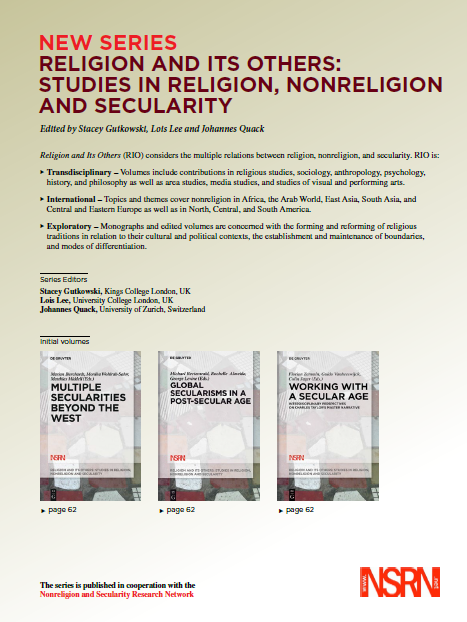
The NSRN and De Gruyter are pleased to announce the first three publications in their book series, Religion and its Others: Studies in Religion, Nonreligion, and Secularity:
As ever, the bibliography is a collaborative enterprise and we cannot claim that it is comprehensive of all relevant NSRN related publications. If you spot any gaps, at any point, you can let us know via this comment form on the website and we will add the publication at our next update.
Guilherme Borges is a postdoctoral researcher at the Brazilian Center for Analysis and Planning and at the Nonreligion in a Complex Future project, based at the University of Ottawa. Drawing on these dual affiliations, he conducts comparative analyses of the presence of religious education in public schools in Brazil and Canada. He holds a PhD and a master’s degree in Sociology from the University of São Paulo.
Keywords: Religious education, Secularism, Brazil, Teacher training, Pluralism, Diversity
Introduction
In the recent years of the pandemic, the need for social distancing led not only to the adoption of remote classes for students but also required many teachers to take part in online continuing education programs. In this context, the Brazilian State of Paraná stood out nationally by creating audiovisual materials to train teachers remotely. Even before the pandemic, Paraná already stood out among Brazil’s 26 States for its substantial investment in teacher training. This leading role became even more pronounced during 2020 and 2021, when hundreds of training sessions were produced to guide—at a distance—the professionals working in the State’s public education system.
As religious education has been part of the public school curriculum in Paraná for decades, nineteen remote training sessions were produced specifically for teachers of this subject. These trainings were officially produced and broadcast by the Paraná State Department of Education. Although there was no monitoring of who actually watched these sessions, teachers were instructed and expected to follow them. Despite being aimed at a specific audience, all sessions are freely accessible on a YouTube channel administered by the state government. Given this availability, it is worth taking the opportunity to examine the guidelines for implementing religious education in this State, which also stands out for the emphasis it places on developing “a form of religious education attentive to the secularity of Brazilian public schooling,” as stated in one of the training sessions analyzed[1].
A Brief Historical Overview of Brazilian Secularity
With regard to the secularity of Brazilian public education, it is worth noting that the formal separation between Church and State in Brazil began in 1889, when the country became a republic. In the preceding period, ecclesiastical leaders played a key role in legitimizing and sustaining political institutions, with Catholicism recognized as the official religion of the Empire[2]. The end of the monarchy marked a radical break from this context. The first republican Constitution, enacted in 1891, established the principle of religious neutrality, stipulating that no religion could receive any form of favor from public authorities, which drastically limited the Church’s influence over political, judicial, and legislative decisions[3].
This trajectory also encompassed the educational system, resulting in a process of separation between Church and State in the school sphere that was more uncompromising than what occurred in other South American contexts[4]. With greater or lesser intensity, this process reverberated over the following decades and continues to the present day. A clear sign of this is that publicly funded confessional schools—common in societally far less religious nations such as Sweden and Finland, for example—were completely prohibited in Brazil at the end of the nineteenth century and have never existed since.
The training sessions suggest that teachers should make their possible religious affiliations invisible while they are at school. Ideally, they should even be recognized by their students as nonreligious: “I think the best way to show this respect for the other person’s religion is for the students to say: ‘Teacher, are you nonreligious?’”. As noted by Weber, as modernization advances, religion tends to be privatized— not necessarily in the sense that it disappears from the public sphere, but because it is removed from the State apparatus[6]. This is a process of juridical-political secularization rather than societal secularization[7]. In the case of religious education taught in public schools in Brazil, this occurs through the expectation that teachers conceal their religious convictions when they are in the classroom.
The secular disposition is seen as a standpoint of impartiality, and this is treated as crucial for managing diversity: “The teacher must take an impartial stance, addressing Brazilian religious matrices without distinction: Indigenous, African, Eastern, and Western”. The reference to these four matrices is not random, as it is reiterated throughout the training sessions. Emphasis is placed on the importance of teachers adhering to the “four religious matrices” that make up the “rich diversity of religions in Brazil”. This multiplicity is anchored in these broad and clearly defined “civilizational” clusters, each representing one of the population groups that have historically shaped Brazilian society.
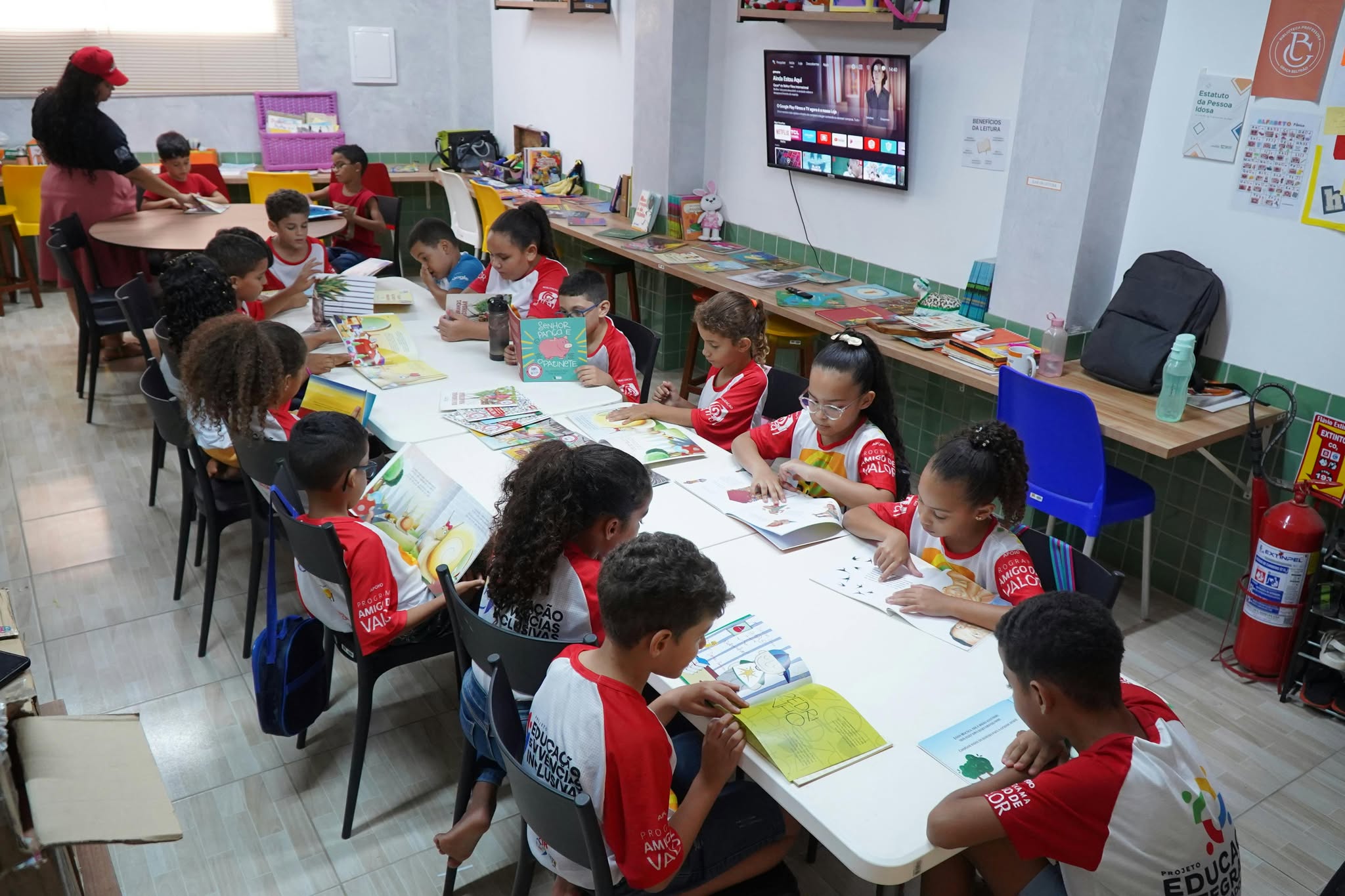
Image of a religious education class in which the teacher presents the “African matrix”
Culturalist and Scientific Religious Education
During class, religious affiliations should not be brought up, either to maintain professionalism for teachers or to avoid discomfort for students. From the perspective of the matrices, the focus moves away from the individual beliefs of the teacher or student. Instead, the focus shifts to broad (imagined) ideal types. Perhaps it is possible to say that, in this approach, religions are viewed not through personal convictions, but as collective national and ethno-racial traditions. This culturalist perspective is also what enables religious education in Brazil to be seen as scientifically grounded. This is indicated in the teacher training sessions:
Rather than using theological terms, teachers must rely on the frameworks and reasoning of post-metaphysical sciences. This implies that the explanations provided to students should be grounded in social reality, not the supernatural. Teachers should present the study of religion as a cultural phenomenon. Additionally, teachers must adopt a stance of critical awareness, ensuring they do not neglect the essential fact that their explanations must remain within a secular episteme.
However, if the approach is secular—in the most strictly Weberian sense of the term—the object of this school subject is far from being so. This can be seen from the following excerpt, taken from one of the continuing education sessions:
There is an expectation in these trainings that both teachers and students may have a wide range of religious beliefs and sensibilities. Yet little or no room is made for the possibility that they may not have any religious convictions or aptitudes. According to the excerpt above, even those who self-identify as atheists, skeptics or agnostics would actually have an innate religiosity or spirituality. It may be possible to give up religion, but religiosity would be universal, because “it is in the subject”.
Such idealistic and transcendental statements contrast with a religious education that is culturalist and based on post-metaphysical sciences such as sociology and anthropology. The idea of a universal religiosity is also at odds with a religious education that aims to embrace the diversity of lifestances and worldviews. As secular as this religious education may be, the possibility of there being people without religiosity is not considered.
This blind spot, so to speak, does not simply reveal a conceptual inconsistency; it has broader implications for how diversity is understood and managed within Brazilian public schooling. By presuming that all individuals possess some form of innate religiosity or spirituality, the training sessions end up reinforcing a normative anthropology that marginalizes nonreligious worldviews. This assumption narrows the range of what can be recognized as legitimate diversity and risks reproducing a subtle form of epistemic exclusion, in which students and teachers who do not perceive themselves as religious become unintelligible within the very framework that is meant to include them. Bringing this dynamic to light helps us understand how secular projects may inadvertently reintroduce religious normativity and how policies oriented toward pluralism can, in practice, constrain the set of identities they claim to acknowledge.
To learn more about this topic, see the chapter ‘Religious Education in Brazilian Public Schools: Between Pluralism and Secularism’, forthcoming in The Palgrave Handbook of Religion in Public Education.
Endnotes
[1] All excerpts from the training sessions reproduced here were translated by me from Portuguese into English.
[4] Montero, P., Borges, G., Copetti, A. B., & Armando, S. (2024). Ensino religioso no Brasil e na Argentina: entre confessionalidades e laicidades. Revista USP, 142, 13–32. https://doi.org/10.11606/issn.2316-9036.i142p13-32
[5] Weber, M. (1982). Ensaios de sociologia. LTC Editora.
[6] Weber, M. (1969). Economía y sociedad: Esbozo de sociología comprensiva (Vols. 1–2). Fondo de Cultura Económica.
[7] Pierucci, A. F. (1998). Secularização em Max Weber: da contemporânea serventia de voltarmos a acessar aquele velho sentido. Revista Brasileira de Ciências Sociais, 13(37), 43–73.
Alexandr Zamușinski is a scholar of religion specializing in secularism, nonreligion, and religious change. He holds a PhD from the University of California, Riverside and is currently Instructor at the Defense Language Institute, Monterey, CA. Email: alexandr.zamusinski@dliflc.edu / ORCID https://orcid.org/0009-0006-7807-8811
Keywords: The Clergy Project, nonbelieving clergy, nonreligion, secularism, behaving without believing
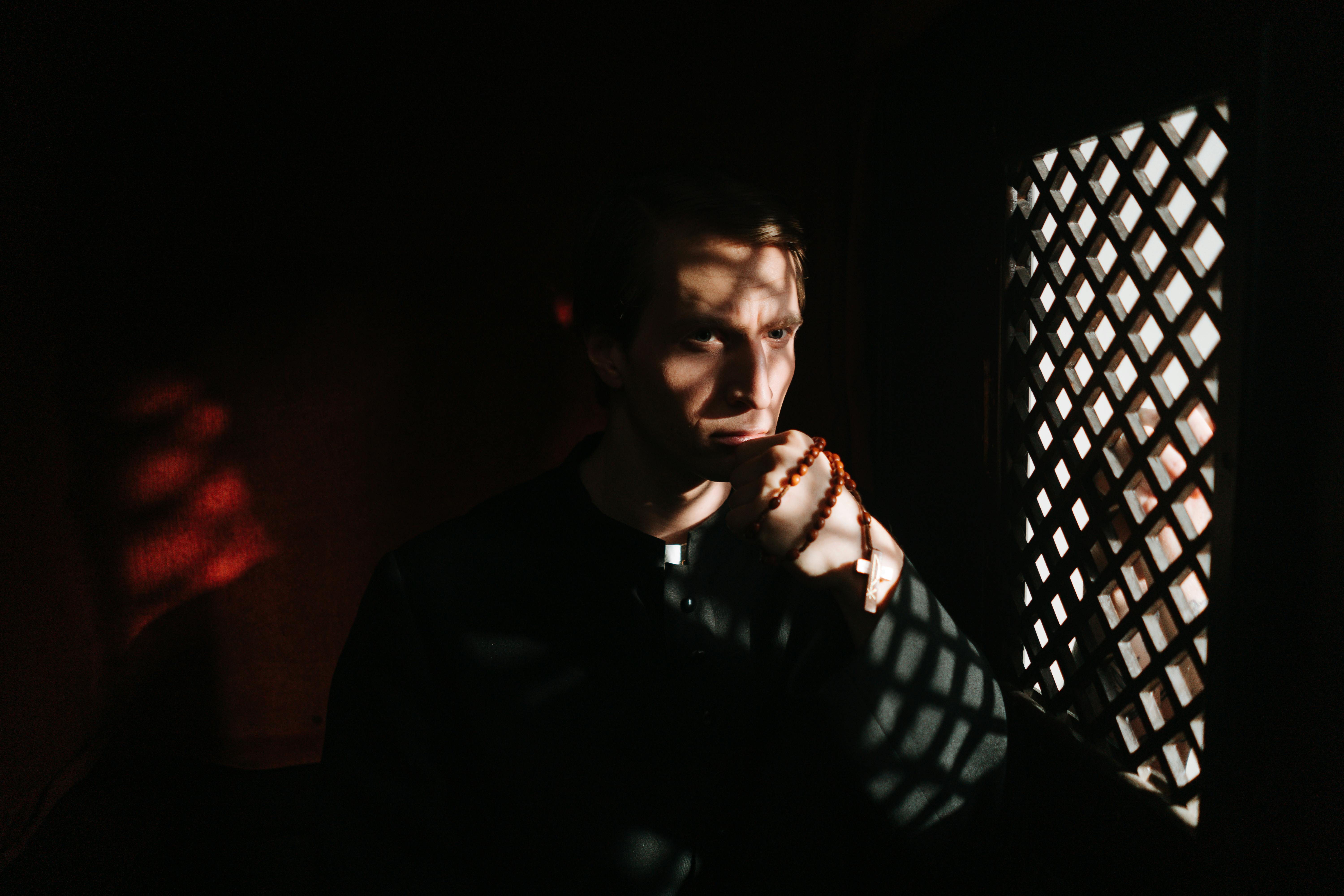
When we think about people leaving religion, we usually imagine ordinary believers quietly drifting away from faith. But there’s another group—smaller, quieter, and far more complicated—whose stories are rarely told: religious professionals who have lost their faith yet often continue to serve within their institutions. These are the nonbelieving clergy. Pastors, priests, rabbis, imams, ministers, monks, and nuns—people whose lives and identities are built around religious leadership but who privately no longer believe in God or the supernatural. Studying them might sound like a narrow niche, but in reality, this group offers one of the most revealing windows into how religion and nonreligion intersect.
For more than a decade, The Clergy Project (TCP)—an online support network for current and former religious professionals who no longer believe in supernatural[i]—has quietly provided a safe space for people in this position. Since its founding in 2011, TCP has grown to nearly 1,400 members from over 50 countries. My research draws on more than five years of engagement with TCP members, including interviews, surveys, and analysis of narratives across diverse traditions[ii]. These people once stood at the heart of religious institutions, trained to guide others in faith and ritual. Yet over time, they moved from supernatural belief to a naturalistic worldview. Their stories— often marked by secrecy, doubt, and deep moral struggle—offer rare sociological insight into what happens when belief collapses within the very institutions meant to sustain it.
The Hidden Side of Deconversion
For many people, leaving religion is already difficult. For clergy, it can be an identity earthquake. Their livelihoods, reputations, and social worlds are often tied to the institutions they serve[iii]. When belief collapses, it’s not just a private loss—it can mean losing family, community, income, and belonging all at once. Some clergy leave openly. But many stay, continuing to preach and perform rituals long after faith has faded[iv]. They do so for many reasons—financial stability, fear of rejection, stigma against nonreligion, or simply not wanting to hurt the people they love. Family is often central here. Many choose silence to avoid causing their parents or spouses pain, or making them feel like they failed as believers[v]. For example, Jim, an ex-clergy from Ontario, Canada, stated: “My mother is 80 and would not understand. It would be a tragedy for her. So, I keep it quiet.” Another poignant account comes from Oliver, a current Baptist deacon in South Africa, who remarked: “My exit strategy at this point in time is to continue maintaining my social life and ties to the church until my parents have passed on and my children have all finished High School. I have no intention of putting further strain on my parents, especially my mother whose health is not good. At that stage, after their death, I will make my lack of belief known and allow my children to decide for themselves the path of life they wish to follow.” This tension between authenticity and belonging produces what I call performative religiosity.[vi] It isn’t hypocrisy—it’s empathy and survival. These clergy navigate a world where their professional role demands belief, but their private conscience no longer allows it.
Behaving Without Believing
We often assume that religion is held together primarily by belief. For most members of TCP, that is indeed the case—once belief disappears, so does religious commitment, and they exit. Yet for others, who may wish to leave religion entirely but cannot due to social or material constraints, religion represents something deeper. It is sustained not only by faith, but by relationships. For many nonbelieving clergy, what keeps them within their religious communities is not doctrine but love—family bonds, communal rituals, shared expectations, or economic dependence, coupled with limited prospects for new employment if they were to come out openly. Another common factor is the pervasive anti-atheist stigma and the fear of ostracism[vii].
This is why studying this group can be valuable for scholars of nonreligion. Their experiences blur the neat boundary between “religious” and “nonreligious.” They reveal how people inhabit the gray zones in between—how belonging and behaving can outweigh believing, and how emotional and moral ties can sustain, or even compel, participation long after faith itself has faded. Such behaving without believing offers crucial insight into secularization. It reminds us that the shift toward nonreligion is not merely about the loss of faith, but also about how individuals and communities renegotiate identity, loyalty, and meaning when belief no longer aligns with behavior.
The Emotional Cost of Secrecy and Disclosure
What struck me most in these stories is the profound emotional cost of living a double life. Imagine standing before a congregation each week, preaching words you no longer believe, all while concealing your disbelief to protect your livelihood or shield your loved ones from distress. For many clergy, this state of secrecy becomes a kind of “closet”. The secrecy is exhausting, but often motivated by care. Remaining closeted can be a way of shielding loved ones from distress or confusion—a form of moral sacrifice that places compassion above personal authenticity[viii].
For those who do “come out” as nonbelievers, the costs can be equally severe—sometimes even greater. Coming out often entails the loss of employment, reputation, and community, and in some cases, family. What one experiences as intellectual honesty or existential integrity, others may interpret as betrayal, arrogance, or moral collapse. The aftermath can be devastating: profound loneliness, social exile, and the painful process of rebuilding one’s life from the ground up. Many of my respondents spoke of rejection not only from their congregations but also from close friends and even family members, including spouses and children. Divorce, isolation, and stigma are common outcomes. For those in midlife, the challenge is especially acute. After decades spent in ministry, many find themselves forced to begin again—searching for new communities, and new sources of meaning. The transition can be profoundly disorienting. Individuals who once served as moral authorities and spiritual guides within their congregations suddenly face the loss of that status and identity. Moving from the pulpit to ordinary forms of employment—driving a taxi, working as a substitute teacher, cleaning, or taking shifts in a supermarket—represents not only a practical adjustment but also an existential one. For many, it feels like a collapse of the very framework through which they once understood their purpose and self-worth. The contrast between who they were and who they have become often brings a deep sense of grief, humility, and alienation. For many, networks like TCP become lifelines—a place to find understanding and support amid upheaval.
Of course, it is essential not to overgeneralize from the example of clergy. They represent a distinctive and highly visible segment of the broader population of nonbelievers. Their experiences of deconversion and disclosure differ markedly from those of lay individuals. Even among clergy, the trajectories of loss and adaptation vary widely. Some choose public transparency—publishing memoirs, giving interviews, or engaging in activism—while others remain silent, disclosing their nonbelief only to a few trusted confidants.
The Clergy Project offers a rare glimpse into this hidden world. It reminds researchers that behind the public face of religion are private, untold stories that complicate our assumptions about faith, doubt, and belonging[ix]. These clergy are not villains or hypocrites. They are people caught in a web of obligations and compassion, trying to balance authenticity with care. Their stories illuminate the emotional, relational, and moral dimensions of deconversion that statistics alone can’t capture. By listening to them, we gain a fuller picture of what it means to move from belief to nonbelief—not as a sudden break, but as a deeply human journey through the spaces in between.
Endnotes
[i] Upon joining TCP, during the application process on the web-site and during the entrance interview, all members are required to declare that they no longer believe in the supernatural. For example, they must check the box under the statement: “I consider myself to be a non-theist who does not believe in a supernatural dimension. Specifically, I do not believe in an order of existence that is beyond the visible observable universe appearing to transcend the laws of nature, a mystical dimension, an afterlife, or a god.” – See section “Becoming a TCP Participant” – https://clergyproject.org/nonbelieving-clergy-join/.
[ii] Zamușinski, Alexandr. 2025a. “Understanding the Role of the Clergy Project: Misconceptions and Realities of a Support Network for Nonbelieving Clergy”, Secularism and Nonreligion, 14(1), p. 1-14. https://doi.org/10.5334/snr.211.
[iii] Dennett, Daniel, and Linda LaScola. 2013. Caught in the Pulpit: Leaving Belief Behind. Durham: Pitchstone Publishing.
[iv] Zamușinski, Alexandr. 2025c. “Hidden Apostasy: What Prevents Nonbelieving Clergy from Disclosing Their Lack of Faith?” Journal of Contemporary Religion. 40(3) (pages TBD), October 2025. https://doi.org/10.1080/13537903.2025.2580133
See also Abbott, Dena, and Debra Mollen. 2018. “Atheism as a Concealable Stigmatized Identity: Outness, Anticipated Stigma, and Well-Being.” The Counseling Psychologist 46 (6): 685-707.
Frost, Jacqui, Christopher Scheitle, and Elaine Howard Ecklund. 2023. “Patterns of Perceived Hostility and Identity Concealment Among Self-Identified Atheists.” Social Forces 101 (3): 1580–1605.
[viii] Zamușinski, 2025c. See also Gull, B. (2021). ‘We Are the Women Our Parents Warned Us Against’: Identity Reconstruction and the Re-imagining of Gender After High-Cost Religious Disaffiliation. Symbolic Interaction 45 (1): 97-122.
[ix] See also Fader, Ayala. 2020. Hidden Heretics: Jewish Doubt in the Digital Age. Princeton: Princeton University Press.
Brewster, Melanie. 2014. Atheists in America. New York Chichester: Columbia University Press.
Brooks, Marshall. 2018. Disenchanted Lives: Apostasy and Ex-Mormonism Among the Latter-day Saints. New Brunswick: Rutgers University Press.
Cottee, Simon. 2015. The Apostates: When Muslims Leave Islam. London: C. Hurst & Co.
Niels De Nutte is affiliated with the history department and the Secular Studies Association Brussels research group at Vrije Universiteit Brussel as a guest professor and postdoctoral researcher. He serves as an associate director to the International Society for Historians on Atheism, Secularism and Humanism and editor to the Secular Studies journal (Brill). Niels’s research interests include post-war organised non-religiousness and unbelief, with specific expertise in church-state relations, the history of bioethics, and end-of-life in Belgium and abroad.
Much of the public and academic discourse surrounding euthanasia tends to frame the practice as a fundamentally secular concern[i] — a rallying point for humanists, atheists, and liberal-minded progressives. Yet, this framing is not only historically simplistic but also obscures the deeper, more entangled social, moral, and even religious and worldview genealogies that shape the right-to-die movement. This contribution shortly displays some key findings from my PhD project on the entangled history of the right-to-die in Belgium. For my project, which was graciously funded by the Fonds Wetenschappelijk Onderzoek (FWO), several archival collections – which included organisational documents, egodocuments, legal document and newspapers – were analysed.[ii]
Far from being a strictly secularist crusade, euthanasia advocacy in Belgium for instance, emerged from a complex constellation of ideas, anxieties, and institutional actors that defy easy categorisation. This complexity is especially apparent when one moves beyond legislative milestones, such as the 2002 law decriminalising euthanasia,[iii] and examines the decades-long evolution of public attitudes, philosophical undercurrents, and socio-political dynamics.
Beyond the Secular–Religious Binary
It is true that humanist and freethinking organisations — particularly the Humanistisch Verbond (HV – Humanist Association) and the Unie Vrijzinnige Verenigingen (UVV – Union of Secular Associations) — played key roles in Belgium’s euthanasia debate.[iv] These groups were vocal proponents of individual autonomy, often framing their arguments in terms of zelfbeschikkingsrecht (the right to self-determination) and critiquing medical paternalism and what they perceived as “therapeutic tenacity.[v]” However, even within these secular circles, the justification for euthanasia was far from monolithic or exclusively rooted in anti-religious sentiment.
Many of the early discussions on euthanasia in Belgium — dating back to the 1930s — were not advanced by advocacy groups, and predate them significantly, but emerged through journalistic inquiry, literature, and courtroom drama. Letters to the editor in socialist newspapers like Vooruit in 1950, for instance, reveal a surprisingly receptive attitude among the secular (vrijzinnig) populace toward euthanasia as mercy killing, long before it became institutionalised within the humanist sphere or dedicated end-of-life advocacy groups.[vi] These expressions of support did not always originate from irreligious motives; rather, they reflected evolving ideas about suffering, dignity, and the limits of medical intervention.
Moreover, while secular humanist organisations were pivotal in advancing the right-to-die cause, they were responding to — rather than initiating — wider shifts in cultural sensibilities. From the 1960s onward, an increasing awareness of overmedicalisation, coupled with dramatic advances in life-prolonging technologies, prompted both religious and nonreligious individuals to reconsider what a “good death” meant.[vii] This mirrors Philippe Ariès’ influential critique of “therapeutic tenacity,” which lamented the erosion of natural death in favour of endless medical intervention — a critique not bound to secular thought.
Entangled Histories, Not Isolated Ideologies
The claim that euthanasia was solely the domain of secular advocacy also ignores the transnational and cross-ideological nature of the movement. Belgian right-to-die societies were deeply influenced by foreign counterparts, such as the Dutch Nederlandse Vereniging voor Vrijwillige Euthanasie (NVVE) and the American Hemlock Society.[viii] Yet unlike in the Anglophone world, where early euthanasia debates were often entangled with eugenics and notions of social utility, Belgian advocacy was largely disconnected from such problematic legacies. This detachment allowed Belgian organisations to frame euthanasia more clearly as an issue of compassion and choice, rather than social engineering.
Importantly, religious responses to euthanasia in Belgium were not uniformly hostile. While official Catholic doctrine continued to oppose euthanasia, some Catholic opinion groups began to express sympathy for limited end-of-life autonomy by the late 20th century.[ix] In fact, elements of Catholic moral reasoning — especially the emphasis on intention and discernment — overlapped in practice with certain secular arguments for pain relief and palliative care. This moral convergence suggests that the secular–religious dichotomy fails to capture the full ethical landscape in which euthanasia advocacy operated.
The Role of Bioethics and the Medical Profession
Another key insight from my research is the role of bioethics as a potential mediating force. The emergence of bioethics on the continent in the 1980s brought with it a new language for discussing death and dying that transcended traditional worldview boundaries. Discussions about living wills, patient rights, and medical consent became central, with both secular and religious voices contributing.[x] It is in this space — not in abstract philosophical disputes about the sanctity of life — that the practical contours of the euthanasia debate were shaped.
Interestingly, early medical resistance to euthanasia was not primarily religious in nature. Many doctors feared legal liability or saw euthanasia as an admission of professional failure. As medical confidence in palliative care grew, however, so too did the openness of some physicians to end-of-life autonomy. This shift highlights the importance of professional ethics and scientific culture in shaping euthanasia debates — realms that do not map neatly onto religious/secular lines.
From Grassroots to Legal Reform
Belgium’s euthanasia law of 2002 is often portrayed as a triumph of secular rationality over religious conservatism, but this narrative overlooks the decades of “prepolitical” activity that made such legislation possible and a societal consensus that significantly predated law-making successes. From the living will storage facilities established by HV in the 1980s, to the increasing number of public debates, media campaigns, and court cases that normalised the issue, euthanasia advocacy was driven as much by grassroots moral reflection as by formal secular ideology, yet notably with much less mobilising success than the abortion movements.[xi]
Notably, support for euthanasia among the Belgian population grew steadily over time, and not just among self-described secularists. Opinion polls from the mid-20th century already revealed openness to euthanasia in secular and socialist circles and support for the wider idea of euthanasia as a medical practice was almost at 90% by the late 1980s.[xii] Arguments even in the 1950 often lacked theological justifications and were instead motivated by compassion, family consultation, and a sense of moral responsibility — values that transcend religious affiliation.[xiii]
Conclusion: Rethinking the Nonreligious Frame
To cast euthanasia and the right-to-die purely as secular projects is to overlook the rich tapestry of beliefs, experiences, and institutional dynamics that have informed end-of-life debates, Belgium being a good test case. Advocacy for euthanasia did not emerge in a vacuum of unbelief; it developed through the interaction of scientific progress, shifting death practices, political realignments, and human concern — concerns shared by religious and nonreligious people alike.
Indeed, what my research illustrates is that euthanasia advocacy was not a reaction against religion, but a response to the changing meaning of death in modern society. As medical technologies challenged the boundary between life and death, and as traditional rituals lost their explanatory power, people from diverse backgrounds — secular, religious, and in-between — began to seek new ways of dying well.
In that sense, the right-to-die was never solely a secularist project. It was — and remains — a human one.
[i] For the American and British cases, see: Ian Dowbiggin, A Merciful End. The Euthanasia Movement in Modern America (Oxford: University Press, 2003); N.D.A. Kemp, Merciful Release: The History of the British Euthanasia Movement (Manchester: University Press, 2002). For Belgium, this is exemplified quite early on in an opinion piece: Het Handelsblad, 12/01/1936, p. 10. The author of this lengthy column is Wilfried Broeckaert, a catholic opinion maker and medical doctor.
[ii] I consulted archival material from the following institutions: Centre for Academic and Secular Humanist Archives (Brussels), Felixarchief (Antwerp), Association pour le Droit de Mourir dans la Dignité (Brussels), Royal Library of Belgium (Brussels), Wellcome Library (London), University of Washington Libraries, Special Collections (Seattle).
[v] This concept originated in France and, through the Dutch connection of Belgium and the Netherlands found its way into the English language, see: Niels De Nutte, “Lighting the spark? Murder Trials in the 1960s and 1970s in the Liège Court of Assizes and Their Influence on Belgian and International Attention for the Issue of Euthanasia,” Derecho en Sociedad 19, no. 2 (2025) forthcoming.
[vii] This is exemplified by the sheer number of publications that emerge in this period which include ‘good death’ (in Dutch ‘waardig’) in their title. Interestingly enough, the word meant something different depending on who published. For end-of-life advocates it referred to dying without suffering and with medical interventions to hasten death, whereas for religiously inspired opponents it meant a natural death, without any form of intervention.
[viii] Niels De Nutte, The right-to-die in Belgium: A history of societal attitudes, conceptual confusion and advocacy concerning euthanasia between the 1920s and 1993 (Vrije Universiteit Brussels, 2025), unpublished PhD dissertation.
[ix] Notably, the first president of the Association pour le Droit de Mourir dans la Dignité, the first Belgian Right-to-Die Society, was a socialist catholic physician.
[xi] For the history of the abortion legalisation in Belgium see: Els Witte, “Twintig jaar politieke strijd rond de abortuswetgeving in België (1970-1990),” Res Publica 32, no. 4 (1990): 436-437.
[xii] Institut Interuniversitaire de sondage d’opinion publique, Les soins de santé dans la société belge (Brussels, 1988), 56.
Jonathan Simmons is a sociologist specializing in nonreligion, atheism, and religious change. He holds a PhD from the University of Alberta and is currently on staff at the University of Alberta. Email: jssimmon@ualberta.ca
A common, often unexamined, assumption clouds discussions about Indigenous peoples in Canada: the conflation of Indigeneity and spirituality. This widespread idea suggests Indigenous identity is inherently and uniformly linked to spiritual beliefs and practices. Such a perspective, for example, often assumes universal participation in traditional ceremonies like smudging (a spiritual cleansing ritual) or a ubiquitous belief in a “Creator.” This view frequently overlooks the many Indigenous people who do not hold such beliefs, contributing to what can be termed the “invisible atheism” among Indigenous populations. This conflation creates a significant gap in our understanding and research of Indigenous nonreligion.
To fully appreciate this diverse population, clarifying “Indigenous” in the Canadian context is essential. The term encompasses First Nations, Métis, and Inuit peoples, the original inhabitants of the lands now known as Canada. These diverse nations and communities each possess unique cultures, languages, and histories spanning thousands of years. Understanding this immense cultural richness makes the prevailing research oversight concerning nonreligion all the more striking.
It is this gap that my own work seeks to address. My research, based on in-depth interviews with 18 Indigenous atheists in Canada, specifically challenges the pervasive assumption that Indigenous identity is monolithically spiritual. As I argue, “By overlooking Indigenous nonreligion, scholars not only miss an important aspect of atheist experiences, but they also perpetuate a Western-centric perspective that homogenizes Indigenous people as inherently spiritual and religious” [1]. This post aims to bring some of these research findings to a broader audience.
Data from Canada’s 2021 Census underscores this diversity. Nearly half of Indigenous people reported “No religion and secular perspectives,” a significant increase from 20% in 2011. This category, as Statistics Canada clarifies, includes those identifying as atheist, agnostic, or humanist. In contrast, about 4.5% reported “Traditional (North American Indigenous) spirituality” [2]. These figures clearly demonstrate a substantial and growing nonreligious demographic among Indigenous peoples in Canada. Recognizing this diversity is necessary for supporting Indigenous self-determination. For international readers, this principle affirms the right of Indigenous peoples to freely determine their political status and pursue their economic, social, and cultural development. Indeed, for such self-determination to be authentic and effective, it must be based on an accurate understanding of Indigenous communities in all their variety, including their nonreligious members, ensuring all voices can shape their collective future.
My research identifies various pathways Indigenous individuals take toward nonreligious identities, with intellectual inquiry being one of the most common. Many participants described a process of systematically questioning supernatural claims in favor of scientific or evidence-based explanations. This commitment to a consistent, evidence-based worldview was a core theme. For example, one participant, whose perspective is further detailed in my forthcoming work (Simmons, forthcoming 2026), explained that his sense of intellectual consistency (and humility) required him to examine traditional spiritual claims with the same critical lens he used for Christianity. He felt it would be dishonest to reject one set of beliefs for lacking evidence while accepting another without that same scrutiny [3]. This is not unique to a Canadian context. It in fact strongly parallels recent findings by Rahmani, Adds, and Senanayake (2024) in their work with Māori atheists in Aotearoa New Zealand. They also identified a pattern of “intellectual doubt,” where participants described a similar process of elimination in examining and rejecting religious frameworks [5]. This parallel across different Indigenous communities underscores the significance of this skeptical, evidence-based pathway to a nonreligious identity.
This critical stance sometimes extends to how Indigenous ways of knowing are positioned against what some participants termed “regular science.” While the Canadian government and many Indigenous scholars rightly advocate for recognizing Indigenous Science as a distinct, time-tested knowledge system, some Indigenous atheists in my research expressed a clear preference for empirical, non-supernatural explanations of the world, applying their skepticism broadly. This careful navigation of knowledge systems is also articulated by other Indigenous thinkers. David “Maheengun” Cook, an Anishinaabe atheist humanist, for example, emphasizes the importance of epistemological clarity, valuing cultural heritage alongside the distinct methods of scientific inquiry. [4].
Religious trauma also contributes significantly to Indigenous individuals becoming nonreligious. The devastating legacy of Canada’s residential schools is central here. These church-run institutions inflicted deep intergenerational harm. For many, this trauma directly leads to a rejection of organized religion and, for some, extends to all supernatural beliefs. A poignant familial example captures this sentiment: “I didn’t realize that it’s 100% a response to residential school. [My father’s] atheism isn’t just philosophical; it’s a direct reaction to religious trauma” [3]. Such responses to colonial religious imposition, framing atheism as a decolonizing act, are not unique to Canada. Similar motivations are found among Māori atheists in Aotearoa New Zealand, who often view the rejection of colonial religion as a form of resistance and cultural reclamation [5].
The experience of being an Indigenous atheist is often marked by navigating stigma. Many of my participants felt societal pressure to believe, and worried about being judged, sometimes fearing that openly identifying as atheist could be seen as a betrayal of their culture or as not being “‘Native’ enough” [1]. This pressure to conform can lead to what I term “navigating disclosure,” where individuals carefully manage how and when they reveal their nonbelief.
The growing presence of Indigenous nonbelievers has important consequences for ongoing reconciliation efforts. Reconciliation aims to build a renewed, respectful relationship between Indigenous peoples and Canadian society. If public understanding and institutional responses are based on the conflation of Indigeneity and spirituality, however, these efforts may fall short. For example, initiatives creating “smudge-friendly spaces” in public institutions, while intended to affirm Indigenous cultures, are centered on a spiritual practice. This focus can inadvertently marginalize Indigenous atheists, agnostics, or those of other faiths. While the provision of culturally relevant spiritual support is rightly seen as vital for many Indigenous individuals seeking to connect with their heritage and find healing, particularly in challenging environments such as correctional facilities [6], it is equally important that public understanding and institutional responses do not presume universal spirituality. Such presumptions risk deepening what my research identifies as a growing divide within Indigenous communities between those who practice traditional spirituality and those who embrace a more secular and naturalistic worldview [1]. Inclusivity requires acknowledging the full spectrum of Indigenous (non)belief.
A nuanced perspective is also important in areas like healthcare. My research found that for some participants, “spirituality” was associated with “complementary and alternative medicine, magic, and various contemplative practices,” and some expressed concern that “spirituality and pseudoscience often went together” [1]. While traditional Indigenous medicines hold cultural value, some nonreligious Indigenous people may prioritize evidence-based medical treatments exclusively, particularly if they perceive some traditional spiritual healing practices as lacking empirical support. An overemphasis on traditional spirituality in healthcare, without acknowledging secular or skeptical Indigenous perspectives, can create tension. Recognizing diverse Indigenous viewpoints is key to developing healthcare that is both culturally sensitive and medically effective.
A critical advancement in Indigenous studies and related disciplines necessitates moving beyond simplistic, spiritualized conceptualizations of Indigenous peoples. Future research must prioritize the recognition of Indigenous individuals as contemporary subjects possessing a wide spectrum of beliefs, experiences, and identities. Engaging with this inherent heterogeneity does not constitute a dilution of Indigenous identity; rather, it affirms its dynamism and resilience.
Endnotes
[1] Simmons, J. (2024). Indigenous Atheists in Canada: Challenging Assumptions and Navigating Belonging. Secular Studies, 6(1), 62–83. [Page 64 for “By overlooking…”; Page 63 for “Jackie” quote; Page 74 for “Native enough”; Page 71 for “spirituality and pseudoscience”]. doi:10.1163/25892525-bja10060.
[2] Statistics Canada. (2022). Table 98-10-0288-01 Religion by Indigenous identity: Canada, provinces and territories. Release date: October 26, 2022. Retrieved from https://tinyurl.com/37z6n4tn.
[3] Simmons, J. (forthcoming 2026). De-Converting from North American Religious Traditions. In The Oxford Handbook of Apostasy and Religious Deconversion. Eds. Zuckerman and Zamușinski.
[5] Rahmani, M., Adds, P., & Senanayake, R. (2024). Māori atheism: a decolonising project? Kōtuitui: New Zealand. Journal of Social Sciences Online, 19(4), 522-541. doi:10.1080/1177083X.2024.2333544. Available at https://doi.org/10.1080/1177083X.2024.2333544
[6] See, for example, Tetrault, J. E. C. (2022). Indigenizing Prisons: A Canadian Case Study. Crime and Justice, 51(1), 637-680. doi:10.1086/720943. Tetrault’s research highlights the value incarcerated Indigenous peoples place on Indigenized programming, including spiritual supports, for cultural connection and healing.
Three full-time four-year paid PhD positions are available at the School of Theology and Religious Studies, University of Tartu. The positions are fully funded and successful candidates will be hired as Junior Research Fellows for the duration of their PhD studies.
There are no predetermined research areas or focuses, the candidate has to propose one’s own topic – and projects on nonreligion are very welcome. For that, contact dr Atko Remmel: atko.remmel@ut.ee.
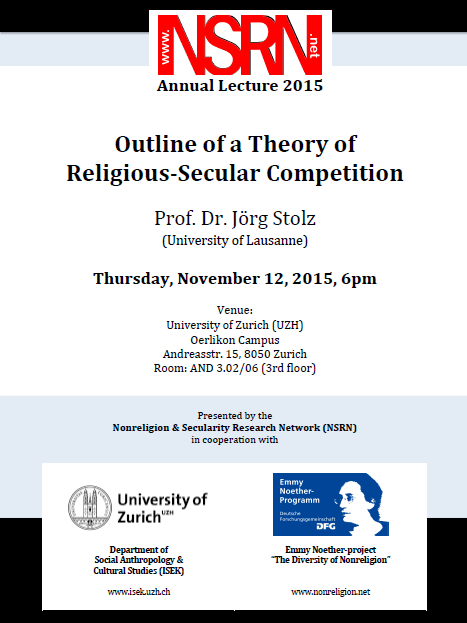
You are cordially invited to the NSRN Annual Lecture 2025, which will be given by Anna Strhan and Rachael Shillitoe. The title of the lecture is Growing Up Godless: Childhood and the Formation of Non-Religion.
How are children’s non-belief and non-religion formed in everyday life? While previous studies have shown that what happens during childhood is crucial in driving the growth of non-religious populations, we know little about the experiences of the growing numbers of children for whom being non-religious is the “new normal” or about how their non-religion and non-belief are formed in everyday life. Drawing on rich ethnographic fieldwork and in-depth interviews with children, their parents, and teachers across different parts of England, this lecture addresses this scholarly gap, examining the formation of children’s non-religious identities and perspectives and how these relate to shifting moral landscapes.
The lecture will take place via Zoom on May 22, 2025, 9.30 am PDT / 12.30 pm EDT / 5.30 pm BST / 6.30 pm CEDT.
Families and Religion: Dynamics of Transmission across Generations
Edited by Christel Gärtner, Linda Henning, Olaf Müller.
This comparative study examines the transmission of religion in families in Germany, Italy, Hungary, Finland and Canada. The authors rely on the widely shared argument that religious change can primarily be understood as an intergenerational process. Based on a mixed-methods design, the book investigates the question of how, when exactly and under what conditions the following generations become less religious than the previous ones. From the perspective of familial and historical generations, the authors examine the significance of (religious) socialization for the transmission of (non-)religious worldviews, affiliation, practice, and identity. According to a central finding, religious change takes place primarily in the phase of adolescence against the background of the respective social context.
Nonreligion and Secularity ResearchNetwork Conference
8-10 September 2025
Institute of Ethnology and Social Anthropology at the Slovak Academy of Sciences, Comenius University in Bratislava, Slovakia
Extended deadline for session and paper proposals: 31 March 2025
Scholarly discussions on nonreligion often begin by noting that nonreligion and its related phenomena are primarily studied within Western, particularly Anglophone contexts, with recent efforts to expand global perspectives. However, these broad categorizations – “Western,” “Anglophone,” or “global North or South” – oversimplify the notable diversity of nonreligion within those demarcations. Various phenomena that are considered nonreligious emerge from complex intersections of national histories, political contexts, and religious influences – or the absence thereof – while simultaneously being shaped by global media and generational dynamics.
The Nonreligion and Secularity Research Network (NSRN) invites paper and session proposals for its 2025 conference, Nonreligion and Secularity at Cultural Crossroads. We aim to explore how secularity and nonreligion function and are manifested in various contexts, social and cultural interconnections, and power relations. Potential topics include, but are not limited to:
Theoretical and methodological challenges of studying nonreligion and secularity – (alternative) conceptualizations of nonreligion; liminalities and ambiguous forms of nonreligion; nonreligion and language
Nonreligion among minority and majority populations – how its reach affects the perceived boundaries of nonreligion and its “important others”
Virtual secularities and nonreligion – how nonreligion is shaped within social networks on the internet
Secularity and state – different aspects of the position of non-religion in different states; regional and global forms and manifestations of nonreligion
Nonreligion and values – nonreligion in changing cultural landscapes and how the cultural context influences what is considered nonreligion
Nonreligion and demographics – the aspects of age, gender, and generations, socialization into nonreligion
We welcome scholars at any career stage (we especially encourage PhD-students) from sociology, anthropology, religious studies, demography, and other fields to apply and bring interdisciplinary approaches and methodologies.
The 2025 NSRN conference will take place as a face-to-face conference that will be held in partnership with the Institute of Ethnology and Social Anthropology at the Slovak Academy of Sciences, Bratislava, Slovakia, and Comenius University in Bratislava.
We expect the participants who present their papers, to join us in person in Bratislava, Slovakia from 8-10 September 2025. However, there will be an opportunity to listen to the presentations and ask questions via Zoom throughout the conference. There will be no fee to attend the 2025 NSRN conference either in person or virtually.
Instructions for submitting session and paper proposals:
Each individual may only present one paper at the 2025 conference, on top of being a co-author on other papers, chairing/organizing a session, and/or being part of an author-meets-critics session. Each session will be allocated a 1h30min time slot during the conference.
To submit a paper proposal:
Title of the paper
Abstract of the paper (max. 150 words)
First and last name, institutional affiliation, title/position, and contact e-mail address of the primary author
First and last name(s), institutional affiliation(s), title(s)/position(s), and contact e-mail address(es) of the co-author(s) (if applicable)
To submit a session proposal (with 3-4 papers and a chair):
Title of the session
Abstract of the session (max. 150 words)
First and last name(s), institutional affiliation(s), title(s)/position(s), and contact e-mail address(es) of the session chair and organizer
Titles of each of the (3-4) papers
Abstracts of each of the (3-4) papers (150 words max. each)
First and last names, institutional affiliations, titles/positions, and contact e-mail addresses for each paper’s primary author and co-author(s)
To submit an author-meets-critics session:
Book title, publication year, and press
Book abstract (150 words max.)
First and last name, institutional affiliation, title/position, and contact e-mail address of the session organizer
First and last name(s), institutional affiliation(s), title(s)/position(s), and contact
e-mail address(es) of the book’s author(s)
First and last names, institutional affiliations, titles/positions, and contact e-mail addresses for each of the (2-4) critics
All paper and session proposals must be e-mailed to nsrnconference2025@gmail.com by the end of the day on 31 March 2025. Notifications of acceptance will be e-mailed to conference participants by April 15, 2025. Preliminary program will be sent out by the end of May 2025, registration date is June 30, 2025 at the latest.
While literature regarding the inclusion of nonreligious worldviews into religious education (RE) curricula is growing, the experiences of nonreligious individuals regarding RE are not often the topic of discussion. This contribution shortly presents how 64 nonreligious adults from different European contexts described their past experiences of RE, by presenting part of the outcomes of a larger qualitative study with nonreligious individuals in Flanders (Belgium), Greece, and Norway. The research participants were all Millennial (born 1981-1998), described themselves as nonreligious, and had attended their primary and secondary education in the countries explored.
RE in Flanders, Greece, and Norway
Before proceeding, some educational specifics in these three contexts should be briefly outlined. Unlike Greece and Norway, where attending a public school is most common, the Belgian/Flemish education system is divided into two networks: government-aided public education (‘officieel onderwijs’) and government-aided private education (‘vrij onderwijs’), with the latter including a very large network of Catholic schools. As a result, a significant number of the Belgian participants were enrolled in a Catholic school, at least during some point during their childhood. This often limited their option to follow non-confessional RE1. However, since switching between different types of school is common, many interviewees had attended both confessional and non-confessional RE classes during their school years.
For the Norwegian participants, the situation was also complicated because of constant changes in the Norwegian RE curriculum during the years that interviewees had attended school (Jarmer, 2022: 781). In 1997, Norway moved from a parallel model with a choice between attending ‘confessional’ or ‘non-confessional’ RE – similar to the one currently existing in Belgian public schools – to introducing an integrative RE model with the course ‘Christianity, Religion, and Ethics’ (Kristendoms- religions- og livssynskunnskap/KRL) (Andreassen, 2014). Consequently, some Norwegian participants attended school when they could choose between the two courses, some experienced the change to integrative RE during their school years, while a few began attending school after the integrative curriculum was implemented.
In contrast to Belgium and Norway, where RE has greatly changed during the past three decades to reflect religious pluralism2, RE in Greek public schools remains catechetical in nature. Overall, RE in Greece greatly prioritizes Orthodox Christianity, with law 1566/1985 describing the development of citizens “driven by loyalty towards their country and the fundamental principles of the orthodox Christian tradition” as one of the aims of primary and secondary public school education. Consequently, and in addition to the confessional nature of RE, the Greek public school environment is also Orthodox-centred, with daily morning prayer, a yearly school blessing, occasional church visits, and Christian iconography displayed in every classroom. Furthermore, the Greek research participants never had the choice of following non-confessional RE because this option was not – and still is not – available in Greek public schools.
Nonreligious Recollections of RE
When recalling their relation with religion while growing up – and no matter whether they described coming from religious, nonreligious, or culturally/nominally religious family backgrounds – participants in all contexts often mentioned RE as a common childhood contact point with religion. Despite this shared contact point, a clear distinction emerged between, on the one hand, the experiences of Belgian and Norwegian participants and, on the other, the experiences of the Greek interviewees.
In particular, Belgian and Norwegian participants expressed a wide variety of reactions to the RE they followed as children. Recollections ranged from indifference and boredom to considering it a course that interested them and broadened their horizons3. Overall, when discussing their experiences of learning about religion and worldviews in school, the vast majority of Belgian and Norwegian interviewees recalled RE as being ‘just another course’ in their school curriculum, one which was relatively easy, often interesting, and mostly informative and pluralistic in nature. None of the interviewees described their general school environment as ‘religious,’ even Belgian participants who attended Catholic schools.
In contrast, Greek participants expressed a great amount of frustration and disappointment with how RE was taught during their primary and secondary education. Descriptions were largely similar as well as overwhelmingly negative, with RE repeatedly described as Orthodox ‘catechism,’ ‘propaganda,’ and ‘brainwashing.’ The disappointment many expressed however, was not only tied to the confessional content of RE but also to the prevalence of Orthodoxy more generally in the Greek public-school environment. School practices such as morning prayer, church visits for receiving communion, and displaying Orthodox iconography were viewed unfavourably and described in very negative tones. Participants cited both personal negative experiences (e.g. feeling ‘forced’ to pray in school) and general reasons (e.g. the preferential treatment of Orthodox Christianity in public education institutions) for disliking such practices. The prevalence of the Orthodox Church in the broader Greek context was also often cited when speaking about RE, with many negatively mentioning the power and involvement of the Orthodox Church in Greek politics and society.
Some Thoughts on the Relationality of it All
Comparing the recollections of participants revealed a stark contrast, tightly connected to the educational and cultural particularities of each context. This study highlights the necessity of taking contextual background into account when discussing nonreligious experiences. Despite being a common contact point with religion during childhood for all interviewees, contextual particularities of RE made for substantial differences in how participants described their past relationships with religion – including how they described their upbringing.
The noticeable difference between reactions of the Greek participants – who had no alternative but to follow catechetical RE in a school environment that promotes Orthodoxy – and Belgian and Norwegian participants – who described their education as more ‘pluralist’ or ‘open’ regarding religion – was made extremely clear. The Greek education system stands out when it comes to negative criticism. Reflecting on these results, it does make sense to ask: Can a person growing up in Greece really have a nonreligious childhood if they have to attend – and undergo RE – in a Greek public school?
Another possible question could be: Would Greek interviewees have expressed the same views if their experiences of RE and school environment were similar to the ones of Belgian and Norwegian participants? The most probable answer is that they would not, as they would not have perceived RE as undergoing a form of catechism or experienced school as an environment that favours Orthodox Christianity. To use an experience cited by some of the Greek participants as an example, anxiously hiding in the back of the school assembly on a daily basis in order to avoid being called to recite the morning prayer does have an effect on how people understand, experience, and live (non)religion both in their past and in their present. And these are experiences that are worth considering if we aim to attain a well-rounded understanding of religion, nonreligion, and everything in between.
Unlike government-aided public schools, which are required to offer RE in all recognised worldviews including “non-confessional ethics,” government-aided private schools are not required to offer all courses but have the freedom to do so if decided. Being the largest group of government-aided private education, Catholic schools usually offer only one religion, specifically Roman Catholicism (Loobuyck and Franken, 2011: 17-19). ↩︎
Even though the RE curricula in Belgium and Norway prioritized the teaching of Christianity at some point in the past, both countries have largely moved beyond that during the 1990s. For example, the Belgian Roman Catholic curriculum opted to pay more attention “to the reality of religious diversity, (the dialogue with) non-Christian traditions and inter-religious learning,” (Loobuyck and Franken, 2011: 23) while the Norwegian curriculum changed consistently over time to reflect “society’s growing cultural and religious diversity” as well as human rights (Andreassen, 2014: 138). ↩︎
As mentioned, some participants from both countries had switched between confessional and non-confessional RE during their time in school; however, the cultural specifics of each context in combination with the limited sample only allowed for looking at the participants’ general experiences of RE and not for a comparison between recollections of different RE types. ↩︎
Sofia Nikitaki is a postdoctoral researcher at the KU Leuven Faculty of Theology and Religious Studies. Her PhD research, “Living A Nonreligious Life: A Qualitative Empirical Exploration of Nonreligion in Belgium, Greece, and Norway” (2023), focused on an in-depth cross-cultural examination of nonreligion and nonreligious individuals in different European contexts. Sofia is also affiliated with the Secular Studies Association Brussels (SSAB) as well as a part of the international board of the European Society for Women in Theological Research (ESWTR). When not exploring (non)religion and secularity, Sofia enjoys doing (street)art, where she is known under the alias Guilt-free OCD.
Nonreligion and Secularity ResearchNetwork Conference
8-10 September 2025
Institute of Ethnology and Social Anthropology at the Slovak Academy of Sciences, Comenius University in Bratislava, Slovakia
Scholarly discussions on nonreligion often begin by noting that nonreligion and its related phenomena are primarily studied within Western, particularly Anglophone contexts, with recent efforts to expand global perspectives. However, these broad categorizations – “Western,” “Anglophone,” or “global North or South” – oversimplify the notable diversity of nonreligion within those demarcations. Various phenomena that are considered nonreligious emerge from complex intersections of national histories, political contexts, and religious influences – or the absence thereof – while simultaneously being shaped by global media and generational dynamics.
The Nonreligion and Secularity Research Network (NSRN) invites paper and session proposals for its 2025 conference, Nonreligion and Secularity at Cultural Crossroads. We aim to explore how secularity and nonreligion function and are manifested in various contexts, social and cultural interconnections, and power relations. Potential topics include, but are not limited to:
Theoretical and methodological challenges of studying nonreligion and secularity – (alternative) conceptualizations of nonreligion; liminalities and ambiguous forms of nonreligion; nonreligion and language
Nonreligion among minority and majority populations – how its reach affects the perceived boundaries of nonreligion and its “important others”
Virtual secularities and nonreligion – how nonreligion is shaped within social networks on the internet
Secularity and state – different aspects of the position of non-religion in different states; regional and global forms and manifestations of nonreligion
Nonreligion and values – nonreligion in changing cultural landscapes and how the cultural context influences what is considered nonreligion
Nonreligion and demographics – the aspects of age, gender, and generations, socialization into nonreligion
We welcome scholars at any career stage (we especially encourage PhD-students) from sociology, anthropology, religious studies, demography, and other fields to apply and bring interdisciplinary approaches and methodologies.
The 2025 NSRN conference will take place as a face-to-face conference that will be held in partnership with the Institute of Ethnology and Social Anthropology at the Slovak Academy of Sciences, Bratislava, Slovakia, and Comenius University in Bratislava.
We expect the participants who present their papers, to join us in person in Bratislava, Slovakia from 8-10 September 2025. However, there will be an opportunity to listen to the presentations and ask questions via Zoom throughout the conference. There will be no fee to attend the 2025 NSRN conference either in person or virtually.
Instructions for submitting session and paper proposals:
Each individual may only present one paper at the 2025 conference, on top of being a co-author on other papers, chairing/organizing a session, and/or being part of an author-meets-critics session. Each session will be allocated a 1h30min time slot during the conference.
To submit a paper proposal:
Title of the paper
Abstract of the paper (max. 150 words)
First and last name, institutional affiliation, title/position, and contact e-mail address of the primary author
First and last name(s), institutional affiliation(s), title(s)/position(s), and contact e-mail address(es) of the co-author(s) (if applicable)
To submit a session proposal (with 3-4 papers and a chair):
Title of the session
Abstract of the session (max. 150 words)
First and last name(s), institutional affiliation(s), title(s)/position(s), and contact e-mail address(es) of the session chair and organizer
Titles of each of the (3-4) papers
Abstracts of each of the (3-4) papers (150 words max. each)
First and last names, institutional affiliations, titles/positions, and contact e-mail addresses for each paper’s primary author and co-author(s)
To submit an author-meets-critics session:
Book title, publication year, and press
Book abstract (150 words max.)
First and last name, institutional affiliation, title/position, and contact e-mail address of the session organizer
First and last name(s), institutional affiliation(s), title(s)/position(s), and contact
e-mail address(es) of the book’s author(s)
First and last names, institutional affiliations, titles/positions, and contact e-mail addresses for each of the (2-4) critics
All paper and session proposals must be e-mailed to nsrnconference2025@gmail.com by the end of the day on March 14, 2025. Notifications of acceptance will be e-mailed to conference participants by April 15, 2025. Preliminary program will be sent out by the end of May 2025, registration date is June 30, 2025 at the latest.









 NSRN Online