Secular Religious Education? Brief Reflections Based on a Brazilian Case

Guilherme Borges is a postdoctoral researcher at the Brazilian Center for Analysis and Planning and at the Nonreligion in a Complex Future project, based at the University of Ottawa. Drawing on these dual affiliations, he conducts comparative analyses of the presence of religious education in public schools in Brazil and Canada. He holds a PhD and a master’s degree in Sociology from the University of São Paulo.

Keywords: Religious education, Secularism, Brazil, Teacher training, Pluralism, Diversity

Introduction

In the recent years of the pandemic, the need for social distancing led not only to the adoption of remote classes for students but also required many teachers to take part in online continuing education programs. In this context, the Brazilian State of Paraná stood out nationally by creating audiovisual materials to train teachers remotely. Even before the pandemic, Paraná already stood out among Brazil’s 26 States for its substantial investment in teacher training. This leading role became even more pronounced during 2020 and 2021, when hundreds of training sessions were produced to guide—at a distance—the professionals working in the State’s public education system.

As religious education has been part of the public school curriculum in Paraná for decades, nineteen remote training sessions were produced specifically for teachers of this subject. These trainings were officially produced and broadcast by the Paraná State Department of Education. Although there was no monitoring of who actually watched these sessions, teachers were instructed and expected to follow them. Despite being aimed at a specific audience, all sessions are freely accessible on a YouTube channel administered by the state government. Given this availability, it is worth taking the opportunity to examine the guidelines for implementing religious education in this State, which also stands out for the emphasis it places on developing “a form of religious education attentive to the secularity of Brazilian public schooling,” as stated in one of the training sessions analyzed[1].

A Brief Historical Overview of Brazilian Secularity

With regard to the secularity of Brazilian public education, it is worth noting that the formal separation between Church and State in Brazil began in 1889, when the country became a republic. In the preceding period, ecclesiastical leaders played a key role in legitimizing and sustaining political institutions, with Catholicism recognized as the official religion of the Empire[2]. The end of the monarchy marked a radical break from this context. The first republican Constitution, enacted in 1891, established the principle of religious neutrality, stipulating that no religion could receive any form of favor from public authorities, which drastically limited the Church’s influence over political, judicial, and legislative decisions[3].

This trajectory also encompassed the educational system, resulting in a process of separation between Church and State in the school sphere that was more uncompromising than what occurred in other South American contexts[4]. With greater or lesser intensity, this process reverberated over the following decades and continues to the present day. A clear sign of this is that publicly funded confessional schools—common in societally far less religious nations such as Sweden and Finland, for example—were completely prohibited in Brazil at the end of the nineteenth century and have never existed since.

These changes can be observed in light of Max Weber’s reflections, which point to the progressive distancing of State institutions from religious regulations as capitalist modernity advances[5]. As can be seen in the training sessions analyzed, this distancing appears to occur even within the very model of religious education that is expected to be taught in public schools: “You don’t ask doctors if they’ve prayed or dentists what their religion is. You expect them to act professionally. […] a teacher, of whatever ideology or philosophical foundation, has to be impartial, and especially in religious education”. There is a strong emphasis in the training sessions on the fact that religious education teachers must not and cannot act as proselytizers of any particular faith.

Four Religious Matrices

The training sessions suggest that teachers should make their possible religious affiliations invisible while they are at school. Ideally, they should even be recognized by their students as nonreligious: “I think the best way to show this respect for the other person’s religion is for the students to say: ‘Teacher, are you nonreligious?’”. As noted by Weber, as modernization advances, religion tends to be privatized— not necessarily in the sense that it disappears from the public sphere, but because it is removed from the State apparatus[6]. This is a process of juridical-political secularization rather than societal secularization[7]. In the case of religious education taught in public schools in Brazil, this occurs through the expectation that teachers conceal their religious convictions when they are in the classroom.

The secular disposition is seen as a standpoint of impartiality, and this is treated as crucial for managing diversity: “The teacher must take an impartial stance, addressing Brazilian religious matrices without distinction: Indigenous, African, Eastern, and Western”. The reference to these four matrices is not random, as it is reiterated throughout the training sessions. Emphasis is placed on the importance of teachers adhering to the “four religious matrices” that make up the “rich diversity of religions in Brazil”. This multiplicity is anchored in these broad and clearly defined “civilizational” clusters, each representing one of the population groups that have historically shaped Brazilian society.

By concentrating on abstract cultural frameworks, this approach enables teachers to overlook the concrete religious diversity within the classroom: “when we talk about matrices, the student’s religion doesn’t matter”. This process of distancing from the visible diversity in the school is emphasized in the training sessions as beneficial, particularly with regard to the students’ well-being: “Often some teachers choose to ask the student’s religion. I don’t think that’s a very good strategy. […] Some students feel embarrassed when they are forced to express their religious choice in public”.

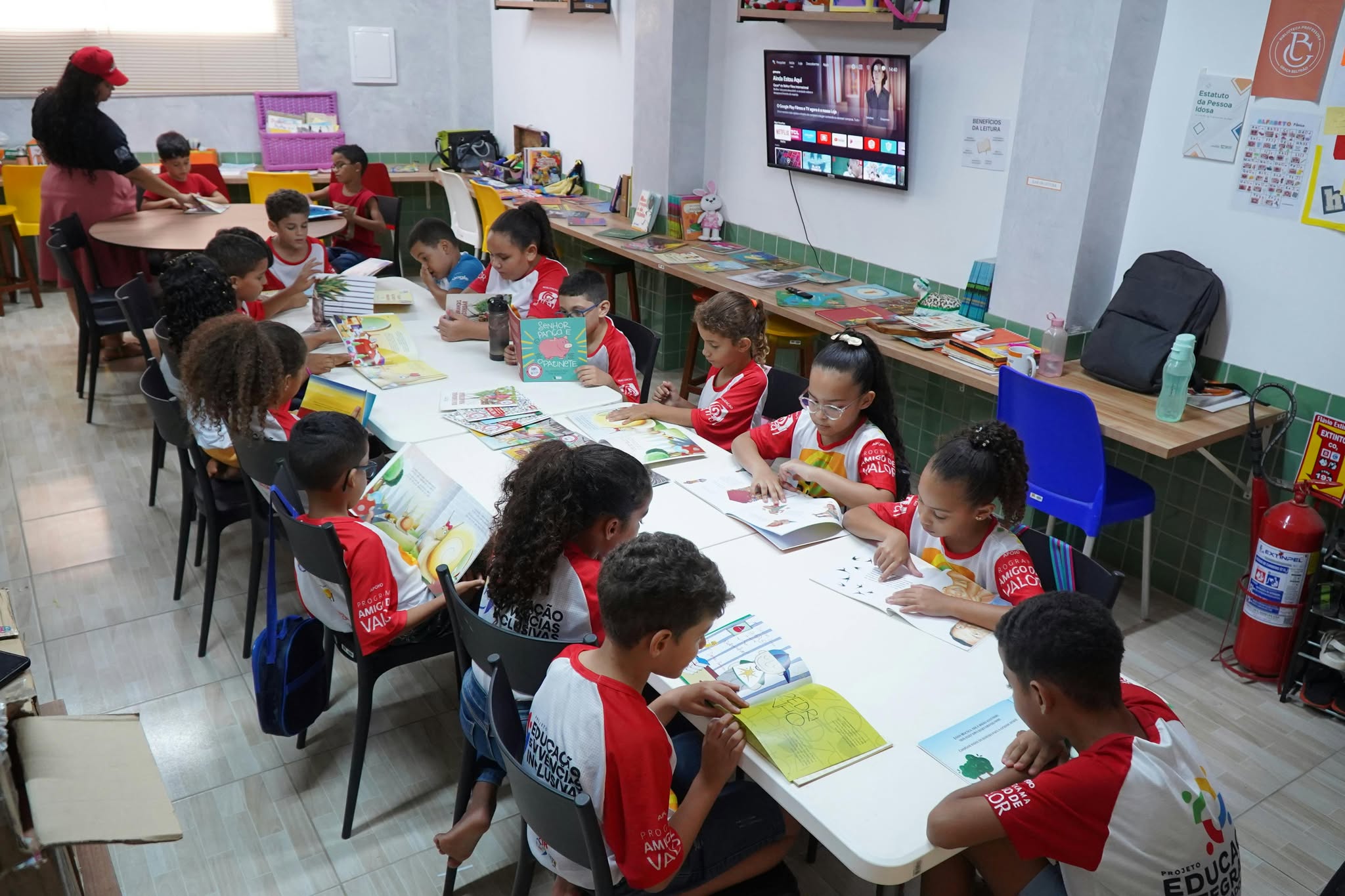
Image of a religious education class in which the teacher presents the “African matrix”

Culturalist and Scientific Religious Education

During class, religious affiliations should not be brought up, either to maintain professionalism for teachers or to avoid discomfort for students. From the perspective of the matrices, the focus moves away from the individual beliefs of the teacher or student. Instead, the focus shifts to broad (imagined) ideal types. Perhaps it is possible to say that, in this approach, religions are viewed not through personal convictions, but as collective national and ethno-racial traditions. This culturalist perspective is also what enables religious education in Brazil to be seen as scientifically grounded. This is indicated in the teacher training sessions:

What supports religious education […] is not faith or belief, but what we know about religions from sociology, history, and geography. Cultural repertoire. Almost everything we work on in religious education is cultural. We work on religious diversity through culture. It’s almost an anthropology of religions.

Another video similarly reinforces the scientific nature of this approach to religious education:

The approach is cultural and not based on assumptions of truth or lies. Faith can’t be discussed, it’s not an object of science, nor could it be. Culture, on the other hand, we can analyze.

Rather than using theological terms, teachers must rely on the frameworks and reasoning of post-metaphysical sciences. This implies that the explanations provided to students should be grounded in social reality, not the supernatural. Teachers should present the study of religion as a cultural phenomenon. Additionally, teachers must adopt a stance of critical awareness, ensuring they do not neglect the essential fact that their explanations must remain within a secular episteme.

Post-Metaphysical Approach, Pre-Metaphysical Object

However, if the approach is secular—in the most strictly Weberian sense of the term—the object of this school subject is far from being so. This can be seen from the following excerpt, taken from one of the continuing education sessions:

Religion is the religious institution, the religious organization, the religious tradition. It was born before you and will last even after you no longer exist. Religiosity is not like that. It is in the subject. It’s how the subject relates to the various forms of religion. This applies even to those who have no religion, even to those who call themselves atheists, skeptics or agnostics. […] Spirituality transcends all this. With spirituality, they don’t need to go to religion, they don’t need to go to church. They create their religiosity from what they connect with, from what is sacred to them.

There is an expectation in these trainings that both teachers and students may have a wide range of religious beliefs and sensibilities. Yet little or no room is made for the possibility that they may not have any religious convictions or aptitudes. According to the excerpt above, even those who self-identify as atheists, skeptics or agnostics would actually have an innate religiosity or spirituality. It may be possible to give up religion, but religiosity would be universal, because “it is in the subject”.

Such idealistic and transcendental statements contrast with a religious education that is culturalist and based on post-metaphysical sciences such as sociology and anthropology. The idea of a universal religiosity is also at odds with a religious education that aims to embrace the diversity of lifestances and worldviews. As secular as this religious education may be, the possibility of there being people without religiosity is not considered.

This blind spot, so to speak, does not simply reveal a conceptual inconsistency; it has broader implications for how diversity is understood and managed within Brazilian public schooling. By presuming that all individuals possess some form of innate religiosity or spirituality, the training sessions end up reinforcing a normative anthropology that marginalizes nonreligious worldviews. This assumption narrows the range of what can be recognized as legitimate diversity and risks reproducing a subtle form of epistemic exclusion, in which students and teachers who do not perceive themselves as religious become unintelligible within the very framework that is meant to include them. Bringing this dynamic to light helps us understand how secular projects may inadvertently reintroduce religious normativity and how policies oriented toward pluralism can, in practice, constrain the set of identities they claim to acknowledge.

To learn more about this topic, see the chapter ‘Religious Education in Brazilian Public Schools: Between Pluralism and Secularism’, forthcoming in The Palgrave Handbook of Religion in Public Education.


Endnotes


[1] All excerpts from the training sessions reproduced here were translated by me from Portuguese into English. 

[2] Negrão, L. N. (2008). Pluralismo e multiplicidades religiosas no Brasil contemporâneo. Sociedade e Estado, 23(2), 261–279. https://doi.org/10.1590/S0102-69922008000200004

[3] Montero, P. (2006). Religião, pluralismo e esfera pública no Brasil. Novos Estudos do Cebrap, 74, 47–66. https://doi.org/10.1590/S0101-33002006000100004

[4] Montero, P., Borges, G., Copetti, A. B., & Armando, S. (2024). Ensino religioso no Brasil e na Argentina: entre confessionalidades e laicidades. Revista USP, 142, 13–32. https://doi.org/10.11606/issn.2316-9036.i142p13-32

[5] Weber, M. (1982). Ensaios de sociologia. LTC Editora.

[6] Weber, M. (1969). Economía y sociedad: Esbozo de sociología comprensiva (Vols. 1–2). Fondo de Cultura Económica.

[7] Pierucci, A. F. (1998). Secularização em Max Weber: da contemporânea serventia de voltarmos a acessar aquele velho sentido. Revista Brasileira de Ciências Sociais, 13(37), 43–73.
Nonbelieving Clergy

Alexandr Zamușinski is a scholar of religion specializing in secularism, nonreligion, and religious change. He holds a PhD from the University of California, Riverside and is currently Instructor at the Defense Language Institute, Monterey, CA. Email: alexandr.zamusinski@dliflc.edu / ORCID https://orcid.org/0009-0006-7807-8811

Keywords: The Clergy Project, nonbelieving clergy, nonreligion, secularism, behaving without believing

When we think about people leaving religion, we usually imagine ordinary believers quietly drifting away from faith. But there’s another group—smaller, quieter, and far more complicated—whose stories are rarely told: religious professionals who have lost their faith yet often continue to serve within their institutions. These are the nonbelieving clergy. Pastors, priests, rabbis, imams, ministers, monks, and nuns—people whose lives and identities are built around religious leadership but who privately no longer believe in God or the supernatural. Studying them might sound like a narrow niche, but in reality, this group offers one of the most revealing windows into how religion and nonreligion intersect.

For more than a decade, The Clergy Project (TCP)—an online support network for current and former religious professionals who no longer believe in supernatural[i]—has quietly provided a safe space for people in this position. Since its founding in 2011, TCP has grown to nearly 1,400 members from over 50 countries. My research draws on more than five years of engagement with TCP members, including interviews, surveys, and analysis of narratives across diverse traditions[ii]. These people once stood at the heart of religious institutions, trained to guide others in faith and ritual. Yet over time, they moved from supernatural belief to a naturalistic worldview. Their stories— often marked by secrecy, doubt, and deep moral struggle—offer rare sociological insight into what happens when belief collapses within the very institutions meant to sustain it.

The Hidden Side of Deconversion

For many people, leaving religion is already difficult. For clergy, it can be an identity earthquake. Their livelihoods, reputations, and social worlds are often tied to the institutions they serve[iii]. When belief collapses, it’s not just a private loss—it can mean losing family, community, income, and belonging all at once. Some clergy leave openly. But many stay, continuing to preach and perform rituals long after faith has faded[iv]. They do so for many reasons—financial stability, fear of rejection, stigma against nonreligion, or simply not wanting to hurt the people they love. Family is often central here. Many choose silence to avoid causing their parents or spouses pain, or making them feel like they failed as believers[v]. For example, Jim, an ex-clergy from Ontario, Canada, stated: “My mother is 80 and would not understand. It would be a tragedy for her. So, I keep it quiet.” Another poignant account comes from Oliver, a current Baptist deacon in South Africa, who remarked: “My exit strategy at this point in time is to continue maintaining my social life and ties to the church until my parents have passed on and my children have all finished High School. I have no intention of putting further strain on my parents, especially my mother whose health is not good. At that stage, after their death, I will make my lack of belief known and allow my children to decide for themselves the path of life they wish to follow.” This tension between authenticity and belonging produces what I call performative religiosity.[vi] It isn’t hypocrisy—it’s empathy and survival. These clergy navigate a world where their professional role demands belief, but their private conscience no longer allows it.

Behaving Without Believing

We often assume that religion is held together primarily by belief. For most members of TCP, that is indeed the case—once belief disappears, so does religious commitment, and they exit. Yet for others, who may wish to leave religion entirely but cannot due to social or material constraints, religion represents something deeper. It is sustained not only by faith, but by relationships. For many nonbelieving clergy, what keeps them within their religious communities is not doctrine but love—family bonds, communal rituals, shared expectations, or economic dependence, coupled with limited prospects for new employment if they were to come out openly. Another common factor is the pervasive anti-atheist stigma and the fear of ostracism[vii].

This is why studying this group can be valuable for scholars of nonreligion. Their experiences blur the neat boundary between “religious” and “nonreligious.” They reveal how people inhabit the gray zones in between—how belonging and behaving can outweigh believing, and how emotional and moral ties can sustain, or even compel, participation long after faith itself has faded. Such behaving without believing offers crucial insight into secularization. It reminds us that the shift toward nonreligion is not merely about the loss of faith, but also about how individuals and communities renegotiate identity, loyalty, and meaning when belief no longer aligns with behavior.

The Emotional Cost of Secrecy and Disclosure

What struck me most in these stories is the profound emotional cost of living a double life. Imagine standing before a congregation each week, preaching words you no longer believe, all while concealing your disbelief to protect your livelihood or shield your loved ones from distress. For many clergy, this state of secrecy becomes a kind of “closet”. The secrecy is exhausting, but often motivated by care. Remaining closeted can be a way of shielding loved ones from distress or confusion—a form of moral sacrifice that places compassion above personal authenticity[viii].

For those who do “come out” as nonbelievers, the costs can be equally severe—sometimes even greater. Coming out often entails the loss of employment, reputation, and community, and in some cases, family. What one experiences as intellectual honesty or existential integrity, others may interpret as betrayal, arrogance, or moral collapse. The aftermath can be devastating: profound loneliness, social exile, and the painful process of rebuilding one’s life from the ground up. Many of my respondents spoke of rejection not only from their congregations but also from close friends and even family members, including spouses and children. Divorce, isolation, and stigma are common outcomes. For those in midlife, the challenge is especially acute. After decades spent in ministry, many find themselves forced to begin again—searching for new communities, and new sources of meaning. The transition can be profoundly disorienting. Individuals who once served as moral authorities and spiritual guides within their congregations suddenly face the loss of that status and identity. Moving from the pulpit to ordinary forms of employment—driving a taxi, working as a substitute teacher, cleaning, or taking shifts in a supermarket—represents not only a practical adjustment but also an existential one. For many, it feels like a collapse of the very framework through which they once understood their purpose and self-worth. The contrast between who they were and who they have become often brings a deep sense of grief, humility, and alienation. For many, networks like TCP become lifelines—a place to find understanding and support amid upheaval.

Of course, it is essential not to overgeneralize from the example of clergy. They represent a distinctive and highly visible segment of the broader population of nonbelievers. Their experiences of deconversion and disclosure differ markedly from those of lay individuals. Even among clergy, the trajectories of loss and adaptation vary widely. Some choose public transparency—publishing memoirs, giving interviews, or engaging in activism—while others remain silent, disclosing their nonbelief only to a few trusted confidants.

The Clergy Project offers a rare glimpse into this hidden world. It reminds researchers that behind the public face of religion are private, untold stories that complicate our assumptions about faith, doubt, and belonging[ix]. These clergy are not villains or hypocrites. They are people caught in a web of obligations and compassion, trying to balance authenticity with care. Their stories illuminate the emotional, relational, and moral dimensions of deconversion that statistics alone can’t capture. By listening to them, we gain a fuller picture of what it means to move from belief to nonbelief—not as a sudden break, but as a deeply human journey through the spaces in between.

Endnotes


[i] Upon joining TCP, during the application process on the web-site and during the entrance interview, all members are required to declare that they no longer believe in the supernatural.  For example, they must check the box under the statement: “I consider myself to be a non-theist who does not believe in a supernatural dimension. Specifically, I do not believe in an order of existence that is beyond the visible observable universe appearing to transcend the laws of nature, a mystical dimension, an afterlife, or a god.” – See section “Becoming a TCP Participant” – https://clergyproject.org/nonbelieving-clergy-join/.

[ii] Zamușinski, Alexandr. 2025a. “Understanding the Role of the Clergy Project: Misconceptions and Realities of a Support Network for Nonbelieving Clergy”, Secularism and Nonreligion, 14(1), p. 1-14. https://doi.org/10.5334/snr.211.

[iii] Dennett, Daniel, and Linda LaScola. 2013. Caught in the Pulpit: Leaving Belief Behind. Durham: Pitchstone Publishing.

[iv] Zamușinski, Alexandr. 2025c. “Hidden Apostasy: What Prevents Nonbelieving Clergy from Disclosing Their Lack of Faith?” Journal of Contemporary Religion. 40(3) (pages TBD), October 2025. https://doi.org/10.1080/13537903.2025.2580133

[v] Ibid.

[vi] Ibid.

[vii] Zamușinski, Alexandr. 2025b. “How Anti-Atheist Prejudice Keeps Non-Believing Clergy Silent: The Clergy Project Participants Share Their Pain”. The Journal of Religion and Culture. Vol. 30 p. 5-34. https://www.jrc-concordia.ca/wp-content/uploads/2025/05/Article1_ZamusinskiAlex_JRCVol30_2025.pdf

See also Abbott, Dena, and Debra Mollen. 2018. “Atheism as a Concealable Stigmatized Identity: Outness, Anticipated Stigma, and Well-Being.” The Counseling Psychologist 46 (6): 685-707.

Frost, Jacqui, Christopher Scheitle, and Elaine Howard Ecklund. 2023. “Patterns of Perceived Hostility and Identity Concealment Among Self-Identified Atheists.” Social Forces 101 (3): 1580–1605.

[viii] Zamușinski, 2025c. See also Gull, B. (2021). ‘We Are the Women Our Parents Warned Us Against’: Identity Reconstruction and the Re-imagining of Gender After High-Cost Religious Disaffiliation. Symbolic Interaction 45 (1): 97-122.

[ix] See also Fader, Ayala. 2020. Hidden Heretics: Jewish Doubt in the Digital Age. Princeton: Princeton University Press.

Brewster, Melanie. 2014. Atheists in America. New York Chichester: Columbia University Press.

Brooks, Marshall. 2018. Disenchanted Lives: Apostasy and Ex-Mormonism Among the Latter-day Saints. New Brunswick: Rutgers University Press.

Cottee, Simon. 2015. The Apostates: When Muslims Leave Islam. London: C. Hurst & Co.