CFP: Unchurched Religion in Central and Eastern Europe

The Journal for Religion and Society in Central and Eastern Europe (RASCEE) invites the submission of original research articles dealing with the topic of Unchurched Religion in Central and Eastern Europe.

There is an ongoing debate in sociology of religion whether new forms of religious beliefs supplement or substitute conventional forms of religiosity or not. Most of the evidence for the proliferation of alternative beliefs stems from Western countries. Although some important contributions about unchurched religion in Central and Eastern Europe (CEE) exist, more research is needed about the emergence and proliferation of alternative beliefs.

Continue reading

CFP: The European Conference on Ethics, Religion and Philosophy 2015

The European Conference on Ethics, Religion and Philosophy 2015

Thistle Brighton, Brighton, East Sussex, United Kingdom

Monday, July 6, 2015 – Wednesday, July 8, 2015 (All Day)

Abstract Submission Deadline: March 1, 2015 

Registration Deadline for Presenters: June 1, 2015

Abstract Submission Process: In order to present at the conference, your abstract must first pass a double blind peer review. Upon payment of registration fees, your presentation will be confirmed.

  • Results of abstract reviews returned to authors: Usually within two weeks of submission
  • Full paper submission: August 1, 2015

How to Submit


Ways to Present

Individual Presenter (30 minutes)The standard format for presentation — oral presentations are thirty minutes in length.Poster Presenter (90 minutes)Posters allow presenters to reach a large audience and engage interested participants directly. These sessions give participants a chance to network with other delegates who may be interested in similar research or other disciplines.Virtual Presenter. Some presenters will be unable to make the trip to the UK to present their paper, mainly due to financial and/or political restrictions on travel. Virtual presentations allow authors the same publication opportunities as regular presenters.

  • We do not allow presentations by video-conferencing but presenters have the opportunity to submit a video of their presentation, which will be placed on the official YouTube channel. Information on how to do this will be sent following registration.
  • Following the conference you will be mailed a conference pack, including a printed receipt of payment, certificate of participation, and a printed copy of the conference programme.

Workshop (60 to 90 minutes) A workshop is a brief intensive course lasting 60 to 90 minutes led by an experienced practitioner, usually someone with a PhD. It emphasises group interaction and the exchange of information usually amongst a smaller number of participants than at a plenary session.Often a workshop involves problem solving, skills training, or the dissemination of new content or disciplinary approaches. Conference workshops are typically more instructional and interactive in nature than oral presentations and involve participants working with the workshop leader on a particular topical issue.Panel (90 minutes) As the organiser of a proposed panel, submit a proposal for the panel through the online system.

  • Panels must have at least four participants (including the chair).
  • All the panel participants must be listed in the submission, with the chair leader as the primary author, and the other presenters as co-authors.
  • If your proposal is accepted you will be invited to register for the conference. Please ensure that you send the submission reference number to the other members of your panel and have them register in a timely fashion. Upon payment of the registration fee of all participants, your panel will be scheduled in the conference programme.
  • If you, as the panel chair, wish to publish a joint paper associated with the panel in the conference proceedings, please upload one through the online system.
  • If you and your panel members wish to publish separate papers, they may register individually and submit their proposals for review.

Conference Theme and Streams

Conference Theme: “Power

The conference theme is “Power” and the organizers encourage submissions that approach this theme from a variety of perspectives. However, the submission of other topics for consideration is welcome and we also encourage sessions within and across a variety of disciplines and fields related to Ethics, Religion and Philosophy, including the following streams:

Philosophy:

  • Philosophy and Religion
  • Philosophy and the Arts
  • Philosophy and Public Policy
  • Philosophy and Technology
  • Philosophy and Culture
  • Philosophy and Education
  • Philosophy and Peace Studies
  • Comparative Philosophy
  • Linguistics, Language and Philosophy

Ethics:

  • Medical Ethics
  • Business and Management Ethics
  • Ethics in Education
  • Ethics, Law, and Justice
  • Ethics and Globalization
  • Ethics and Science
  • Comparative Ethics
  • Linguistics, Language and Ethics

Religion:

  • Theism and Atheism
  • Feminism and Religious Traditions
  • Religion and Education
  • Religion and Peace Studies
  • Mysticism, Faith, and Scientific Culture
  • Interfaith Dialogue
  • Comparative Religion
  • Linguistics, Language and Religion

Interdisciplinary:

  • Conflict Resolution and Mediation Studies

For further information – please see the ECERP2015: Call For Papers website.

The Archives at Conway Hall

Liz Lutgendorff, Phd student at Oxford Brookes and Chair of Conway Hall Ethical Society, has provided the NSRN with an informative overview of the archive facilities offered by Conway Hall in London which may be helpful to researchers of secularism and nonreligion.

As part of my research into the history of atheism and secularism in the UK, I’ve become involved with Conway Hall Ethical Society (CHES) and I am currently the chair of Trustees. CHES may be better known to some as the South Place Ethical Society or South Place Chapel. It started as a radical Unitarian church in the eighteenth century and gradually evolved into a secular, ethical society in the late nineteenth century. It is now the only Ethical Society remaining in the UK and only one of two freethought and secular organisations in the UK with a hall purposely built for the promotion of ethical, secular, or humanist principles in the UK (the other being Leicester Secular Hall). Continue reading

CFP: Atheism: Psychological Perspectives – Secularism & Nonreligion Journal Symposia

The journal Secularism & Nonreligion is planning to propose a symposium of 3-4 individual papers for the upcoming 2015 International Association for the Psychology of Religion (IAPR) World Congress. We invite you to submit proposals falling under the broad theme of psychological perspectives on atheism for consideration as part of the proposed symposia. Some topics and perspectives include, but are not limited to: cognitive science, qualitative/quantitative methods, psychological-anthropology, phenomenology, ethnography, cultural psychology, and philosophy of science. We are particularly interested in papers covering atheism outside of the Western context. Continue reading

CFP: Old religion and new spirituality: continuity and changes in the background of secularization

Research group of religious studies of the Centre of Excellence in Cultural Theory (Estonia) announces a call for papers for its conference:

Old religion and new spirituality: continuity and changes in the background of secularization

University of Tartu, Estonia

26-29 May 2015

Estonia is an extremely secularized European country, characterized by the diminishing institutionalization of religion (de-institutionalization) and the decline of the Christian practices and beliefs (de-Christianization). In order to investigate the historical roots of the situation and clarify the characteristics of the current picture, the research project about religiosity in Estonia was started in 2011. The staff of the project welcomes the researchers dealing with the religious situation in various regions and countries of Europe in order to make comparisons of certain features of the changing religious landscape. Papers that address contemporary developments or provide a historical perspective will be accepted.

Particularly interesting aspects may include:

– historical process of secularization, its specific features in different countries;

– combinations of religion and nationalism, effects of nationalism on public religion;

– changes in the traditional religious groups and churches in 21st century;

– atheism and nonreligion, their organized and individual manifestations;

– new spirituality, “New Age” and individual religiousness, mixed forms of organized and individual religion.

Invited speakers include: Stephen Bullivant (St Mary’s University, Twickenham), Abby Day (University of Kent), Paul Heelas (Erasmus University Rotterdam), Detlef Pollack (University of Münster).

The language of the conference is English. The length of papers: 20 minutes. A conference fee €80 will be applied for meals and materials, the participants are expected to pay for their travel and accommodation. The organizers plan to publish a selection of papers.

Please send abstracts of papers of 250-300 words to the conference e-mail: orns@ut.ee before 01.01.2015.

Pre-arranged panels are to be considered as well.

Notification of acceptance and opening of the registration: 01.02.2015.

For further inquiries you may also contact Riho Altnurme: riho.altnurme@ut.ee

Constantly updated information about the conference can be found at: http://orns.ut.ee/

Event: American Academy of Religion Annual Meeting

American Academy of Religion Annual Meeting

22-25 November 2014

San Diego, CA, USA

The American Academy of Religion brings thousands of professors and students, authors and publishers, religious leaders and interested laypersons to its Annual Meeting each year. Co-hosted with the Society of Biblical Literature, the Annual Meetings are the largest events of the year in the fields of religious studies and theology. More than 1,000 events—academic sessions, additional meetings, receptions, tours, and workshops—will be offered.

Most sessions will take place at the San Diego Convention Center located at 111 W Harbor Drive, San Diego, CA 92101. Conference hotels are located within easy walking distance of the Convention Center. San Diego is just 120 miles south of Claremont, CA, where the 2014 NSRN Conference takes place 19-20 November. Several NSRN presenters and attendees will also be present at the AAR Annual Meeting.

Event: World Religions Conference

34th World Religions Conference

28 September 2014

River Run Centre, Guelph, Ontario, Canada

The World Religions Conference (WRC) is a multi-faith event which brings together well-known scholars from the world’s major religions and philosophical traditions (including Aboriginal Spirituality, Hinduism, Buddhism, Judaism, Christianity, Islam, Sikhism, and Humanism/Atheism) to speak on a common topic from the point of view of their respective religious traditions. While this is not an academic conference or a call for academic papers, this event may be of interest to those working in nonreligion and secularityContinue reading

CFP: Sociology of Religion Study Group (Socrel) Annual Conference 2015

Sociology of Religion: Foundations and Futures

Sociology of Religion Study Group (Socrel) Annual Conference www.socrel.org.uk

Date of Conference: Tuesday 7 – Thursday 9 July 2015 hosted by Kingston University London High Leigh Conference Centre, Hoddesdon, Hertfordshire, UK http://www.cct.org.uk/high-leigh/introduction 

Deadline for abstracts and panel proposals: December 1, 2014.

Keynote Speakers:

Professor Nancy T. Ammerman (Boston University)

Professor James Beckford (University of Warwick)

Professor Grace Davie (University of Exeter)

Professor David Martin (London School of Economics)

Professor Linda Woodhead (Lancaster University)

Since its foundation in 1975, the Sociology of Religion Study Group has become one of the largest in the British Sociological Association (BSA). Its membership includes educators and researchers from across the UK and internationally, and in 2015 the Sociology of Religion Study Group will be celebrating 40 years!

Given this occasion, it is an opportune moment to reflect on religion in society, and religion in sociology. From its foundation, Socrel has foregrounded research on secularisation, gender, spiritualities, embodied and lived accounts, materiality, generational innovations, atheism, social difference, migration, institutions, politicised expressions and methodologies in the study of religion. While this list does not account for all the many ways scholars have been investigating religion in social life – its various forms, intersections and spaces – it does speak to how religions continue to be important subjective and collective experiences that are stable and continuous, resistant and shifting. This conference will bring together scholars who have shaped and are shaping the discipline. It will be an opportunity to pay heed, not only to the Study Group’s and discipline’s accomplishments, but also an opportunity to address questions that still need answering, and questions that are emerging to inform future agendas and areas of concern and study, such as:
 
– What are the key points of continuity and innovation in theorising religion? 
– How are methodologies emerging and informing research on religion? 
– How are new approaches adapting and transforming old practices? 
– What are the key controversies that will occupy sociologists of religion? 
– What are the pedagogical challenges and innovations in teaching the sociology of religion? 

We invite you to celebrate with us by engaging in the conference questions from your particular area of research in the Sociology of Religion. 

Abstracts for individual papers (250 words max.) and panel proposals (500 words max.) are invited by 1 December 2014. Panels may take a standard 20-minute paper format or take alternative modes such as pre-circulated papers/work in progress/or ‘points of view’ that are 10-minutes long. Submissions should be made in Word format and include in the following order: Name, institutional affiliation, email address and paper title.

**All presenters must be members of Socrel.
Abstracts will be subject to peer review. Please note, presenters will be limited to one paper per person at the conference, but you may also organise a panel. 

-Abstract submissions open: 1 September 2014 -Early bird registration opens: 1 September 2014 -Abstract submissions close: 1 December 2014 -Decision notification: 15 January 2015 -Presenter registration closes: 16 March 2015 -Draft programme online: 16 April 2015 -Early bird registration closes:  11 May 2015 -Registration closes: 15 June 2015 

Please send abstracts to the attention of the conference organisers:
Dr Sylvie Collins-Mayo (Kingston University London) and Dr Sonya Sharma (Kingston University London) at: socrel2015@gmail.com  

Should you have other questions about the conference please also contact the conference organisers at the above email address.

Online Registration: http://portal.britsoc.co.uk/public/event/eventBooking.aspx?id=EVT10391 

A limited number of bursaries are available to support postgraduate, early career, low income or unwaged Socrel members to present at the conference. Please visit www.socrel.org.uk for instructions, and to download an application form, and submit your bursary application along with your abstract by 1 December 2014.

Socrel is the British Sociological Association’s study group on Religion. For more details about the study group and conference please visit www.socrel.org.uk.

CFP: Religion and Realism

The American University of Rome are pleased to announce a CALL FOR PAPERS for an International Conference on RELIGION AND REALISM

Date of the conference: November 28, 2014

Deadline for paper proposals: September 1, 2014

Rome, The American University of Rome.

Religion remains one of the most significant social forces and cultural constituencies. It can be said that religion and religious truths are becoming increasingly important in the so called “post-secular” times, when the sphere of the (secular) social/political and the sphere of the religious have to be re-thought again. The relevancy of religious truths and the way they structure our understanding of “reality” overcomes the sphere of theology and particular religious practices. Religion, truth, and reality, and the way these concepts are approached and understood, continue to be vital for a broader cultural discourse as well, from philosophy and science, to politics, mass media and show business.

“Realism,” on the other hand, is usually understood as a position and method, which is opposite to “idealism” and the “imaginary.” “Realism” implies a certain way of approaching the reality and truth. Looking from a positivistic perspective, many would find it difficult to associate concepts of “realism” or “truth” with phenomena such as religion. However, the experience of the post-modern times has taught us that relations between the “reality,” “truth,” “knowledge” and “interpretation” are far more complex, and that even the purest “fiction” is sometimes capable of being more effective (and therefore more “real”) in influencing our lives and in structuring the world in which we live, than most of the things that are directly exposed to our sensuous experience and rational reflection. On the other hand, we have also learned from the experience of modernity that certain metaphysical narratives, and their claims for “absolute truth” and “absolute reality,” could be very dangerous in their practical, social and political manifestations.

The conference seeks to explore philosophical, social, political, and theological dimensions of religion and realism. The themes and subjects for paper proposals include (but are not limited to) the following:

  • Secularism, post-secularism, new religiosity
  • Religion and reality
  • Religion and truth
  • Religion and subversion
  • Religion and political reality
  • Religion and economic “realisms”
  • Absolute “truths” and social/political freedom
  • Ultimate truth: tyranny or liberation?
  • Realism as epistemology
  • Realism – the political dimension
  • Realism – the aesthetic dimension
  • Realism – the religious/theological
  • Realism and the “New Realism”
  • Understanding metaphysical, physical and social “reality”
  • Reality and creativity
  • Reality and religion: the need for interpretation or for a social change?
  • Power, reality and knowledge

Submitting proposals: English will be the working language of the conference. Paper proposals (abstracts) should contain no more than 250 words.

There will be no conference fee for speakers. All presented papers will be published in the conference proceedings.

Abstracts, together with a short CV (not to exceed 1800 characters) should be sent no later than September 1, 2014 to: religionrealism@gmail.com


Registration Now Open for NSRN 2014 Conference

Registration is now open for the NSRN 3rd International Conference

19-20 November 2014, Pitzer College, Claremont, CA

“Explaining Nonreligion and Secularity in the U.S. and Beyond”

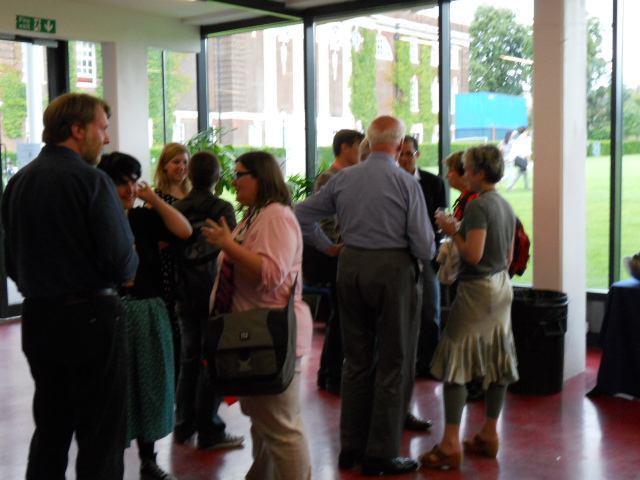
Delegates mingling at the NSRN 2012 Conference in London.

Delegates mingling at the NSRN 2012 Conference in London.

See the conference page for further details and registration form.

We hope to see many of you there!