
The journal Secularism & Nonreligion is planning to propose a symposium of 3-4 individual papers for the upcoming 2015 International Association for the Psychology of Religion (IAPR) World Congress. We invite you to submit proposals falling under the broad theme of psychological perspectives on atheism for consideration as part of the proposed symposia. Some topics and perspectives include, but are not limited to: cognitive science, qualitative/quantitative methods, psychological-anthropology, phenomenology, ethnography, cultural psychology, and philosophy of science. We are particularly interested in papers covering atheism outside of the Western context. Continue reading
Call For Papers
CFP: Sociology of Religion Study Group (Socrel) Annual Conference 2015
Sociology of Religion: Foundations and Futures
Sociology of Religion Study Group (Socrel) Annual Conference www.socrel.org.uk
Date of Conference: Tuesday 7 – Thursday 9 July 2015 hosted by Kingston University London High Leigh Conference Centre, Hoddesdon, Hertfordshire, UK http://www.cct.org.uk/high-leigh/introduction
Deadline for abstracts and panel proposals: December 1, 2014.
Keynote Speakers:
Professor Nancy T. Ammerman (Boston University)
Professor James Beckford (University of Warwick)
Professor Grace Davie (University of Exeter)
Professor David Martin (London School of Economics)
Professor Linda Woodhead (Lancaster University)
Since its foundation in 1975, the Sociology of Religion Study Group has become one of the largest in the British Sociological Association (BSA). Its membership includes educators and researchers from across the UK and internationally, and in 2015 the Sociology of Religion Study Group will be celebrating 40 years!
Given this occasion, it is an opportune moment to reflect on religion in society, and religion in sociology. From its foundation, Socrel has foregrounded research on secularisation, gender, spiritualities, embodied and lived accounts, materiality, generational innovations, atheism, social difference, migration, institutions, politicised expressions and methodologies in the study of religion. While this list does not account for all the many ways scholars have been investigating religion in social life – its various forms, intersections and spaces – it does speak to how religions continue to be important subjective and collective experiences that are stable and continuous, resistant and shifting. This conference will bring together scholars who have shaped and are shaping the discipline. It will be an opportunity to pay heed, not only to the Study Group’s and discipline’s accomplishments, but also an opportunity to address questions that still need answering, and questions that are emerging to inform future agendas and areas of concern and study, such as:
– What are the key points of continuity and innovation in theorising religion?
– How are methodologies emerging and informing research on religion?
– How are new approaches adapting and transforming old practices?
– What are the key controversies that will occupy sociologists of religion?
– What are the pedagogical challenges and innovations in teaching the sociology of religion?
We invite you to celebrate with us by engaging in the conference questions from your particular area of research in the Sociology of Religion.
Abstracts for individual papers (250 words max.) and panel proposals (500 words max.) are invited by 1 December 2014. Panels may take a standard 20-minute paper format or take alternative modes such as pre-circulated papers/work in progress/or ‘points of view’ that are 10-minutes long. Submissions should be made in Word format and include in the following order: Name, institutional affiliation, email address and paper title.
**All presenters must be members of Socrel.
Abstracts will be subject to peer review. Please note, presenters will be limited to one paper per person at the conference, but you may also organise a panel.
-Abstract submissions open: 1 September 2014 -Early bird registration opens: 1 September 2014 -Abstract submissions close: 1 December 2014 -Decision notification: 15 January 2015 -Presenter registration closes: 16 March 2015 -Draft programme online: 16 April 2015 -Early bird registration closes: 11 May 2015 -Registration closes: 15 June 2015
Please send abstracts to the attention of the conference organisers:
Dr Sylvie Collins-Mayo (Kingston University London) and Dr Sonya Sharma (Kingston University London) at: socrel2015@gmail.com
Should you have other questions about the conference please also contact the conference organisers at the above email address.
Online Registration: http://portal.britsoc.co.uk/public/event/eventBooking.aspx?id=EVT10391
A limited number of bursaries are available to support postgraduate, early career, low income or unwaged Socrel members to present at the conference. Please visit www.socrel.org.uk for instructions, and to download an application form, and submit your bursary application along with your abstract by 1 December 2014.
Socrel is the British Sociological Association’s study group on Religion. For more details about the study group and conference please visit www.socrel.org.uk.
CFP: Religion and Realism
Date of the conference: November 28, 2014
Deadline for paper proposals: September 1, 2014
Rome, The American University of Rome.
Religion remains one of the most significant social forces and cultural constituencies. It can be said that religion and religious truths are becoming increasingly important in the so called “post-secular” times, when the sphere of the (secular) social/political and the sphere of the religious have to be re-thought again. The relevancy of religious truths and the way they structure our understanding of “reality” overcomes the sphere of theology and particular religious practices. Religion, truth, and reality, and the way these concepts are approached and understood, continue to be vital for a broader cultural discourse as well, from philosophy and science, to politics, mass media and show business.
“Realism,” on the other hand, is usually understood as a position and method, which is opposite to “idealism” and the “imaginary.” “Realism” implies a certain way of approaching the reality and truth. Looking from a positivistic perspective, many would find it difficult to associate concepts of “realism” or “truth” with phenomena such as religion. However, the experience of the post-modern times has taught us that relations between the “reality,” “truth,” “knowledge” and “interpretation” are far more complex, and that even the purest “fiction” is sometimes capable of being more effective (and therefore more “real”) in influencing our lives and in structuring the world in which we live, than most of the things that are directly exposed to our sensuous experience and rational reflection. On the other hand, we have also learned from the experience of modernity that certain metaphysical narratives, and their claims for “absolute truth” and “absolute reality,” could be very dangerous in their practical, social and political manifestations.
The conference seeks to explore philosophical, social, political, and theological dimensions of religion and realism. The themes and subjects for paper proposals include (but are not limited to) the following:
- Secularism, post-secularism, new religiosity
- Religion and reality
- Religion and truth
- Religion and subversion
- Religion and political reality
- Religion and economic “realisms”
- Absolute “truths” and social/political freedom
- Ultimate truth: tyranny or liberation?
- Realism as epistemology
- Realism – the political dimension
- Realism – the aesthetic dimension
- Realism – the religious/theological
- Realism and the “New Realism”
- Understanding metaphysical, physical and social “reality”
- Reality and creativity
- Reality and religion: the need for interpretation or for a social change?
- Power, reality and knowledge
Submitting proposals: English will be the working language of the conference. Paper proposals (abstracts) should contain no more than 250 words.
There will be no conference fee for speakers. All presented papers will be published in the conference proceedings.
Abstracts, together with a short CV (not to exceed 1800 characters) should be sent no later than September 1, 2014 to: religionrealism@gmail.com
Call for Papers: Atheism, Secularism, and Science
Announcing CFP: Atheism, Secularity, and Science, a special journal issue in Science, Religion & Culture
.
Guest edited by: John R. Shook Ph.D., Ralph W. Ho od Jr.
Ph.D., and Thomas J. Coleman III.
Over the past 10 years research and scholarship on secularity in general, and atheism in particular, has increased significantly. Moreover, these phenomena have been researched, studied and documented by multiple
disciplines ranging from cognitive science to religious studies, and from anthropology to sociology. The study of atheism and secularity is of high interest to not only scholars, but also the public in general.
Atheism and secularity are often seen as two constructs that are intimately related with a third, that of ‘science’. Where one finds the scientific method, positivist epistemology and naturalism in general, one typically finds atheism and secularism. Continue reading
CFP: BASR Annual Conference
British Association for the Study of Religion annual conference
3-5 September 2014
The Open University, UK
http://www.basr.ac.uk/conference.htm
BASR’s 2014 conference has two themes: “religion, art and performance” and “the cutting edge”. Both can be interpreted broadly. Panels and papers are invited. Continue reading
CFP: Religion and Spirituality in Society
Fifth International Conference on Religion and Spirituality in Society
16-17 April 2015
University of California at Berkeley
Berkeley, California, USA
http://religioninsociety.com/the-conference/call-for-papers
SPECIAL CONFERENCE FOCUS: Social Movements and Faith
Religious commitments are, as often as not, social commitments. In addition to its usual range of themes, this year’s special focus of the Religion and Society knowledge community is the relation of religion to social movements, ranging from movements for nominally “progressive” or “liberal” social change, to “fundamentalisms” whose religious practices are often explicitly or implicitly social and political. The conference will ask the questions: under what conditions and to what extent are religious communities socially activist, either in their doctrine or their practices? How do religious communities, support or align with other social movements?
The 2015 meeting will feature a special focus on this provocative subject. We welcome open debate, discourse and research from participants that center on this special topic, as well as any other themes or issues relevant to religion and spirituality in society. Continue reading
CFP: European Conference on Ethics, Religion & Philosophy 2014
The European Conference on Ethics, Religion & Philosophy
24-27 July 2014
Thistle Hotel Brighton, UK
http://iafor.org/iafor/ecerp2014-call-for-papers/
2014 Conference Theme: “Individual, Community & Society: Conflict, Resolution & Synergy”
Conflict is an integral part of the human condition. The universal struggle between our personal selves—who we are as unique, separate and different from others, with our specific blend of experiences, abilities, attitudes, aspirations, needs and wants—and our social selves, intricately connected to, and interdependent on, others—our loved ones, our friends and favoured groups, our communities and cultures—leads inevitably to internal as well as interpersonal conflict.
Conflict among our communities and societies is also natural, given that these groups are founded on commonality—of geography, values, attitudes, beliefs, aspirations—and differentiated from others based on these. Diversity, however, though it may lead to conflict, plays an important role in the flourishing of communities and societies. One of the challenges of modern society is harnessing the synergy that emerges from the interaction of these differences.
Abstracts of no more than 250 words should be submitted by the extended deadline of June 1, 2014.
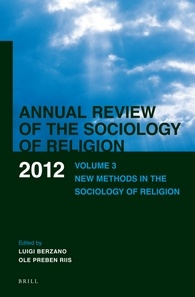
Call for Papers: Annual Review of the Sociology of Religion – “Atheism”
Proposal for a special issue of the Annual Review of the Sociology of Religion, edited by Franco Garelli and Roberto Cipriani, on atheism (cut-off date for delivery of papers, 30th June 2015; forthcoming 2016)
 In the spring of 1969 an International Symposium on the Culture of Unbelief was held in Rome, organized by the Vatican Secretariat for Unbelievers, with the participation of illustrious sociologists like Parsons, Berger and Luckmann: see R. Caporale, A. Grumelli (eds.), The Culture of Unbelief, University of California Press, 1971 (published in Italian as Religione e ateismo nelle società secolarizzate, Mulino, 1972). This pioneering experience sought to understand the evolution of the secularization then taking place. Later, the topics of religious non-belonging, indifference, agnosticism, ceased to attract the specific attention of sociologists, who began taking a greater interest in pluralism, globalization, multiple modernity and intercultural phenomena. But for some years now the issue of non-religious attitudes and behaviour has come to the fore again. The Sociology of Religion review devoted most of one of its recent issues (Winter 2013, with two essays by Stephen LeDrew and one by Jesse M. Smith) to the phenomenon of atheism. The Journal for the Scientific Study of Religion (March 2013) also showed an interest in unbelief by publishing essays by Jesse M. Smith (Godless Community), Eran Shor and David J. Roelfs (Nonreligious Participation). Previously the Journal of Contemporary Religion had devoted a special issue (January 2012) to the topic of “Non Religion and Secularity”.
The time seems to have come for sociology to take stock of the situation, not merely in partial or territorial terms, but in a much broader sense, in order to obtain a better understanding of the dynamics presently at play in this area. Among other things, it is significant that, in the meantime, a neologism, previously unknown to the literature of sociology has been coined: Nones, those who deny, do not believe, do not belong, do not participate, do not pray, do not refer at all to values of a religious nature.
However, adequate statistical references and specific research devoted entirely to the issue of unbelief are lacking. Without claiming to present a comprehensive picture of the situation at world level, nevertheless, the intention underscoring this proposal is that of trying to provide as varied an analytical perspective as possible, one capable of acting, maybe, as a new starting point for a future sociology of non-religion.
Possible topics include:
- Irreligion
- Religious nones
- Agnosticism
- Non religious education
- Non religious participation
- Non religion
- Non religion in Britain
- Atheism in India
- Non religion in USA
- Religious indifference
- Atheism and religion in Eastern and Western Countries
- World statistics of religion and irreligion
- Atheism and islam in Eastern and Western Countries
- Atheism and Orthodox Churches
- American atheists
- Teaching atheism
- Paganism
- Religion and Non Religion
- Religion and Secularism
- New Atheism and Non Religion
- Atheism in International Social Survey Program
Please send all proposals (300 words) to Roberto Cipriani: rciprian@uniroma3.it
Deadlines:
- Submission of proposals: June 30, 2014
- Notification of acceptance: September 30, 2014
- Completed manuscripts (7000 words): June 30, 2015
Call for Papers for NSRN 2014 Conference
 The call for papers is now live for our 2014 conference on ‘Explaining Nonreligion and Secularity in the US and Beyond’ to be held 19-20 November 2014 at Pitzer College, Claremont,CA.
Full details can be found here: http://nsrn.net/2014-conference/
Please circulate widely. Thanks!

CFP: Religion, Secularity, and the Public Sphere in East and Southeast Asia
Date: 07 Mar 2013 – 08 Mar 2013
Venue: Asia Research Institute Seminar Room
469A Tower Block, Level 10, Bukit Timah Road
National University of Singapore
Description:
Co-organised by the Asia Research Institute, NUS and the University of Tokyo Center for Philosophy Contemporary Philosophy in the Age of Globalization, Japan
The ongoing debate about the secular public sphere reaches to the core of the issue of the foundation of modern political power. Scholars upholding liberal democracy insist on a normative, privatized definition of religion in their efforts to sustain the secular, rational public sphere. Critiques of this approach call into question the viability of the distinction between the religious and the secular, and argue the public sphere, far from a free space for rational political discussions, is the very terrain where the public power of the state is deployed to ensure the proper formation of its national-citizens by shaping what they believe as truth. This debate reflects a primary concern with religion and the state as manifested in European and North American context. This conference is an attempt to engage the conversations on religion, secularity and the public sphere from the specific sites of East and Southeast Asia. The goals are to problematize social-political conditions and generate new ways to understand state-society relations in these regions.
Two anchoring points ground the more specific discussions of each paper. First, the “religious” and the “secular” are categories of performativity that have been instrumental in constructing distinctions of the private and public, belief and reason, distinctions central for the operation of the power of modern nation-state. We seek to examine these performativity moves of the categories of the religious and the secular through specific case studies of East and Southeast Asia. Second, the secular public sphere will be rethought. It operates upon the premise of exclusion of what is defined as religion. Questioning the “secular” nature of the public sphere requires interrogations into such notions as public good, citizenship, minority, ethnicity, freedom, and fundamentally the relation of the individual with the public authority of the state. Instead of the liberal democratic public sphere, we propose the possibility of envisioning an alternative one that is unbound, inclusive, and embodied. The conference seeks in the past and present of East and Southeast Asia alternative conceptions and practices of that which can be called a public realm.
We pursue these issues while addressing specific questions of:
- In what ways are ongoing discussions on religion, secularity and the public sphere relevant to E/SE Asia?
- How were these ideas shared, borrowed, understood and experienced in this part of the world?
- How were/are the pre-modern or indigenous conceptions, such as gōnggòng/kōkyō 公共 (public) or maslaha (public good), transformed in modern nation-state building?
- How did the diverse populations of Buddhists, Muslims, Christians and adherents of other religions in Asia pursue “public good”?
- How did the definition of religion relate to constructions of nation-states and of modern scientific knowledge in Asia?
- How did the secular become constitutive of modes of representations of the state in the diverse Asian contexts?
- How were/are the principles of religion-state separation and religious freedom legally and politically instituted and practiced? What tensions and problems were generated in the process?
- How and in what sense do the religious revivals in Asia challenge the very ideas of the public sphere and the nation-state, and why?
Papers from any field in the humanities or social sciences are welcome. We are particularly interested in theoretically informed empirical study of cases, issues and events pertaining to the conference themes.
Successful applicants will be notified by January, 2013 and will be required to send a draft paper (5,000-7,000 words) by February 15, 2013. Travel and accommodation support is available from the Asia Research Institute, depending on need and availability of funds.
CONTACT DETAILS
Workshop Convenors:
Dr. Yijiang Zhong
Asia Research Institute, National University of Singapore
Email: arizyj@nus.edu.sg
Assoc. Prof. Yongjia Liang
Asia Research Institute, National University of Singapore
Email: arilyj@nus.edu.sg
Secretariat:
Mr Jonathan Lee
Asia Research Institute, National University of Singapore
Email: jonathan.lee@nus.edu.sg
Contact Person: Mr LEE Ming Yao, Jonathan
Email: arilyj@nus.edu.sg, arilmyj@nus.edu.sg, arizyj@nus.edu.sg
 NSRN Online