[Census Reflection] The ‘Nones’ and the Australian Census

In the await for the Australian Census result coming out in mid-2017, Kevin Lenehan reflects onlenehan demographics of Australian ‘nones’ from 1971 to date. He demonstrates that inconsistency and complexity of the question of ‘nones’ result in confusion over how to best describe these people and interpret their expression of unbelief, anticipating the upcoming Census report will bring us new insights.

Tuesday 9th August 2016 was Census night across Australia’s states and territories, the night on which a snapshot of key characteristics of the nation’s 24 million people is taken in the quinquennial Census of Population and Housing. For the first time an online option was provided for completing the Census instrument this year. Despite the website being compromised by a number of distributed denial of service (DDoS) events on the night, the gathering of Census data continued in electronic and paper formats and was completed on 23rd September 2016. Researchers interested in the religious and nonreligious identification of Australians are eagerly awaiting the release of the census data sets from mid-2017. Will the significant increase in the percentage of ‘nones’ in the Australian population over recent decades continue in this Census, even outranking any particular religious affiliation?

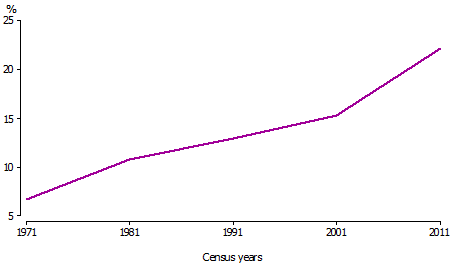
Since 1911, the Census has provided current information on religious identification in Australia. Since 1933, it has been optional to identify a religious affiliation, and in 1971 those with no religious affiliation were instructed ‘if no religion, write none’, resulting in a seven-fold increase on previous figures for no religion. The number of Australians reporting no religion has continued to rise steadily at about 3.9 percentage points per decade; the decade between 2001 and 2011 saw the largest increase at 6.8 percentage points. In 2011, 22% of Australians (just under 4.8 million people) chose the ‘no religion’ option.


PERCENTAGE OF PEOPLE REPORTING NO RELIGION IN AUSTRALIA, 1971 – 2011
lenehan-census

Source: Australian Bureau of Statistics, Censuses of Population and Housing, 1971- 2011

In the 2011 Census, small numbers of the Australian ‘nones’ further described themselves as atheist (1.2% of the no religion respondents), agnostic (0.7%), humanist (0.2%) or rationalist (0.1%). The number of people who identified themselves as ‘atheist’ almost doubled between 2006 (32,300 people) and 2011 (58,900 people). A campaign by the Atheistic Foundation of Australia encouraging people to mark ‘no religion’ on the Census form may have been a factor in this increase.[i] Additionally, around 10% of the population usually do not respond to the religious affiliation question (11.5% in 2006, 9.4% in 2011). Thus in the 2011 Census over 32% of Australian did not identify a religious affiliation.

Features of the ‘nones’ in Australia include: gender, with the number of females reporting no religion increasing to similar levels as males, especially among younger respondents; age, with those aged 15 to 34 showing the most significant rates of increase; education, where 31% of those with a postgraduate degree reported no religion compared to 20% of those with school level education, and those in the creative arts, sciences, and information technologies the most likely to have no religious affiliation; state of origin, where Tasmania, South Australia and the Australian Capital Territory have higher rates of no religion than Victoria and New South Wales; and country of birth, where 63% of Australians born in China reported no religion compared to 23% of those born in Australia.

Another indicator of nonreligion in Australia is the steady increase in those who state they have no belief in God. Australia has been described as ‘the most godless place under heaven’. Over ten years ago Norris and Inglehart claimed that 25% of Australians did not believe in any gods; the 2009 Australian Survey of Social Attitudes showed that the number of those who believed in God or some form of higher power had declined to 71%; a 2009 Nielsen Poll Report on Faith in Australia stated that 24% were nonbelievers and a further 6% unsure; the WIN-Gallup International ‘Religion and Atheism Index 2012’ ranks Australia 10th in the world listing of atheistic nations, with 10% identifying as atheist and a further 37% identifying as ‘not a religious person’.

Of course, social researchers prefer more nuanced measures of such a complex personal phenomenon as religious or nonreligious identity, and data-gathering demonstrates that what people mean when they describe themselves or others as nonreligious or nonbelievers can vary a great deal.[ii] Pew Research data (2016) in the US shows that 8% of those who describe themselves as atheists also say they believe in God or a universal spirit. Similarly, the Australian Survey of Social Attitudes found that of those who say they have no religion 29% did believe in a higher power, 10% believed in God with doubts and 2% believed in God without doubts; 32% of these nonreligionists considered themselves to be spiritual, while 54% said they were neither religious nor spiritual.[iii] On the other hand, Andrew Singleton argues that the religious ‘nones’ correlate strongly across a range of measures indicating a secular worldview and nonreligious practices.[iv]

This inconsistency in data responses and interpretive analyses call for qualified assertions concerning religious or nonreligious worldviews. Tom Frame distinguishes between considered disbelief and pragmatic unbelief, claiming the majority of Australians fall into the latter category. Kaldor, Hughes and Black likewise claim that the majority of Australians are ‘practical’ rather than ‘ideological’ atheists.[v] According to these researchers, of those describing basically secular worldviews, significant subgroups claim to believe in a personal God (‘something beyond’, 33%; ‘uncertain’, 15%; ‘nothing beyond’, 8%) or transcendent spirit or life-force (‘something beyond’, 50%; ‘uncertain’, 33%; ‘nothing beyond’ 22%). Such a blurring of the line between religious/nonreligious identification may be a consequence of the ‘expressive individualism’ that characterises late modern societies and constitutes one of the conditions of belief one of the conditions of belief in this context. It may also suggest that people continue to make use of concepts and symbols of a confessional cultural heritage in shaping a meaningful framework in which to live. As Danièle Hervieu-Léger puts it: ‘Today, individuals write their own little belief narratives using words and symbols that have “escaped” the constellations of meaning in which a given tradition had set them over the centuries’.[vi]

So, those interested in the demographics of religious and nonreligious identification in Australia look forward to the results of the 2016 Census. In the lead-up to Census night, internet and social media sites promoting both ‘No Religion’ and ‘I’m Christian’ options encouraged people to make clear their affiliation, emphasising the implication of the results for future social planning and provision of education, health and community services by the Australian Government. The decision by the ABS to reorder the possible responses to the question ‘What is the person’s religion?’ indicates that the Bureau expects the ‘no religion’ option to attract the most respondents in this Census, outranking Catholics, who at 25.3% in 2011 were the largest group in the population. Will the 2016 Census report that ‘no religion’ is now the majority affiliation in the category of ‘religion’ in Australia, as in Britain?


Kevin Lenehan (PhD, Leuven) is Senior Lecturer in Theology, University of Divinity, Australia. His teaching and research are in the fields of fundamental and contextual theology, and theological anthropology. He is editor of Pacifica: Journal of Theological Studies and a member of the Editorial Board of The Bonhoeffer Legacy: Australasian Journal of Bonhoeffer Studies.


References

Australian Bureau of Statistics, 2013, ‘Losing my religion?’ Australian Social Trends, http://www.abs.gov.au/ausstats/abs@.nsf/Lookup/4102.0Main+Features30Nov+2013.

Bullivant, S. 2012, ‘Not so indifferent after all? Self-conscious atheism and the secularisation thesis,’ Approaching Religion, vol. 2, no.1, pp. 100-106.

Clifton, S. 2008, ‘Australian theology,’ in W. A. Dryness & V.-M. Kärkkäinen (eds), Global dictionary of theology, IVP Academic Press, Downers Grove, IL, pp. 92-4.

Dawson, L.  & Thiessen, J. 2014, The sociology of religion: A Canadian perspective. Oxford University Press, Don Mills, ONT.

Frame, T. 2009, Losing my religion: Unbelief in Australia, University of New South Wales Press, Sydney.

Hervieu-Léger, D. 2006. ‘In search of certainties: The paradoxes of religiosity in societies of high modernity,’ The Hedgehog Review, vol. 8, nn. 1-2, pp.59-68.

Hughes, P. 2012, ‘The persistence of religion: What the census tells us,’ Pointers, vol. 22, no. 3, pp. 4-5.

Kaldor, P. Hughes, P. & Black, A. 2010, Spirit matters: How making sense of life affects wellbeing, Mosaic Press, Melbourne, pp. 6-16.

Lee, L. & S. Bullivant. ‘What’s in a name?’ Nonreligion and Secularity Research Network Online Blog, 6 September 2016, https://nsrn.net/2016/09/06/whats-in-a-name/.

National Church Life Survey, 2011, ‘A picture of the religious beliefs of the Australian community,’ http://www.ncls.org.au/default.aspx?sitemapid=6817

Norris, P. & Inglehart, R. 2004, Sacred and secular: religion and politics worldwide, Cambridge University Press, New York.

Pew Research Center, 2016, ‘10 facts about atheists,’ 1 June, http://www.pewresearch.org/fact-tank/2016/06/01/10-facts-about-atheists/

Singleton, A. 2015, ‘Are religious “nones” secular? The case of the nones in Australia,’ Journal of Beliefs and Values, vol. 36, no. 2, pp. 239-243.

Taylor, C. 2007. A secular age. The Belknap Press, Cambridge, MA.


[i] Australian Bureau of Statistics, 2013, ‘Losing my religion?’ Australian Social Trends, http://www.abs.gov.au/ausstats/abs@.nsf/Lookup/4102.0Main+Features30Nov+2013

[ii] see Bullivant, 2012; Lee & Bullivant, 2016.

[iii] Hughes, P. 2012, ‘The persistence of religion: What the census tells us,’ Pointers, vol. 22, no. 3, pp. 4-5.

[iv] Singleton, A. 2015, ‘Are religious “nones” secular? The case of the nones in Australia,’ Journal of Beliefs and Values, vol. 36, no. 2, pp. 239-243.

[v] Kaldor, P. Hughes, P. & Black, A. 2010, Spirit matters: How making sense of life affects wellbeing, Mosaic Press, Melbourne, pp. 6-16.

[vi] Hervieu-Léger, D. 2006. ‘In search of certainties: The paradoxes of religiosity in societies of high modernity,’ The Hedgehog Review, vol. 8, nn. 1-2, pp.59-68 at p.59.
 

[Research] Atheism in Greek society: Breaking the chain of religious memory and the emergence of atheist identity

What are atheists like in Orthodox Christian countries? In this post, Alexandros SakellariouOLYMPUS DIGITAL CAMERA explores this question by examining Greek atheists. His analysis shows that Greek atheists choose to be atheists as a result of breaking the chains of religious memory. At first, formation of their atheist identity is largely to reject their Orthodox identity, but Greek atheists gradually find their own positive identity with atheist beliefs and morality.


Even until very recently the dominant perception has been that more than 95 per cent of the Greek population is Orthodox Christian and some polls (2006) have supported it (Orthodox Christians: 96.9 per cent; Atheists: less than 2 per cent). However, according to a recent poll (2015) 81.4 per cent are Orthodox Christians while 14.7 per cent are atheists (Chiotis 2015), which is quite a significant change. The international revival of atheism, especially what has been called “new atheism”, has influenced Greek society as well. Greek translations of all the major works of the protagonists of the international movement (Dawkins, Dennett, Hitchens and Harris); articles about atheism published in mainstream media; websites, forums and blogs that support and disseminate atheist ideas; and the establishment of the Atheist Union of Greece in 2012 are the most important outcomes.

For a long time atheists were, quite stunningly, almost completely ignored by sociologists (Le Drew 2013, 1), but contrary to international interest, atheism in Greece has still attracted no attention among social scientists. Bearing that in mind, in 2012 I started qualitative research on atheism resulting in 63 semi-structured interviews with people self-characterized as atheists. The purpose was to answer the following questions: Who are the Greek atheists in contemporary Greek society? In which family environment were they born and raised? How did they de-convert from the Greek Orthodox traditional and dominant religious paradigm and how did their families react to this rupture with their past? What are their beliefs about religion, morality and life?

With the exception of few interviewees who were raised in rather atheist or secular family environments and some raised in mixed families (e.g. Orthodox and Protestant), all the others grew up in families where the Orthodox religion was the dominant paradigm and was practised by either both parents or mainly by the mother who was usually the parent with the strongest religious affiliation. Living within a Greek-Orthodox society, especially in the past, meant that it was almost inevitable that they followed their parents’ religious beliefs and practices, the family chain of religious memory (Hervieu-Leger 2006).

As a consequence, many of the interviewees in their childhood were close to the Church and they observed the family’s practices like fasting and praying, while some of them attended Mass and Sunday school. In many cases, though, Sunday school and Church attendance were social obligations and practices of social inclusion, not necessarily a manifestation of strong faith, even though at the same time they were not atheists either:

I went to Sunday school from the age of 5 to 8 because all my friends were going and I had nothing else to do during the weekends. (Sotiris)[1]

Most of the interviewees characterized their families as typical Orthodox, middle-class families, not very religious – (below) average – that preserved those teachings and customs the family considered as good and didn’t follow what they considered as wrong or bad.

Greek atheists frequently frame their prior religious identity as something forced upon them by the family rather than a genuine religious belief, a finding confirming other studies (Chalfant 2011, 51-54).

In my early childhood, like every Greek child of my times, I was inculcated by my parents and my environment with the dogma of the Orthodox faith. Because of limited knowledge and without the development of critical thinking, I was persuaded that the God of our religion was something true. (Paraskevas)

But sometimes this chain breaks and interruptions in religious continuity are observed (Bengtson 2013, 131-144). There is a variety of reasons behind the rupture with the dominant religious paradigm both at the family and social levels (e.g. book reading, scientific documentaries, social observations, self-reflection, etc.), but the common thing is time, since for the vast majority the starting point was between early childhood or puberty and their 20s.

I had doubts from a very early age; I was in my mother’s village, 6-7 years old….I came across my mother’s uncle who was a priest; I went near him to kiss his hand and I asked him about other religions. He replied that all the others are wrong and only we [the Orthodox] have the true religion. To my childish mind this was irrational, because every religion believes that, so either they are all right or all wrong, you can’t base your faith on this kind of argumentation. (Xrysanthi)

For the majority of the interviewees this process of de-conversion took some time. As one of them described it:

It is like a ship leaving port and gradually distancing itself from the coast. (Dimitris)

Besides breaking this chain of religious memory atheists seem to form an atheist identity through the expression of their own views regarding morality, life meaning and personal beliefs. When asked to comment on the Church’s argument that atheists are immoral because religion is the only way to moralise human society, or the Dostoevskian saying that “without God everything is permitted”, they completely rejected it, arguing that religions have been extremely immoral and referring to a number of issues like violence (e.g. the Crusades, the Islamic State), financial scandals, child abuse, etc. They argued that they help other people not because a divine power is watching and judging them or because of the fear of hell. They claimed that they as atheists are also moral, because morality is a social construction and religion has nothing to do with it, confirming the findings of other studies (Bengtson 2013, 155). As one of them wondered,

Am I immoral because I don’t go to Church? Am I immoral because I have premarital sex? (Themis)

All the interviewees were asked to say what they believe in, i.e. their raison d’etre. They all rejected every supernatural power power influencing people’s lives or any power that has created the universe. As in other studies (Bengtson 2013, 155), some of them said that they value science and scientific and technological achievements, others said that they believe in human beings, in society, in nature or animals and others in themselves and in freedom. This last point was also common to other qualitative studies in which atheists stated that they have stopped worshiping God and they now worship freedom (Zuckerman 2012, 11), even if worshipping in this case has a metaphorical meaning.

The outcome of my research is that Greek atheists having brought up as Greek Orthodox Christians decided to break this chain of religious memory and change their ethnic nominal Orthodox identity at some point of their life course following a variety of paths. However, as it came out, after an initial stage of rejecting their Orthodox identity they gave moved towards a positive formation of an atheist identity. This means that the vast majority of them reflected on a number of issues, particularly life meaning and morality, building this way a distinct atheist identity which is not any more identified exclusively with anti-Orthodox attitudes. It is not easy to argue whether there are more atheists in Greece now, or that they have started to speak out, or both. The truth is that atheism in Greece is still in its infancy compared with other western societies and which also applies to its scientific study.

References

Bengtson, L. Vern. (2013). Families and Faith: How Religion is passed down across Generations. Oxford: Oxford University Press.

Chalfant, Eric. (2011). Thank God I’m an Atheist: Deconversion Narratives on the

Internet. Unpublished MA Thesis. Winston-Salem, North Carolina: Wake Forest University.

Chiotis, Vassilis. (2015). “Orthodox Christians, but once a year”. To Vima, 12-13 [in

Greek].

Hervieu-Leger, Daniele. (2006). Religion as a Chain of Memory. Cambridge: Polity

Press.

Le Drew, Stephen. (2013). “Discovering Atheism: Heterogeneity in Trajectories to

Atheist Identity and Activism”. Sociology of Religion, 74 (4), 454-463.

Zuckerman, Phil. (2012). “Contrasting Irreligious Orientations: Atheism and Secularity in the USA and Scandinavia”. Approaching Religion, 2 (1), 8-20.

[1] All names used are pseudonyms.


Alexandros Sakellariou is currently teaching sociology at the Open University of Greece and is a post-doctoral researcher at Panteion University of Social and Political Sciences of Athens, studying the forms of atheism in contemporary Greek society. He earned his PhD on Sociology of Religion from the Department of Sociology of Panteion University. Since 2011 he has worked as a researcher at Panteion University in EU Projects on young people’s socio-political engagement (MYPLACE 2011-15), young people’s well-being (MYWEB 2014-16) and the evaluation of innovative social policies (INNOSI 2015-17). His interests include among others politics and religion, religious communities in Greek society, religious freedom, religion and globalisation, youth activism and civic participation, and right-wing extremism. Email: sociology.panteion@gmail.com

[Admin] End of year message from blog editors

Josh Bullock Photoosakabe

Year 2016 was another success with 27 innovative and insightful posts from various disciplines. We anticipate to remain as a platform for sending out exciting and timely research in the field of nonreligion/secularity studies.

In particular, we are hoping that our blog page will put more emphasis on interdisciplinary aspects between academic and non-academic readers next year. We are also planning to send out ‘a call for blogs’ early next year, in which we hope many of you will consider submitting. There may be a couple of other new developments as well. Please stay tuned.

Lastly, we would like to thank you to all the contributors, editors, directors and readers for keeping the NSRN a central network within the study of nonreligion/secularity. Look forward to being back in 2017!

Josh Bullock and Yutaka Osakabe

[Seasonal Reflection] The Christmas bear: merry reflections on the sacred in a secular Christmas

Timothy Stacey reflects on secular spirits of giving in this festive period…  timothy

Standing in the urinals of a pub in Bangalore, India, I look up to see a Christmas-themed poster. A bear, wearing a Christmas hat, invites me to “get merry this Christmas – and not just on our beer”. I was about to dismiss the poster as a depressing example of the needless secularisation and commercialisation of Christmas. Though barely raised Christian, I suppose I had always assumed that Christian symbols such as, say, the nativity scene, still reminded what we might call post-Christian (raised Christian and still influenced by Christian culture despite neither believing nor attending church) celebrants that Christmas was about remembering the poor. I was about to dismiss the poster, but realising I had nothing better to do, decided to read on. In fact, the Christmas bear invited me to get merry by gifting money to a poor child. I had been too quick to judge. Later, I saw how those taking up the offer had been incorporated into a public ritual,immortalized by writing their name beside a picture of the child they had helped on a paper tag, which had been draped in the branches of a Christmas tree, where normally decorative baubles might hang.

I reflected on how a secular Christmas had nonetheless sacralized and ritualised giving and receiving, and this ritual in itself might be a strong enough anchor from which to inspire solidarity with the poor.

To understand how this might work, I began to reflect on the nature of this ritual. I recalled Bloch’s (2010) description of ritual as a performance of transcendental ideals. Notwithstanding the commercialisation, there does seem to remain, at least amongst my family and friends, an authentic sense that Christmas is about thoughtful giving and receiving amongst those we most dearly love. Bloch also tells us that ritual acts as a performance of a possible world that deliberately contradicts the world around us, such as when funerals speak to the continuation of a life despite the evidence to the contrary.

What world might our Christmas ritual of giving and receiving be contradicting? Parry (1986) observes that a capitalist society is one in which there is simultaneously no gift, since everything has a cost, and an absolute gift, whereby nothing is expected in return. Perhaps secular Christmas is a time in which we push through the no gift/absolute gift, and return to a reciprocity grounded in love.

Perhaps the Christmas bear draws its strength from this same binary, luring us towards the absolute gift. Or perhaps the bear invites us to expand the circle of those we love. In either case, in this bar, in Bangalore, the Christmas bear might be all that is required to inspire solidarity with the poor.


References

Bloch, Maurice (2010). ‘Bloch on Bloch on Religion’. Advances in Research 1. 4-13.

Parry, Jonathon (1986). ‘The Gift, the Indian Gift and the ‘Indian Gift”. Man 21(3). 453-473.


Dr Timothy Stacey is a graduate of and Research Assistant at the Faiths and Civil Society Unit, Goldsmiths, University of London. Against a backdrop of a perceived decline of solidarity in secular modernity, especially in the North-Atlantic West, Tim’s doctoral thesis explored the sources of solidarity in religiously plural spaces. The thesis combined a genealogical exploration of constructions of solidarity in theology, philosophy, sociology, anthropology and social policy, with an ethnographic study of groups seeking to develop solidarity in London. Tim is interested in research into and visions of solidarity that defy binaries such as religious/secular, embodied communitarian/cartesian individualist, and socialist/capitalist. His aim is to undertake research that strengthens solidarity by connecting with policy makers and activists.

**Please get in touch with us if you want to add similar reflections on other public holidays.

[Research] Gender, Feminism and the Formation of British Secularism

In this post, Laura Schwartz challenges taken-for-granted binaries between religious and the secularsept_2015-june_2016_076
from historical and gender perspectives. She argues, ‘the “Woman Question” – the question of which was a better system for women – was by no means a by-product of debates between Christians and Secularists but constitutive of and absolutely fundamental to modern definitions of religion and secularism that emerged from them’.

My 2013 book, Infidel Feminism, has been largely received as an intervention into the history of feminism, pointing to a previously unexplored strand of ‘Freethinking feminism’ which existed in Britain throughout the 19th century, and arguing that anti-religious or secular ideas were fundamental to the development of first wave feminist thought. I intended the book as a response to, and partly a reaction against, the ‘religious turn’ in gender and feminist history of the last 20 years or so, which (in quite rightly pointing to the importance of religion as one of the ‘founding impulses’ of modern feminism) has now so dominated the field that many of my students today assume that religion is essentially complementary to feminism, and find it difficult to articulate why it might ever have been seen as an obstacle to women’s rights in Britain.

But Infidel Feminism, was also intended as an intervention into scholarship on secularism, to say something new about the category of the secular as a whole and to take forward debates on the secularisation thesis and ‘post-secularity’. Charles Taylor’s book A Secular Age (2007) has proven pivotal in this scholarship, though much of attention it has received as been critical as well as positive. Without wanting to endorse the whole of his agenda, I was particularly interested in Taylor’s critique of narratives that portray secularisation as nothing more than a “subtraction story”, as an absence of religion. Responding to this call, I attempted to approach secularism as a substantive rather than a negative category, to analyse the positive content of that particular form of secularism that emerged in 19th century Britain (and to some extent across the Anglophone world). What values did it embody? And what kind of identities did it generate? This was obviously crucial to a historical study that focused, as mine did, on the National Secular Society and wider milieu of self-proclaimed Secularists and Freethinkers, actively engaged in constructing a secular public sphere. Secularism, for them, was not merely an absence of religion, but powerful intellectual and ethical framework structuring every aspect of their lives which compelled them to think counter to the majority of Victorian society.

Where did the ideas for Infidel Feminism come from?

I began my project at the University of Oxford, where I participated in the religious history seminar which was run by many of those scholars engaged in the redefinition and expansion of the category of ‘religion’ in histories of modern Britain (most notably the authors of Garnet et al.’s Redefining Christian Britain). These scholars expanded the definitional parameters of ‘religion’ to encompass personal beliefs, linguistic structures and modes of identity. They have identified religion with a variety of phenomena beyond those traditionally associated with ecclesiastical institutions and doctrinal belief-systems, leading some historians to argue that ‘transformation’ rather than ‘decline’ ought to be the key organising factor when thinking about religion in modern society. And of course this group of scholars at Oxford were building upon and responding to Callum Brown’s highly influential concept of ‘discursive Christianity’ which defined religion not as an institution, or even a set of beliefs, but as a ‘dominant discourse’ which ‘infused public culture and was adopted by individuals, whether churchgoers or not, informing their own identities’. I was also reading, when starting out my research project, a related set of debates by historians, such as Alex Owen, who were revealing the extent to which modernity, far from being wholly secularised, has in fact continued to be permeated with ‘enchantment’, with religious and magical beliefs co-existing with and sometimes complementing scientific and rational modes of thought that were previously thought to define modernity and, in the sociologist Max Weber’s terms, signify the end of enchantment.

Rejecting secularisation as “subtraction” story

All of this scholarship was crucial in confronting the orthodox secularisation thesis, and in opening up many new and important avenues for understanding the workings of religion in 20th century Britain. But it was not terribly informative for me as someone wanting to trace not the continued influence of religion in an age of modernity, but rather the emergence of the distinctive category of the secular in this period. For better or for worse (perhaps because of the historical moment in which it emerged – the end of the 20th century with the re-emergence of religion as a powerful force on the global stage), the effect of this historical scholarship has tended to be to obscure the secular rather than to offer more meaningful understandings of it. My feeling, from attending panels on secularism at various modern British history conferences is that sometimes more zealous advocates of an expansive and discursive definition of religion, wrongly conceive of it as an all-encompassing intellectual and linguistic framework which structures the thoughts of believers and non-believers alike, causing the secular sphere to effectively disappear, an turning the ‘religious’ or the ‘sacred’ into such capacious categories that they too lose any descriptive purchase.

So that was my problem, and some of my concerns – what did I try to do differently? Firstly, I tried to take seriously the reasons that individual Freethinkers and Secularists gave for renouncing Christianity and embracing a Secular view of the world. It was tempting, in light of much of the recent scholarship on the porosity of boundaries between the religious and the secular, to read Freethinkers’ accounts of their loss of faith as simply inverted evangelical conversion narratives. (Indeed this is what Edward Royle, the pre-eminent historian of the British Secularist movement, has tended to conclude when he defines Secularism as an inversion of Victorian evangelical Christianity). Certainly, Christian metaphors and narrative structures were overtly present in the writings and autobiographies of self-proclaimed 19th century Secularists, yet to simply conclude that they were deluded in their belief that they had left the much-hated religions of their youth behind, would have been to deny the reality they themselves experienced. It was hard to stop being a Christian in 19th century Britain, one risked not only alienation from one’s family and community but also – for women especially – accusations of sexual impropriety. So to treat these historical subjects simply as inverted Christians would have been to do them an injustice. Instead, I wanted to convey a sense of the fundamental transformation they felt they had undergone, as well as the antagonism they felt towards Christianity. I therefore chose the term ‘counter-conversion’ to capture this. And I focused in the book on outlining the new ethical vision that Secularists promoted – one that was committed to complete moral and bodily autonomy, freedom of speech, abhorrence of enforced ignorance and an unflinching commitment to the democratic dissemination of knowledge.

The ‘Woman Question’ and the formation of modern concepts of religion and secularism

A crucial aspect of (to quote Charles Taylor) these ‘new inventions, newly constructed self-understandings and related practices’ was Secularists’ response to the ‘Woman Question’ – which can be briefly summarised as a rejection of God-given gender roles, and thus the sacred bonds of marriage which entailed support for the right to divorce and various (albeit fraught) articulations of greater sexual freedom for both men and women; the inclusion of women in secular societies on a more or less equal basis, an affirmation of women’s right to speak in public and act as intellectual leaders; and a rejection of certain forms of ‘imperial feminism’ whereby, unlike large portions of the women’s movement at this time, Secularists refused to valorise the treatment of women in the Christian West as superior to that in the Muslim or Hindu world.

Yet this form of Secularism was itself highly gendered, sometimes posing problems for feminism in its celebration of science and reason (masculine characterisations) versus superstition and religious enthusiasm (feminised attributes). The central argument of the book is that the ‘Woman Question’ – the question of which was a better system for women – was by no means a by-product of debates between Christians and Secularists but constitutive of and absolutely fundamental to modern definitions of religion and secularism that emerged from them.

But what of the highly apparent continuation and/or vestiges of religious language, metaphors and intellectual frameworks deployed by these self-proclaimed Secularists and Freethinkers? Ultimately, although this remains a tension in the book, I was able to accept the significance of Christianity to modern Western forms of secularism, without having to collapse one category into the other, precisely because I was no longer working within the parameters of the orthodox secularisation thesis and its assumption that, in modern society, religion would necessarily give way to a secular world. Aided by some of the scholars of religion that I discussed above, who had rejected secularism as an inevitable process, and an abstract and universal concept, I was able to examine more closely a particular form of 19th century British secularism that was historically constituted and geographically specific. Of course, then, in 19th century Britain – a society dominated by Serious Christianity at the level of the state, civil society and personal identity – the form of secularism that emerged was strongly influenced by the form of religion it reacted against, in particular evangelical Protestantism. But to argue that religion and secularism in this context existed in an antagonistic and symbiotic relationship (as I did) is not to say that they are one and the same thing, nor to deny the existence and influence of ethical, intellectual and political traditions that were overtly and distinctively Secularist in their make-up. What this points to, in terms of future areas of research, is the need to distinguish between different kinds of secularism which emerged in different places at different times, and to assess them (especially in terms of their gender and race politics) according to the particularities of their content rather than some pre-determined and assumed definition of what secularism really is.


Laura Schwartz is Associate Prof of Modern British History at the University of Warwick. She has published widely on the history of British first wave feminism. Her most recent work on the history of gender, religious and anti religious thought is an article entitled ‘”Enchanted Modernity”, Anglicanism and the Occult in Early 20th-century Oxford: Annie Moberly and Eleanor Jordain’s “Adventure” Revisited’, forthcoming in Cultural and Social History.


[Research] “Of” or “For”: Studying “Spirituality” and the Problems therein…

How might “spirituality” relate to “nonreligion”? In this blog post Galen Watts reflects on this question galen-wattswith respect to the category of “spiritual but not religious.” Noting how a distinction between the study of spirituality and the study for spirituality is rarely made in the field of spirituality studies, he challenges scholars of spirituality to define their object more clearly and to declare their stakes in it.

There is a category that has recently begun to rise in popularity in those societies often deemed Western and which seems to fall—albeit somewhat uneasily—under the label “nonreligion.” I am speaking of those who self-identify as “spiritual but not religious” (SBNR). Having recently conducted research on Canadian millennials who self-identify as SBNR, it has become clear to me that SBNR spirituality, or contemporary spirituality, is a type of nonreligion that is quite distinct in form and content from, say, atheism, or even agnosticism (of course, as signifying discourses, these labels do not reflect reality, in any sense, flawlessly, but I think you get the point). We might then say the recent upsurge in the number of people in North America who self-identify as SBNR (Pew Research Center 2013) troubles any simplistic narrative one might tell about the secularization of Western states, whereby societies simply move from a “religious” standpoint to a “secular” one—“secular” understood as the decline of religious belief and practice. I am not alone in holding this view (see Fuller 2001; Heelas and Woodhead 2005; Carrette and King 2005; Gottlieb 2013; Mercadante 2014). Indeed, the rise of SBNRs has engendered an increase in the number of scholars, based in a variety of disciplines, who research “spirituality.”

In this post, I want to discuss a specific issue that continues to stifle the nascent field of what we might call “spirituality studies.” It seems to me that those of us interested in “spirituality” have not yet figured out how to adequately study this puzzling phenomenon. I believe this is in part because we have not been entirely upfront about how we approach our subject of interest, and what our underlying motivations are.

Let me explain. There are a number of scholars—usually arising out of the fields of health studies, management, or education (but not always)—who view the emergence of “spirituality” as purportedly distinct from “religion” as a positive thing, but are nevertheless reluctant to articulate how they define “spirituality” or what political commitments underpin their use of the term. For instance, Christopher Cook (2004), in offering a comprehensive overview of 265 published books and academic articles on the broad topic of “spirituality and addiction,” found what he calls “a diversity and lack of clarity of understanding of the concept of spirituality” (539). He writes: “It is therefore somewhat concerning that the authors of well over one-third of the papers studied here felt no need to attempt to define or describe the concept [of ‘spirituality’] or even to comment on the difficulty of definition” (547). This is by no means uncommon outside of the realm of “spirituality and addiction,” either. More amazing is the fact that many who remain reluctant to provide a clear explication of their use of the term nevertheless argue that “spirituality”—whatever it is—ought to be embraced and promoted, for it is universal, and therefore transcends religious and/or secular contexts.

I would argue this rests on the (implicit) view that “spirituality” is inclusive (understood positively) while “religion” is exclusive (understood negatively). Indeed, many SBNRs I spoke to seemed to endorse “spirituality” over and above “religion” on this very basis (as Joel Thiessen notes in another NSRN post, this is not uncommon). The basic assumption is something like, “religion” is exclusivistic, ideologically charged, and (in some cases) dogmatic, whereas “spirituality” is universal and inclusivistic in nature. Of course, this assumption is problematic because it is, in fact, self-contradictory. For no discourse is truly universal, most especially those discourses which claim a universal scope; in the end, a discourse that is founded on the principle of inclusivity is at least exclusive of those which are founded on the principle of exclusivity. Thus it is somewhat curious how those who herald discourses on “spirituality” in many instances are reluctant to embrace those discourses which they deem “religious.” Nevertheless, this dichotomization helps to explain why and how even a New Atheist like Sam Harris can embrace a “secular spirituality.”

Of course, there are those who propose such a vague definition of “spirituality” that it becomes truly universally applicable. Ursula King (2011) has done this in offering her open-ended definition of “spiritualities”: “[they] quite simply connote those ideas, practices and commitments that nurture, sustain and shape the fabric of human lives, whether as individual persons or communities” (21 emphasis in the original). This definition is useful in that it provides a framework with which to begin discussions about different kinds of spirituality. However, it should be noted, it offers no substantive description of any specific spiritualities. Under it, one could just as easily call Christianity, American Football or Nazism types of spirituality. And although I see nothing intrinsically wrong with these applications, such examples should lead us to recognize why we ought to be more forthright and articulate about the kinds of spirituality we wish to endorse, and the substantive moral and political commitments that underpin them.

Disciplinary boundaries clearly play a formative role here. Scholars that work in health studies, management, or education tend not to study “spirituality” in order to better understand what it is or what it signifies, but rather to find out what a specific kind of spirituality – that they usually normatively endorse (or disparage) – might do for their workplace. In other words, these scholars are motivated by a personal interest in contemporary spirituality and the positive benefits (or negative consequences) they believe it yields in practical application. This approach, I believe, is better understood as the study for spirituality. In contrast, religious studies, cultural studies, or critical theory scholars generally take a broader (perhaps less practical) approach to “spirituality,” framing it as a socio-cultural and/or discursive construct that is everywhere and always political. These scholars therefore may seek to offer a description of contemporary spirituality as it presents itself in a specific social or cultural context, and/or critique it from a normative standpoint. This approach rightly falls under the study of spirituality.

Nevertheless, this is not to suggest these two approaches cannot, or do not, overlap. One may hold a normative understanding of contemporary spirituality, while at the same time, seek to better understand it as an abstract concept or as a lived phenomenon, or, wish to criticize that which one views as an inauthentic or perhaps corrupt form of it. And conversely, one may seek to better understand how spirituality operates within certain spheres (e.g. healthcare, education, etc.) from a critical perspective, all the while hoping to promote its application in said spheres. Thus I do not wish to give the impression that these approaches are inherently at odds. What remains true, however, is that they are, in important ways, distinct endeavours; and the confusion surrounding the study of spirituality, I argue, originates in their not being recognized as such.


Bibliography

Carrette, Jeremy R., and Richard King. 2005. $elling Spirituality: The Silent Takeover of Religion. London: Routledge.

Cook, Christopher C. H. 2004. “Addiction and Spirituality.” Society for the Study of Addiction. (99) 539-551.

Fuller, Robert C. 2001. Spiritual But Not Religious. New York, NY: Oxford University Press.

Gottlieb, Roger S. 2013. Spirituality: What It Is and Why It Matters. New York, NY: Oxford University Press.

Heelas, Paul, and Linda Woodhead. 2005. The Spiritual Revolution: Why Religion Is Giving Way to Spirituality. Malden, MA: Blackwell.

King, Ursula. 2011. “Can Spirituality Transform Our World?” Journal for the Study of Spirituality. (1) 17-34.

Mercadante, Linda A. 2014. Belief Without Borders: Inside the Minds of the Spiritual But Not Religious. New York, NY: Oxford University Press.

Pew Research Center. “Canada’s Changing Religious Landscape.” 2013. Pew Religion Public Life Project. Accessed June 26, 2016. http://www.pewforum.org/2013/06/27/canadas-changing-religious-landscape/.


Galen Watts is a PhD Candidate in the Cultural Studies Graduate Program at Queen’s University. He has a broad and diverse range of academic interests. Currently, his research could be classified as convening at the intersection of political philosophy, religious studies, and social theory. For his Masters, he sought to articulate and analyze how Canadian millennials (ages 18-34) who self-identify as “spiritual but not religious” conceptualize the relationship between their “individual” spirituality and their commitments, or lack thereof, to a number of social justice issues. For his PhD, he is continuing to research the basic values, belief-systems, and practices that inform contemporary spirituality among millennials in Canada in order to discern its ideological nature, as well as its social and political implications, broadly understood.

[Research] The Mind’s Revolt: The Lessons of Protestant Freethought for the Study of New Atheism

In this article, Liam Jerrold Fraser explains how an examination of seventeenth- and eighteenth-century English freethought can help us to understand contemporary New Atheism. By using a historical case study, Fraser hopes to push back against viewing atheism as either a purely political or purely intellectual phenomenon and instead suggests that only a multi-disciplinary study can fully make sense of atheism.liam-fraser

It is a common belief in many Western societies that politics and religion should be separate, and that religion should play little or no role in the governance of modern states. This belief, in turn, can support two other assumptions: first, that it is possible to have religious beliefs whose significance is purely intellectual, and which possess no political meaning; and second, that the absence or rejection of religious language, symbols, and narratives in political life implies neutrality or indifference toward the intellectual cogency of religious belief. These beliefs can affect the methodologies we use, as is seen in different approaches toward New Atheism. On the one hand are a range of polemical works that seek to defend or refute the intellectual plausibility of its core arguments, with little consideration of its social and political significance. On the other hand are works by Schulzke, Kettell, and McAnulla, which have sought to move beyond this intellectual and polemical approach by conceptualising New Atheism as a primarily political movement (Schulzke, 2013; Kettell, 2013; McAnulla, 2014; LeDrew, 2016).

In contrast to these overly intellectual or political methods, historians of Protestant freethought such as Budd, Reventlow, and Champion have long noted the inter-dependent relationship between atheism, theology, and political protest (Budd, 1977; Reventlow, 1984; Champion, 1992). Although largely forgotten today, the Protestant freethinkers of the late seventeenth and early eighteenth centuries question many popular assumptions about the boundaries between politics and religion, as they fought political and social battles with theology, and challenged Christianity not with ‘Enlightenment’ or ‘science’ but with Protestant Christianity’s own teachings. My own research on Protestant freethought suggests that this period – perhaps unexpectedly – holds three definitional and methodological principles that are potentially useful for the study of present-day New Atheism: one, that atheism is a social and political phenomenon whose expression is frequently intellectual; two, that its intellectual expression involves the use of theological categories; and three, for these reasons, atheism must be studied in its social, political, and theological aspects.

The political and social background to the first flowering of anti-Christian thought in Britain is the chaos of the English Civil War (1642-1651) and its aftermath. The Civil War had witnessed an explosion in religious heterodoxy, as a multiplicity of sects, reading the Bible for themselves, rejected traditional doctrine and conventional morality, and adopted beliefs and practices considered immoral and even treasonous. In order to curtail this hermeneutical, moral, and political pluralism, and defend against the persistent threat of Roman Catholicism, figures such as John Locke altered English Protestant thought in two ways. First, against Protestant enthusiasts who claimed to possess private revelation, Locke set reason as the judge of revelation, rather than presupposing revelation as the basis of all theological thought. This meant that revelation was to be assessed and investigated just like anything else. Second, against Roman Catholicism, Locke divorced the reading of Scripture from its interpretive context within confessions, creeds, and the liturgy of the Church, and argued that there was an objective meaning to Scriptural texts that could be discerned by any person, irrespective of the theological tradition in which they were raised (Locke 1695; 1999; 2012). These theological changes were accompanied by a second consequence of the Civil War – the Great Ejection. This saw hundreds of nonconformist clergy and their congregations ejected from the Church of England, and a series of laws known as the Clarendon Code enacted, which severely limited the civil and political rights of non-Anglicans.

It was the combination of these two theological and political factors that would lead to the first flowering of anti-Christian freethought in England. In order to illustrate this, I will briefly survey two representative figures from this period.

The first is John Toland (1670-1722). Toland adopted Locke’s epistemology almost wholesale, but differed from him in his willingness to use reason not simply to verify that Scripture is revelation, but to question whether Scripture is revelation at all. To believe something contrary to reason simply because it is found in Scripture, argues Toland, is to give license to every absurdity. Moreover, to claim that any doctrine is above reason, and hence ‘mysterious’, is to play into the hands of priests, who use mysteries to cement their own religious power. In arguing this, Toland explicitly places himself within the line of the Protestant Reformers, arguing that he can no more be blamed for encouraging religious doubt than Luther, Calvin, and Zwingli can be, for they too opposed the prevailing religious authorities of their day (Toland, 1696; 1997).

The second of our representative figures is Anthony Collins (1676-1729). Like Toland, Collins also adopted Locke’s epistemology, yet took its implications much further. The continuing possibility of a reversal of legal toleration for nonconformists led Collins to marshal older puritan arguments against the “Popish trappings” of the Church of England to push for a new rationalist agenda against Church authority. The Twentieth Article of the Thirty-Nine Articles gave the Church of England the authority ‘to decree rites or ceremonies and authority in controversies of faith’. Collins argues that, if authority is the basis of the Church’s power, then there should have been no Reformation, for the Roman Catholic Church also claims such authority for itself (Collins, 1710; 1770). In addition to this direct attack upon Church authority came an indirect one based on the new biblical hermeneutics. A literal reading of biblical prophecies such as Isaiah 7:14 shows that Christ cannot be the prophet’s intended object. Yet if the prophecy fails to be fulfilled in Christ then Jesus, his apostles, and the Church of England are shown to be wrong, and their religious authority crumbles (Collins, 1737).

English freethought, then, drew its intellectual structure from ambiguities within prevailing forms of Protestant theology, and its social and political motivation from the persecution of nonconformists. Due to the theological and political factors in play, the arguments of Toland and Collins – and many other freethinkers – display a range of ambiguous features. First, they employ Protestant arguments to advance an anti-Christian, rationalist worldview. Second, while they are couched as theology, their object is clearly the political one of undermining the authority of the Church of England and the Establishment it supported.

The ambiguity of this period means that no single methodology, whether historical, political, or theological, is sufficient to account for it, and this necessitates the adoption of alternative methodological principles. First, this period suggests that anti-Christian thought is a social and political phenomenon which commonly manifests itself in the intellectual critique of religion; two, that its intellectual expression involves the use of theology; and three, for these reasons, atheism must be studied in its social, political, and theological aspects.

While derived from the study of eighteenth-century freethought, I believe these principles are also useful for the study of present-day New Atheism, offering helpful corrections to the work of a number of commentators. The first principle corrects polemical works of all stripes that treat New Atheism as a primarily intellectual issue, as well as works by the likes of Schulzke, Kettell, McAnulla, and LeDrew that treat it as a primarily political phenomenon. The second principle corrects writers such as Julian Baggini, Sam Harris, and AC Grayling, who argue that there is no dependence of atheism upon the religion it rejects [Baggini, 2003; Harris, 2007; Grayling, 2013]. On the contrary, there is no motivation, structure, vocabulary, or audience for atheism unless it has a positive religious content to critique, negate, and invert. The third and final principle offers assurance to those who are wary of engaging in theology, which, rather unfortunately, has the reputation of being something of a non-subject. On the contrary, the history of Protestant freethought suggests that there is no way to properly understand anti-Christian movements such as New Atheism without considering the theology that generates and structures them.

The strength of these principles arises from their acceptance of existing disciplinary boundaries, yet also from their ability to integrate different methodologies into a multi-disciplinary approach that captures the complex intellectual and political nature of anti-Christian movements. And for a phenomenon as contentious and complex as New Atheism, that is no bad thing.


References

Baggini, J., 2003. Atheism: A Very Short Introduction. Oxford: Oxford University Press.

Budd, S., 1977. Varieties of Unbelief. London: Heinemann.

Champion, J.A.I, 1992. The Pillars of Priestcraft Shaken. Cambridge: Cambridge University Press.

Collins, A., 1737. Grounds and Reasons of the Christian Religion. London.

Collins, A., 1770. Priestcraft in Perfection. London: B. Bragg.

Grayling, A.C., 2013. The God Argument. London: Bloomsbury.

Harris, S., 2007. Letter to a Christian Nation. London: Bantam Press.

Kettell, S., 2013. ‘Faithless: The Politics of New Atheism’. Secularism and Nonreligion, 2, pp.61–72.

LeDrew, S., 2016. The Evolution of Atheism. Oxford: Oxford University Press.

Locke, J., 1695, 1999. The Reasonableness of Christianity, by John Locke. Oxford: Clarendon Press.

Locke, J., 1695, 2012. Vindications of the Reasonableness of Christianity. Oxford: Clarendon Press.

McAnulla, M. 2014. ‘Secular Fundamentalists? Characterising the New Atheist Approach to Secularism, Religion and Politics’. British Politics, 9, pp. 124–145.

Reventlow, H.G., 1984. The Authority of the Bible and the Rise of the Modern World. London: SCM Press.

Schulzke, M., 2013. ‘The Politics of New Atheism’. Politics and Religion, 6(4), pp. 778-799.

Toland, J., 1696, 1997. Christianity not Mysterious. Dublin; Lilliput Press.


Liam Jerrold Fraser recently completed a doctorate at the University of Edinburgh, where he examined the Protestant origins of British and American atheism, and the way in which this Protestant heritage informs the theological assumptions of contemporary New Atheists. He serves on the ministry team at Greyfriars Kirk, Edinburgh.

[Research] Thank God for Secularity

In an attempt to investigate further the contemporary relationship between secularity and religiousroger-mitchell communities, Roger Mitchell offers us his thoughts on how the establishment of a fully secular society and a strong institutional separation between secular authorities and religious communities can lead to positive consequences for religious and nonreligious people alike.

My argument is that the progress of secularity as the new normal in British society is crucial to the recovery of a church that recognisably represents the Jesus of the New Testament gospel story. I make this argument by reflecting on the sermon that Giorgio Agamben gave in Notre Dame Cathedral in March 2009 (Agamben, 2012). The argument has three main components: 1) the church is understood to be a community of foreigners and exiles as opposed to citizens of a city, state, kingdom or empire; 2) the church is marked by a distinctive relation to time which is in tension with the chronological timeframe of a particular socio-political construct of law or state, in our case Western neo-liberal representative democracy; 3) the way that community can form and flourish is in an extraordinary kind of tension between the poles presented in the first two points, namely aliens and citizens and chronological and eschatological time. Taking these components in order, I will look at several characteristics from the genealogy of Western European Secularity that can help provide for this ecclesial recovery. I will then suggest that there can be a positive tension between secularity and a Jesus style of church, and that this can engender a flourishing community for all. I will then refer to the current refugee crisis as a context for this.


1. Secularity as space for positive alienation


William Cavanaugh points out that the word “religion” itself only came into use with the Renaissance (Cavanaugh, 2009:70). The only differentiation prior to that was of regnum and sacerdotium, that is to say the realm of the monarch’s power and the realm of the priests’ power, and the saeculum was simply the time that remained between the first coming and the expected second coming of Christ; it was by no means to be thought of as secular. In this context, the church was no longer the counterpolitical agent of community but the oppressive partner in the colonisation of the whole of socio-cultural and political space. My own work traces the genealogy of this occupation from the 4th century partnership of church and empire, which I suggest is best understood as a fall, or lapsis, in the history of the church (Mitchell, 2011). This idea of a lapsis is something that John Milbank and Michael Alan Gillespie,  among others, suggested happened at the Enlightenment (Milbank, 1997: 44; Gillespie, 2008: 11-12).  But, as well as locating this fall much earlier, I see it playing out right up until the present biopolitical fulness of neoliberal capitalism. In this context, the recognition of religion as a specific entity provides for the possibility of its eventual separation from the socio-political mainstream and the subsequent recognition of secularity as a norm, which in turn gives space for the re-positioning of the church as exiles and foreigners.


2. Secularity as the opportunity for interruption and surprise


The increasing displacement of the church, from a central role in the saeculum as a permanent partner in sovereignty, and the consequent establishment of a secular sphere of Law and State provides for the recognition of a de-sacralised secular realm. Now a reconfigured church can again have the opportunity to interrupt the existing constructed temporal order and be restored to its early identity of constantly surprising the ongoing hegemony of the socio-political system. The church can become what Paul Fletcher has described as impolitical (Fletcher, 2009: 176-178), because it does not and cannot fit the mainstream timeframe.

As is becoming increasingly clear, it is not all transcendence and spirituality that is banished from this secular realm, but the organised religion that was perceived to dominate it, or might have the potential to do so. This explains the increasingly post-material character of secularity as Graham Ward exposes (Ward, 2009: 115-117), and shows that secularity continues to carry both power from above and power from below, analogous to the two streams Linda Woodhead recognises within Christendom (Woodhead, 2004: 406) The stream from above continues to maintain the status quo, while the one from below has the potential to provide co-conspirators alongside any newly representative form of church.


3. Intensive engagement and the loving community


Key to all this is Agamben’s understanding of the tension between the expressions of corporate identity, which he defines as citizens and aliens, and his two distinct configurations of time. Here he introduces two Greek expressions selected by the Apostle Paul, hōs mē and katargēsis, to interpret what is happening. It is important not to be put off by Agamben’s vocabulary here, because it provides important insight into how the contemporary ecclesia may be understood as a net contributor to the overall wellbeing of society. The first word literally means “as not” and conveys the way that doing a particular job or having a particular role in the ongoing order can be used to subvert it to another end or purpose, in this context, that of loving community. The second word, katargēsis is used by Agamben to convey the idea of disregarding the role of “law” and of the “state” while affirming any motivation behind them that might promote a flourishing community.

For the radical church operating within the counter timeframe of Jesus’ rule, or what Agamben calls messianic time, this component is love (Agamben, 2005: 108). Some of us radical contemporary disciples have been attempting to configure this politics of love by means of the newly invented word kenarchy, from archy: a way of ordering or relating in social space and keno: the Greek word for empty, together signifying emptying out sovereign power and replacing it with love (Mitchell and Arram, 2014). A contemporary example of this love component at work would be the use of every available opportunity to show hospitality to strangers and to bend the powers of state and law to this end. It hardly needs saying that the current refugee crisis is calling for just this kind of innovatory expression of British and European community. By such means, out of the encounter between secularity and the newly disclosed church, the community of love is beginning to emerge.


Bibliography

Agamben, Giorgio. The Church and the Kingdom. Translated by Leland de la Durantaye. London, New York, Calcutta: Seagull Books, 2012.

———————–. The Time That Remains. Translated by Patricia Dailey. Stanford, California: Stanford University Press, 2005.

Cavanaugh, William. The Myth of Religious Violence. Oxford: Oxford University Press, 2009.

Fletcher, Paul. Discipling the Divine. Farnham, Surrey and Burlington Vermont: Ashgate, 2009.

Gillespie, Michael Alan. The Theological Origins of Modernity. Chicago: The University of Chicago Press, 2008.

Milbank, John. The Word Made Strange. Oxford: Blackwell Publishers Ltd, 1997.

Mitchell, Roger Haydon. Church, Gospel and Empire: How the Politics of Sovereignty Impregnated the West. Eugene, Oregon: Wipf & Stock, 2011.

Mitchell, Roger Haydon and Julie Tomlin Arram eds. Discovering Kenarchy. Eugene, Oregon: Wipf & Stock, 2014.

Oord, Thomas Jay. The Uncontrolling Love of God. Downers Grove Illinois: IVP Academic, 2015.

Ward, Graham. The Politics of Discipleship. Grand Rapids, Michigan: Baker Academic, 2009.

Woodhead, Linda. An Introduction to Christianity. Cambridge: Cambridge University Press, 2004.


Roger is a political theologian with a particular interest in the politics of love. He co-directs 2MT, a charitable organisation committed to managing change, is External Partnerships Coordinator of the Richardson Institute for Peace Studies and an Honorary Research Fellow in the Lancaster University Department of Politics, Philosophy and Religion. He is a member of the Society for the Study of Theology, the Conflict Research Society and the United Kingdom Pentecostal-Charismatic Leaders Conference.  He is married with two sons and four grandchildren.

[Research] Contemporary Japan’s “Nonreligious” Conversion to Christianity

In this post, Jesse LeFebvre unpacks the enigma of Japanese nonreligiosity by analysing thejesse presence and increase of Christian weddings in Japan. He argues that Japanese nonreligiousness has altered strategies of Japanese Christian missions and influenced the bridal industry.

Statistically speaking, the vast majority of contemporary Japanese self-identify as nonreligious (Reader 2012). However, this self-identification is far from a wholesale rejection of religion, and often employed both to reject and affirm religious behaviors and identities (LeFebvre, 2015). Most typically, nonreligious attitudes reject religious dispositions that are perceived as deviant, unhealthy, or foreign while simultaneously affirming religion’s importance. Nonreligious individuals tend to rely on religious professionals and vicariously entrust specialized acts of prayer and ritual to religious authorities when desirable and appropriate. Along with various Buddhist and Shinto rites, Christian wedding ceremonies are now one of the occasions where nonreligious Japanese rely on religious professionals. Nonreligious attitudes are responsible for significant transformations in Japanese Christianity and the bridal industry and the successful response of the Christian churches and the bridal industry to consumer demand has led to an explosion in Christian wedding ceremonies. In short, the popularity of Christian weddings among nonreligious individuals has transformed the policies and approaches of Christian churches and created new Christian ritual venues and religious organizations.

The story of contemporary Japanese Christianity is one of success and failure in the face of overwhelming “nonreligiousness.” The story of failure depicts the inability of Christian churches to acquire Japanese converts (Mullins 1998); both transplant and domestic Japanese churches face aging membership and dwindling baptism numbers. In 2006, Christians accounted for 1.2 percent of the Japanese population (Agency for Cultural Affairs 2006, 31). Similarly, Christian religious organizations accounted for a mere 2.3 percent of Japan’s 182,468 religious juridical persons (Ishii 2007, 59). This data, along with an aging church population, led researchers to suggest that a marginal Christian population is headed for rapid decline (Saito 2005).

However, these statistics on Christian affiliation do not account for the unprecedented popularity of Christian wedding ceremonies or address how nonreligiousness has altered Japanese Christianity. By the mid-1990s, Christian weddings surpassed Shinto weddings and, since 1999, continue to be the wedding ceremony of choice among sixty to seventy percent of Tokyo couples with similar trends in popularity throughout the country (Ishii 2005, 31). Christian wedding ceremonies have attracted and sustained the interest of a majority of Japanese—the majority of whom are nonreligious. In short, the majority of Japanese are not only “Born Shinto, Die Buddhist,” (Reader 1991), but they also “Identify nonreligious, Wed Christian.”

Nonreligiousness has transformed the traditional Japanese Christian churches and the bridal industry. Although frequently dismissed as bridal-industry activity, Christian churches and personnel were essential in the rise of Christian weddings and their popularity. On the 1st of March, 1975, the Vatican granted the Japanese Catholic Church special permission to conduct wedding ceremonies for non-affiliated, non-Christian couples (Japanese Catholic Pastoral and Evangelization Committee 1992. 1). Nonreligious Japanese have access to this Catholic sacrament in a manner on par with baptized church members. These forms of access were instrumental in popularizing the Christian wedding in the late 1980s and the 1990s. The Catholic Church used in Kanda Masaki and Matsuda Seiko’s “wedding ceremony of sacred shining (seiki no kekkon)” became the setting of the 1991 Japanese television series Itsu ka, sarejio kyōkai de and one of the most popular venues in the early years of Christian weddings.

In addition to new policies and approaches, the nonreligious demand for Christian weddings has given rise to new religious institutions and powerful partnerships between commercial and religious groups—occasionally blurring the lines between the two. One successful example of religious and commercial partnership is the Christian Bridal Mission (kirisutokyō buraidaru senkyōdan), which was founded in 1980 and incorporated as a religious juridical person in 1986 (Ishii 2005, 49-50). From humble beginnings, this non-denominational Evangelical Protestant Church—the first Christian organization devoted exclusively to the production of weddings—grew to national proportions. Currently, the Christian Bridal Mission has over one thousand ministers—making it one of the largest Christian organizations in Japan.

Where the active majority of people are nonreligious, mechanisms for establishing a convincing reference to Christianity takes on a sensual character. Visual cues—minister’s race, architectural style, musical talent, etc.—have become the primary way not only to generate a connection to Christian tradition but to verify that a connection does exist (LeFebvre 2015). The bridal industry relies on sensory experience in almost every conceivable manner with the result that venues of commercial institutions now play a crucial role in the success and continued popularity of Christian weddings as new Protestant churches.

Mentioning Notre Dame and Christian relics undoubtedly conjures images of Notre Dame de Paris, which houses some of Catholicism’s most famous relics—the Crown of Thorns, a fragment of the True Cross, and one of the Holy Nails. One is less likely to imagine the Notre Dame Shimonoseki in Yamaguchi Prefecture, which houses and displays relics of Saint Valentine (Igarashi 2007, 120). The Notre Dame Shimonoseki claims to be one of Japan’s largest great cathedrals, but there are no parishioners or church members who regularly attend services—at least not in the ordinary sense. Despite the rich Christian environment, Notre Dame Shimonoseki is not a “church” in the legal sense. It is a commercial entity devoted to meeting consumer demand for wedding ceremonies; a space—borrowing the Japanese architect Igarashi Tarō’s (2007) terminology—referred to as a “wedding church (kekkonshiki kyōkai).”

According to a 2003-2004 survey conducted by Kekkon Pia, when asked what aspect of the wedding they felt was most important, the most common response of couples was venue (kaijō) followed by ceremonial style (kyoshiki no sutairu), indicating the importance of sensory experience (Igarashi 2007, 27). Industry response to this demand manifested itself in a number of ways—the most visible including the creation of more than 1,228 locations for the performance of Christian weddings (Igarashi 2007, 49). Nearly half of these locations are freestanding wedding churches designed to meet expectations for aesthetic beauty and religious authenticity.

The vast majority of wedding churches are built in one of two Western architectural styles—Classical or Gothic. Stained glass, pulpits and pipe organs are common fixtures in both wedding churches and hotel chapels (Igarashi 2007, 53). Wedding churches are typically designed to boast a large-scale vaulted-arch ceiling, extended virgin road, steeples, a rose window, and flying buttress. Some wedding churches are actually built from the ground up using traditional materials and, even in some cases, materials taken from Gothic churches that were torn down in Europe, imported and reconstructed in Japan (Igarashi 2007, 52). The bridal industry is building Gothic-style churches at scales and in numbers that Catholic and Protestant Churches in Japan could never afford or justify. Japanese demand for Christian ritual spaces is fueling a boom in this architectural style that cannot be witnessed anywhere else in the world.

In Japan, nonreligiousness is considered normal, non-exclusive religious belief and helps to explain the wealth of diversity in the Japanese religious market and recent acceptance of Christian weddings (LeFebvre 2015). Under this paradigm and beginning with Shinto weddings, wedding ceremonies in modern Japan have become more, not less, religious in the postwar era. More recently, nonreligious attitudes are responsible for significant transformations in Japanese Christian churches and the bridal industry. Currently, Protestant and Catholic Churches offer services to meet the demand of the nonreligious in unprecedented ways. But this “commercialization” of Christianity and growth of new Christian organizations can only be properly understood in tandem with the “religionization” of the bridal industry—which now coordinates thousands of wedding churches and cooperates with thousands of ministers. In predominantly nonreligious Japan, religion not only retains its value—its scarcity ensures that the demand will continue to create lucrative opportunities for those who meet the needs of the nonreligious.


References

Agency for Cultural Affairs. (2006). Shūkyō nenkan. Tokyo, Japan: Agency for Cultural Affairs.

Igarashi, Tarō. (2007). Kekkonshiki kyōkai no tanjō. Tokyo: Shunjusha.

Ishii, Kenji. (2005). Kekkonshiki: Shiawase wo tsukuru gishiki. Tokyo: Nihon hōsō shuppan kyōkai.

Ishii, Kenji. (2007). Gendai nihonjin no shukyō. Tokyo: Shin’yosha.

Japanese Catholic Pastoral and Evangelization Committee. (1992). Nihon no katorikku kyōkai ni okeru hikirisutosha dōshi no kekkon ni tsuite. Tokyo, Japan: Catholic Bishop’s Conference.

LeFebvre, Jesse. (2015). “Christian wedding ceremonies: ‘Nonreligiousness’ in contemporary Japan.” Japanese Journal of Religious Studies, 42(2), 185-203.

Mullins, Mark. (1998). Christianity Made In Japan: A Study of Indigenous Movements. Honolulu: University of Hawai’i Press.

Reader, Ian. (1991). Religion in Contemporary Japan. Honolulu: University of Hawaii Press.

Reader, Ian (2012). “Secularisation, R.I.P.? Nonsense! The ‘Rush Hour Away from the Gods’ and the Decline of Religion in Contemporary Japan.” Journal of Religion in Japan, 1(2012) 7-36.

Saitō, Zenkyū. (2005). “Jūnengo Nihon no kirisutokyō wa sonzai shiuru ka.” Hanashiai (November).


Jesse Robert LeFebvre is currently a doctoral candidate in the Department of East Asian Languages and Civilizations at Harvard University. His research interests focus on contemporary and medieval manifestations of religion in Japan.

[Research] Atheism on YouTube for the last ten years

Looking at the spread and negotiation of a particular controversy between atheists andstaff-photo-1 Christians, Stephen Pihlaja examines how YouTube users negotiate tensions in a particular social space and how the collapse of a recognisable context for these negotiations affect the ways in which they put forth their beliefs. Pihlaja shows how close analysis of interaction on social media can provide insights about the religious arguments and discussions develop over time.

For the last ten years, my research (Pihlaja, 2013; 2014a; 2014b; 2011) has followed atheists and Christians on social media and YouTube. As a social media site, YouTube particularly has played an important role in the visibility of atheism, providing a platform for atheists to challenge religious dogma. This has been particularly true for the American context, where many of the YouTube atheists I have research are located. In America, atheism is still viewed with suspicion, and consistently one of the most distrusted minorities. Particularly in places like the deep southern states, identifying as an atheist remains problematic. YouTube, however, has facilitated ‘coming out’ as an atheist, a topic that has been of interest to researchers in the sociology of religion (Cimino and Smith, 2011, Smith and Cimino, 2012). The interaction of the dominant culture offline, and the emerging, bullish atheist culture on YouTube has created a kind of tension, where Christians would essentially come onto the site to ‘preach the gospel’.

Initially, my assumption about talk around religion on YouTube would focus on issues of theology and religious dogma. Unexpectedly, however, fewer of the disagreements were about the proof of God’s existence, and more were about who had insulted whom. The boundaries between religious and non-religious, as Hutchings suggests in his recent blog post, are not always simple to delineate, particularly when looking at real discourse. My book, Antagonism on YouTube, (Pihlaja, 2014a) looks at how these arguments, that seemed markedly small and petty in comparison to points of doctrine and theology, developed in one particular community of users. Adapting a discourse-centred online ethnographic approach (Androutsopoulos, 2008), I analysed the development of one particular argument, an instance where one Christian user called an atheist ‘human garbage’, after the atheist had insulted the Christian user’s wife.

The argument spread when the Christian user defended calling the atheist ‘human garbage’, using a Bible passage from the gospel of John. This action resulted in several kinds of responses: first, users (both Christians and atheists) who rejected the premise entirely, saying that it was never okay to call someone ‘human garbage’, regardless of the circumstances. Second, there were users who accepted this reading of the Bible (namely Christians) and said that although it was harsh, it was better to warn people about the truth than for them to end up being judged in hell. A third response, however, was the most interesting. These users argued not that it was wrong to call others ‘human garbage’, but that the Bible passage being used to condone it was being misread. The arguments focused on the use of metaphor and how users interpreted the parables of Jesus (Pihlaja, 2013).

While the Christians in my study argued over whether or not the Bible condoned calling other people ‘human garbage’, the atheists ridiculed the arguments and made the case that even the possibility that the language could be justified using the Bible showed how corrupting religion could be. However, like the arguments among the Christians about the reading of the Bible, an argument arose among the atheists about the extent to which the example of ‘human garbage’ could be used to condemn Christianity more generally, or if indeed, this was just an example of one person misreading the Bible. The atheists then argued back and forth about whether there were ‘good Christians’ and ‘bad Christians’ (Pihlaja, 2014b). These arguments as well were instructive in showing how discussions about religion and ideology can fall into very small, interpersonal discussions.

My research has shown that religious discussions and arguments cannot be divorced from the social context in which they take place. This has grown increasingly more complicated with the development of new mobile technology and the integration of offline and online lives. My research now (Pihlaja, forthcoming, 2017) looks at the ways in which ‘context collapse’ (or the diverse audiences watching users on social media from a variety of different, disparate backgrounds) has affected how users present themselves and their beliefs or lack of beliefs online. In 2006, many users couldn’t say they were atheists in offline settings, but could do so on YouTube; now, it’s potentially much easier to declare a lack of faith, but users have a growing awareness of all the different people watching them. There is an increased awareness of the multitude of online and offline audiences and the effect of this integration on how people of faith and no faith interact with one another is an important area of research going forward.


References

ANDROUTSOPOULOS, J. 2008. Potentials and Limitations of Discourse-Centred Online Ethnography. Language@Internet [Online], 5. Available: http://www.languageatinternet.org/articles/2008/1610 [Accessed June 6, 2016].

CIMINO, R. & SMITH, C. 2011. The New Atheism and the Formation of the Imagined Secularist Community. Journal of Media and Religion, 10, 24-38.

PIHLAJA, S. 2011. Cops, popes, kings, and garbage collectors: Metaphor and antagonism in an atheist/Christian YouTube video thread. Language@Internet [Online], 8. Available: http://www.languageatinternet.org/articles/2011/Pihlaja/ [Accessed 6 June 2013].

PIHLAJA, S. 2013. ‘It’s all red ink’: The interpretation of biblical metaphor among Evangelical Christian YouTube users. Language and Literature, 22, 103-117.

PIHLAJA, S. 2014a. Antagonism on YouTube: Metaphor in Online Discourse, London, Bloomsbury.

PIHLAJA, S. 2014b. ‘Christians’ and ‘bad Christians’: Categorization in atheist user talk on YouTube. Text & Talk, 34, 623-639.

PIHLAJA, S. forthcoming, 2017. Religious talk online: the online evangelical language of Muslims, Christians, and atheists, Cambridge, Cambridge University Press.

SMITH, C. & CIMINO, R. 2012. Atheisms unbound: The role of the new media in the formation of a secularist identity. Secularism and Nonreligion, 1, 17-31.


Stephen is an applied linguist, discourse analyst, and stylistician researching and teaching at Newman University in Birmingham UK. His research focuses on the discourse dynamics of talk on the Internet, particularly in online video around religious issues. His book Antagonism on YouTube: Metaphor in Online Discourse (Bloomsbury, 2014) focuses on the ways in which Christians and atheists argue online. He is currently completing a second monograph entitled Religious Talk Online: Muslim, Christian, and Atheist Discourse on Social Media, forthcoming on Cambridge University Press.