The ‘Secular AA’ Movement

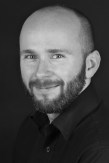
In this blog post, Zachary Munro discusses the development of a non-religious recovery culture in Alcoholics Anonymous (AA), and how groups like Secular Organizations for Sobriety (SOS), and LifeRing Secular Recovery are renegotiating their relationships to AA’s origins in the evangelical “Oxford Group” of the 1930s. As this non-religious recovery culture grows, it continues to explore ways in which the Twelve Steps on the road from the “addicted-self” to the “recovering-self” might need neither God nor even “spiritual” discipline to work.Zach Munro Photo

Continue reading

Myth and Solidarity in the Modern World: An Introduction

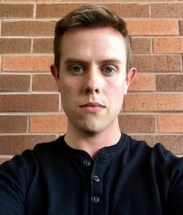
The world is awash with myths and fake news. The gut consensus among university-educated, post-Enlightenment minds appears to be that we should do away with myths altogether. But what about the positive role that myths play in underwriting shared action? My book, Myth and Solidarity in the Modern World: Beyond Religious and Political Division, sheds light on this positive role and how groups are facilitating the inclusive sharing of myths in diverse spaces. The following is a short introduction to that book. Tim

Continue reading

Research Assistant for History of Humanism project (London, UK)

History of Humanism in Britain since 1896

University of Glasgow / Oxford Brookes University

Research Assistant (0.8FTE, 24 months), based London

A research assistant is being sought to work on the above project with Callum Brown (University of Glasgow) and David Nash (Oxford Brookes University). With the support and funding of Humanists UK, the objective is to research the History of British Humanism from c.1896 to the present. The post will be based in London. Full details of the post are on the University of Glasgow jobs site at https://www.gla.ac.uk/it/iframe/jobs/ (and enter ‘Humanists’ in Search) and at http://www.jobs.ac.uk/job/BJJ357/research-assistant-part-time/ (Note that fuller details are on the Glasgow site.)

Informal queries are welcomed to callum.brown@glasgow.ac.uk

Spirituality: Secular or Religious?

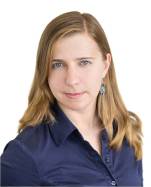
In this post Galen Watts questions whether the paradigm of secularization—exemplified by the recent work of Steve Bruce—is ultimately the most useful for studying spirituality. He contends that scholars might be better off eschewing essentialist definitions of “religion” and instead examining the various ways in which individuals operationalize the term “spirituality,” and for what purposes. Drawing from his qualitative research with Canadian millennials who self-identify as SBNR he argues that individuals who claim “spirituality” do so largely as a result of the religious imaginaries they hold. Thus investigating the nature of these imaginaries might prove far more fruitful than obsessing over whetherBio pic (1)galenwatts or notspirituality is “real religion” or not.

Continue reading

Who’s the Master of None?


The misfits ticking off ‘none’ when asked about religious affiliation. An unrecognised chunk of diverging identities: It’s time to ask how the non-religious are recognised in state, law and politics.IMG_8025

How does the state deal with the considerable portion of the population whose practises, beliefs, identities and belongings are other than religious? How is the phenomenon of non-religion (mis)recognised in different religious, social and cultural contexts on national level across the world today?

The emerging research field of non-religion seems to have become an established part of the sociology of religion and other disciplines addressing the varieties of identities associated with what has become to be known as ‘the nones’ within religious studies of various kinds.

In the Anglophone world ‘none’ denotes a survey option declaring ‘no affiliation’ with listed worldviews, e.g. Christian, Muslim, Jew, Hindu, Buddhist etc. For obvious reasons, the category of non-religion covers a vast variety of identities that one way or the other are hallmarked as ‘other than religious’ to quote Lois Lee’s minimum common denominator for recognizing the nonreligious.

8787213646_f756b65371_o-1

Image: The Descrier / Flickr

The None Next Door

The lion’s share of available research on nones has been focused on the construction of non-religious identities from below: For instance how individuals come to identify as non-religious. American research in particular has predominantly conceptualised this through apostasy; how people break the chain of memory and join the socio-cultural deviance of having no religion.

As a culturally contingent phenomenon, non-religion is often understood in its dialogue and conflict with the dominant formats of religion in society, hence William Stahl argues that Catholic nones and Protestant nones are different. In addition, non-religious identities appear less defined in societies where religiosity is not socially expected or widespread according to Phil Zuckerman who argues that Scandinavian nones are less prone to identify as atheists when compared to the US, or Greece for that matter.

While apostasy indeed is interesting, it is not a key concept of non-religion in the Nordics where most nones in general are likely to have been brought up without religious guidance and live their everyday lives without expectations of belonging, believing or practicing religion. They are to a large extent what Zuckerman describes as indifferentIn Norway, a large share of the non-religious population is ‘unaffiliated’, i.e. they are not registered in an officially recognised worldview community (e.g. The Norwegian Humanist Association). The unaffiliated is the second largest group in Norway and counts 14% of the population (2012). The largest group are the members of the Church of Norway, which count about 70%. For quite obvious reasons it is difficult to tell what faiths, worldviews, beliefs and identities that are contained under the category of ‘no affiliation’.

Members Only

Interestingly – that can also be said about the members of the Church of Norway, which is largely based on a system that allows automatic enrolments and passive memberships, and more notably a number of involuntarily memberships. First, new-borns are registered as members of the church if at least one of the parents are registered and will remain so from cradle to grave unless opted out by parents as minors or on their own initiative after turning 15. A new online system for registering with and opting out of the church was implemented in 2016. Up until then opting out was a tedious affair involving written letters and the bureaucratic goodwill (sic!) of the local parish. However – for reasons unknown– such procedures have proven to be futile as there is way too many who regardless of their opt-out have remained registered members of the church. According to the Norwegian newspaper VG, as much as 75 000 were involuntarily members of the church in 2005. In the aftermath of the online registration and opt-out form in 2016 more than 41 000 cancelled their memberships, while 3147 persons registered as members of The Church of Norway. During my own interviews of Norwegian nones, conducted in 2017/2018, several of the interviewees (3/10) discovered that they were involuntarily members of the church. It is therefore reasonable to assume that a significant share of the Church of Norway’s members is so without consent.

Another reason for scholars to engage with the membership number in critical fashion is the fact that membership to the Church of Norway has no practical impact on the individual: Not financially; you cannot opt out of the church tax (which you can in Sweden) and there is no other implications of being a member – you are not reminded about such affiliations through newsletters etc. and church magazines, journals and pamphlets are distributed evenly and regardless of the house’s status as members or not. In other words, you can easily be a member throughout your life completely unaware of it.

The only practical difference is that members of the church are entitled to vote in the church elections, which are held simultaneously as general elections in Norway. One of my informants revealed that the ability to push the church in a more liberal direction through the elections was an incentive to remain member despite her general lack of belief and sense of belonging to the Church of Norway. Her passion for equality (sex, gender and ethnic) was instrumental for that choice. We cannot draw solid conclusions from such trajectories, but they nonetheless underscore the suspicion that official membership stats are not reliable sources when mapping religious de facto practice, belief and belonging. The reasons for why nones remain members are diverse, but the main point here is the observation that they sometimes do, whether it is out of indifference, ignorance, or potential of political impact or utter unawareness.

Turning the tables

While acknowledging the importance of the dominant socio-cultural and religious structures for nones ‘on the ground’ it is interesting to turn the tables and ask how they are perceived from above. Emphasising research of non-religion from above is not to say that the perspective from below is ruled out or wrong in any sense. Instead I argue that the numerous ethnographies of nones make a solid foundation for developing research on other societal spheres, such as within law, politics and institutions. This is the intention of the upcoming conference Formatting non-religion in late modern society – Institutional and legal perspectives, which takes place in Oslo September 26-27, hosted by the GOBA project (University of Oslo) and the international research network Eurel.

When establishing knowledge about sociocultural forms of non-religious identities (from below), it is politically and academically interesting to ask how such social formations are recognised, represented and perhaps negotiated from above. Now, this is however not quite straight forward as it sounds, because nones are to a certain extent an academic construct. That is, nones are not necessarily formally recognised as a worldview category, possibly due to the lack of formal organisation. Meanwhile, the lack of such is completely natural as the group consists of a variety of ways of being ‘other than religious’, the diversity amongst nones means that certain fractions may not want to be associated with each other. For example consider the significant difference between the ‘spiritual not religious’ group and New Atheism. The diversity of non-religious identities and group formations might be a challenge for non-religion to be substantially recognised in governmental bodies, law and politics. However, that does not make research on ‘non-religion from above’ less important if we think about the significant number of people who are not formally represented through officially recognised membership to faith and worldview communities.

This is both significant in societies where the minority of nones are persecuted such as Pakistan as well as in the UK where nones form a possible silent majority or even in Norway despite the impression of 70% church membership gives. Both contexts – where nones are numerous and not – make interesting research phenomena of the state’s handling with these identities in politics and law. We can for instance ask how different forms of secularism facilitates politics to serve nones, religious majorities and minorities alike? How non-religious worldviews are considered in public religious education and other institutions where the state is expected to facilitate for freedom of belief and thought? Or what happens with citizenship and sense of belonging when the state supports an established church in a country with an increasing non-religious population?

Non-religion is arguably an academic construct derived form English survey-lingo, which perhaps is difficult to recognise at first glance. Including ‘nones’ when mapping the religious landscape of late modern societies definitely broadens our horizon. As with the example from Norway, including the unaffiliated and critically examining the possibility of nones formally affiliated with the Church of Norway, changes our perception of the religious demography. It would be worthwhile to conceptualise this complexity further in research of politics, law and institutions. Regardless of the lack of fixed definitions, institutional representation and widespread acknowledgement in scholarly discourses and beyond, ‘non-religion’ is an analytical tool that cannot be overlooked by researchers, politicians, state officials and others who seek to understand, facilitate and marshal contemporary plurality of faiths and worldviews.


This blog has been co-published with Religion Going Public.


Biography

Erlend Hovdkinn From Doctoral Research Fellow, Faculty of Theology, University of Oslo.PhD Project: ‘From Protestant to Post-Religious? Researching nones in Oslo’.

My academic interests are within sociology of religion, and more specific – nonreligion and secularity. My PhD project addresses nonreligion in the Norwegian context. How does the religiously unaffiliated relate to Norway’s cultural heritage of protestant Christianity? Moreover, what constitutes Norwegian nonreligion, politically, socially, existentially and culturally?

My position as PhD candidate is part of the project Good Protestant, Bad Religion (GOBA, funded by the Research Council of Norway, 2014-2018).

I am one of the editors of the collaborative scholarly blog Religion: Going Public (2016->), and I am writing for the Norway section at EUREL, a database of socio-legal data on religion in Europe.