
Announcing CFP: Atheism, Secularity, and Science, a special journal issue in Science, Religion & Culture
.
Guest edited by: John R. Shook Ph.D., Ralph W. Ho od Jr.
Ph.D., and Thomas J. Coleman III.
Over the past 10 years research and scholarship on secularity in general, and atheism in particular, has increased significantly. Moreover, these phenomena have been researched, studied and documented by multiple
disciplines ranging from cognitive science to religious studies, and from anthropology to sociology. The study of atheism and secularity is of high interest to not only scholars, but also the public in general.
Atheism and secularity are often seen as two constructs that are intimately related with a third, that of ‘science’. Where one finds the scientific method, positivist epistemology and naturalism in general, one typically finds atheism and secularism. Continue reading
CFP: BASR Annual Conference
British Association for the Study of Religion annual conference
3-5 September 2014
The Open University, UK
http://www.basr.ac.uk/conference.htm
BASR’s 2014 conference has two themes: “religion, art and performance” and “the cutting edge”. Both can be interpreted broadly. Panels and papers are invited. Continue reading
CFP: Religion and Spirituality in Society
Fifth International Conference on Religion and Spirituality in Society
16-17 April 2015
University of California at Berkeley
Berkeley, California, USA
http://religioninsociety.com/the-conference/call-for-papers
SPECIAL CONFERENCE FOCUS: Social Movements and Faith
Religious commitments are, as often as not, social commitments. In addition to its usual range of themes, this year’s special focus of the Religion and Society knowledge community is the relation of religion to social movements, ranging from movements for nominally “progressive” or “liberal” social change, to “fundamentalisms” whose religious practices are often explicitly or implicitly social and political. The conference will ask the questions: under what conditions and to what extent are religious communities socially activist, either in their doctrine or their practices? How do religious communities, support or align with other social movements?
The 2015 meeting will feature a special focus on this provocative subject. We welcome open debate, discourse and research from participants that center on this special topic, as well as any other themes or issues relevant to religion and spirituality in society. Continue reading
CFP: European Conference on Ethics, Religion & Philosophy 2014
The European Conference on Ethics, Religion & Philosophy
24-27 July 2014
Thistle Hotel Brighton, UK
http://iafor.org/iafor/ecerp2014-call-for-papers/
2014 Conference Theme: “Individual, Community & Society: Conflict, Resolution & Synergy”
Conflict is an integral part of the human condition. The universal struggle between our personal selves—who we are as unique, separate and different from others, with our specific blend of experiences, abilities, attitudes, aspirations, needs and wants—and our social selves, intricately connected to, and interdependent on, others—our loved ones, our friends and favoured groups, our communities and cultures—leads inevitably to internal as well as interpersonal conflict.
Conflict among our communities and societies is also natural, given that these groups are founded on commonality—of geography, values, attitudes, beliefs, aspirations—and differentiated from others based on these. Diversity, however, though it may lead to conflict, plays an important role in the flourishing of communities and societies. One of the challenges of modern society is harnessing the synergy that emerges from the interaction of these differences.
Abstracts of no more than 250 words should be submitted by the extended deadline of June 1, 2014.
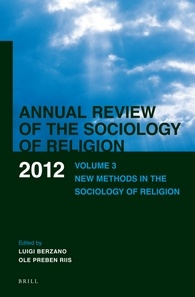
Call for Papers: Annual Review of the Sociology of Religion – “Atheism”
Proposal for a special issue of the Annual Review of the Sociology of Religion, edited by Franco Garelli and Roberto Cipriani, on atheism (cut-off date for delivery of papers, 30th June 2015; forthcoming 2016)
 In the spring of 1969 an International Symposium on the Culture of Unbelief was held in Rome, organized by the Vatican Secretariat for Unbelievers, with the participation of illustrious sociologists like Parsons, Berger and Luckmann: see R. Caporale, A. Grumelli (eds.), The Culture of Unbelief, University of California Press, 1971 (published in Italian as Religione e ateismo nelle società secolarizzate, Mulino, 1972). This pioneering experience sought to understand the evolution of the secularization then taking place. Later, the topics of religious non-belonging, indifference, agnosticism, ceased to attract the specific attention of sociologists, who began taking a greater interest in pluralism, globalization, multiple modernity and intercultural phenomena. But for some years now the issue of non-religious attitudes and behaviour has come to the fore again. The Sociology of Religion review devoted most of one of its recent issues (Winter 2013, with two essays by Stephen LeDrew and one by Jesse M. Smith) to the phenomenon of atheism. The Journal for the Scientific Study of Religion (March 2013) also showed an interest in unbelief by publishing essays by Jesse M. Smith (Godless Community), Eran Shor and David J. Roelfs (Nonreligious Participation). Previously the Journal of Contemporary Religion had devoted a special issue (January 2012) to the topic of “Non Religion and Secularity”.
The time seems to have come for sociology to take stock of the situation, not merely in partial or territorial terms, but in a much broader sense, in order to obtain a better understanding of the dynamics presently at play in this area. Among other things, it is significant that, in the meantime, a neologism, previously unknown to the literature of sociology has been coined: Nones, those who deny, do not believe, do not belong, do not participate, do not pray, do not refer at all to values of a religious nature.
However, adequate statistical references and specific research devoted entirely to the issue of unbelief are lacking. Without claiming to present a comprehensive picture of the situation at world level, nevertheless, the intention underscoring this proposal is that of trying to provide as varied an analytical perspective as possible, one capable of acting, maybe, as a new starting point for a future sociology of non-religion.
Possible topics include:
- Irreligion
- Religious nones
- Agnosticism
- Non religious education
- Non religious participation
- Non religion
- Non religion in Britain
- Atheism in India
- Non religion in USA
- Religious indifference
- Atheism and religion in Eastern and Western Countries
- World statistics of religion and irreligion
- Atheism and islam in Eastern and Western Countries
- Atheism and Orthodox Churches
- American atheists
- Teaching atheism
- Paganism
- Religion and Non Religion
- Religion and Secularism
- New Atheism and Non Religion
- Atheism in International Social Survey Program
Please send all proposals (300 words) to Roberto Cipriani: rciprian@uniroma3.it
Deadlines:
- Submission of proposals: June 30, 2014
- Notification of acceptance: September 30, 2014
- Completed manuscripts (7000 words): June 30, 2015
Call for Papers for NSRN 2014 Conference
 The call for papers is now live for our 2014 conference on ‘Explaining Nonreligion and Secularity in the US and Beyond’ to be held 19-20 November 2014 at Pitzer College, Claremont,CA.
Full details can be found here: http://nsrn.net/2014-conference/
Please circulate widely. Thanks!

Call for Papers: Association for the Sociology of Religion Conference 2014
ASSOCIATION FOR THE SOCIOLOGY OF RELIGION
76th Annual Meeting: RELIGION AS A SOCIAL FORCE
August 13-15, 2014. J.W. Marriott Union Square, San Francisco, CA
PROGRAM CHAIR: Jeremy Uecker, Baylor University, Jeremy_Uecker@baylor.edu
Over the past three decades, a number of scholars have underscored the apparent role of religious institutions, practices, beliefs, and values in shaping social institutions and human behavior. This strand of work has been collectively labeled the “strong program” in the sociology of religion. Theorists and researchers working within this program have explored the role of religion with regard to a wide array of domains, including social movements and politics, social stratification, immigration, health and well-being, and many others. Notable contributions have come from scholars whose main specialization is the sociology of religion, and from others who are known for their scholarship in other areas, but who have come to recognize the relevance of religion for their own work. Others have critiqued the “strong program” on a number of important grounds. The 2014 ASR meeting will explore what can be learned by viewing religion and spirituality as independent influences in social life, as well as the potential pitfalls of doing so, along with the many other approaches that flourish within the highly pluralistic sociology of religion.
Papers and discussion sessions on all topics within the sociology of religion are welcome, but especially those related to the meeting theme, including, but not limited to the following:
- Religion and demographic processes; Religion and globalization; Religion and politics; Religion and social movements; Religion and education; Spirituality and religion; Religion and socioeconomic inequality; Religion, spirituality, and health/well-being; Religion, race, and ethnicity; Religion, gender, and sexualities; Religion and immigration; Non-western religion and social change; Religion, terrorism, and violence; Religion and pro-social attitudes and behavior; Religion in adolescence and emerging adulthood; Religion, marriage, and family life; Religion, biology, and the body; Religion, crime, and deviance; Religion, spirituality, and emotions.
DEADLINES: Session Proposals are due by March 31, 2014 (submit to Jeremy_Uecker@baylor.edu)
Paper Proposals and abstracts are due by April 30, 2014 (submit through the Member Portal at www.sociologyofreligion.com)
Meeting registration is due by July 1, 2014 (submit through the Member Portal at www.sociologyofreligion.com)
Event: Religion and Political Theory lecture series launch
‘Neutrality and Religious Freedom’
Daniel Weinstock, McGill University
Thursday 6 February 2014
5pm Council Room, School of Public Policy, The Rubin Building, 29-30 Tavistock Square, London WC1H 9QU
Daniel Weinstock will deliver the first in the RAPT (Religion and Political Theory) lecture series (see below for full details of the series and news of upcoming lectures). Weinstock is Professor in the Faculty of Law and Director of the Institute for Health and Policy at McGill University. He was previously Professor of Philosophy and director of the Research Centre on Ethics, both at Université de Montréal (CRÉUM), and he has held the Canadian Research Chair on Ethics and Political Philosophy. He has published extensively on the question of cultural and religious diversity in liberal democracies.
***
RAPT (Religion and Political Theory) Lecture Series
The RAPT lecture series showcases the work of prominent international scholars in the study of religion and political theory. It is organised by UCL’s Religion and Political Theory (RAPT) Centre. RAPT is a 5-year project funded by the European Research Council and led by Professor Cécile Laborde. It aims to interrogate the special status of religion (ethics, epistemology and practices) in western political and legal theory.
Unless otherwise stated, all lectures take place at 5pm and will be held in the Council Room, School of Public Policy, The Rubin Building, 29-30 Tavistock Square, London WC1H 9QU.
All are welcome. If you wish to be added to our mailing list, please email Aurelia Bardon (a.bardon@ucl.ac.uk) or Lois Lee (lois.lee@ucl.ac.uk). To attend, please register at www.uclspp.eventbrite.com
Thursday 6 February 2014
‘Neutrality and Religious Freedom’
Daniel Weinstock, McGill University
‘Neutrality and Religious Freedom’
Daniel Weinstock, McGill University
Tuesday 25 March 2014
‘Religious Exemptions and Self-Respect’
Jonathan Seglow, Royal Holloway, University of London
*Venue tbc*
Wednesday 28 May 2014
‘Religious Freedom and Fairness: An Egalitarian View’
Jocelyn MacLure, Université Laval
Wednesday 4 June 2014
‘Modes of Secularism’
Slavica Jakelic, University of Virginia
Thursday 3 July 2014
‘Hinduism, Christianity, and Religious Liberal Toleration’
Jeff Spinner-Halev, University of North Carolina at Chapel Hill
CFP: Religion Indifference, Due 2/28
CFP: Religious Indifference
The Emmy-Noether-Project, “The Diversity of Nonreligion,” (www.nonreligion.net) is happy to be hosting a workshop on “religious indifference” in Frankfurt am Main, from November 13th to 15th.
The concept of religious indifference has been used to describe a specific mode of nonreligiosity that is an expression of extremely low concern for religion. As such “indifference” is to be distinguished from religiosity on one hand and avowed atheism on the other. Furthermore, religious indifference can take various modes, for example that of “existential” or “cognitive” indifference (Pollack, Wohlrab-Sahr, and Gärtner 2003).
As with other modes of nonreligiosity, the social status of religious indifference varies according to the constitution of the religious field and the general socio-cultural context (Quack 2013, 2014). Referring to the British case, Bagg and Voas (2010) argue that current indifference is primarily the result of changes in the religious landscape of Britain and the increasing religious and social acceptance of people who do not practice any religion. Conversely, if religion is deeply embedded in civil culture, religious indifference might be negatively perceived as a form of social dissent (Wohlrab-Sahr and Kaden 2013). Bullivant (2012) by contrast, has introduced an alternative meaning of religious indifference by hinting at the seemingly paradoxical situation of rising interest and concern with religion in European secularized societies; what is at stake here is not a positioning towards personal religious belief, behavior, or belonging, but the (dis)interest in public-political manifestations of religion.
While anti-clericalism or other anti-religious expressions have visibly accompanied processes of secularization, indifference seems to be an important yet unaccounted feature of contemporary societies. In the upcoming workshop, we seek to bring together different scholars who wish to (further) engage with the concept of religious indifference.
The workshop will take place in Frankfurt am Main, from November 13th-15th.
Please note that the workshop’s primary goal is to develop a joint publication. In order to do so, we suggest that all participants write a draft article and distribute it to the other participants prior to the workshop. These articles will be discussed during the workshop itself. We welcome theoretical contributions and methodological and methodic reflections as well as case studies from different national or regional contexts.
Please send a short abstract for consideration to schuh@em.uni-frankfurt.de. Deadline for application is February 28th.
Further dates of importance:
- All participants will be provided an extended conceptual sketch: Spring 2014
- Participants submit a draft article: October 2014
- Revision of articles by participants: Spring 2015
- Final Submission: Summer 2015
PhD Studentship: The Institute of Cognition and Culture at Queen’s University Belfast and the Religion, Cognition, and Culture unit at Aarhus University
The Institute of Cognition and Culture at Queen’s University Belfast and the Religion, Cognition, and Culture unit at Aarhus University are offering a new joint PhD studentship in the cognitive science of religion.
Applications would be welcome regarding the intersection of atheism or non-religion and cognitive science.
Please see details below and contact Paulo Sousa p.sousa@qub.ac.uk for questions regarding the first studentship, available for this upcoming year (2014-2015).
A new Doctoral programme in the cognitive the science of religion has been established by Aarhus University (Graduate School of Arts/Religion, Cognition and Culture Research Unit–see http://www.rcc.au.dk/) and Queen’s University, Belfast (School of History and Anthropology/Institute of Cognition and Culture—see http://www.qub.ac.uk/schools/InstituteofCognitionCulture/).Students should apply for admission via one of the two Universities, and will be considered in line with their normal Postgraduate Admission Procedures, which require, among other things, a research proposal on a topic relevant to the cognitive science of religion. The normal duration of the Doctoral programme is full time for three years. In general, admitted students will spend the first six months and the last six months of their doctoral studies at the University where they are admitted. The intervening 24 months are spent according to a PhD plan established for each individual student. In completion, the student receives a single degree certificate issued by Aarhus University and Queen’s University.
Each University agreed to provide two fellowships to support the programme. One fellowship shall be available each year—Queen’s University will allocate funding in the academic years 2014-15 and 2016-17, while Aarhus University will allocate funding in academic years 2015-16 and 2017-18. Students who wish to compete for a fellowship will be required to apply to the University responsible for offering the support in the related year. For more information about the programme, please contact Armin W. Geertz (AWG@teo.au.dk) or Paulo Sousa (p.sousa@qub.ac.uk)
 NSRN Online