[CFP] Atheism, Agnosticism, and Non-Religious Worldviews: Theoretical Models and Psychological Measurement

The central focus of this special issue of Psychology of Religion and Spirituality, with guest editors Ralph W. Hood Jr., Heinz Streib, and Thomas J. Coleman III, is to challenge psychologists and cognitive scientists to move beyond atheism and agnosticism by investigating “non-religious worldviews” as full-fledged constructs rather than as a solely negative identity.

We invite manuscripts (theoretical, empirical, and method) focused on exploring atheism, agnosticism, and non-religion from multiple perspectives by addressing the question of complexity and multidimensionality in measurement, psychological mechanisms, and theoretical models.

Topics of specific interest are

  • Psychometric measures of non-religious worldviews
  • Atheist and agnostic “spirituality.” Can nonbelievers be “spiritual?”
  • Computer models of atheism
  • Comparative studies of atheists and theists
  • Quantifying and categorizing types of nonbelief
  • Atheism and analytical thinking
  • Moving beyond stigma and discrimination
  • Non-religion in childhood and adolescence
  • A framework for “implicit atheism?”
  • Do agnostics differ psychologically from atheists?
  • Atheism, agnosticism, and non-religious prosociality
  • Atheism, a next step in human evolution?
  • Nonbelief as a complex, adaptive system?
  • Atheism, health, and well-being
  • Atheism and the autism spectrum

Deadlines

  • March 31, 2017: letter of intent submission
  • September 15, 2017: submission of selected articles

More information: http://www.apa.org/pubs/journals/rel/call-for-papers-atheism.aspx


[Event] NSRN Annual Lecture 2016

NSRN Annual Lecture 2016: Is atheism a religion?

Psychological & Anthropological Perspectives.


This panel will consider atheism and religion from the perspectives of psychology and anthropology and will seek to bring scientific theory and evidence to bear on these questions and establish how it might (and might not) make sense to liken atheism to a religion.

Speakers include:

Dr Miguel Farias, Coventry University

Professor Christopher French, Goldsmiths College, University of London

Dr Jonathan Lanman, Queen’s University Belfast

Dr Lois Lee, UCL (chair)


The event will take place at UCL – 6pm, 2 December 2016.

https://www.eventbrite.co.uk/e/nsrn-annual-lecture-is-atheism-a-religion-registration-28392936036

[Research] Thank God for Secularity

In an attempt to investigate further the contemporary relationship between secularity and religiousroger-mitchell communities, Roger Mitchell offers us his thoughts on how the establishment of a fully secular society and a strong institutional separation between secular authorities and religious communities can lead to positive consequences for religious and nonreligious people alike.

My argument is that the progress of secularity as the new normal in British society is crucial to the recovery of a church that recognisably represents the Jesus of the New Testament gospel story. I make this argument by reflecting on the sermon that Giorgio Agamben gave in Notre Dame Cathedral in March 2009 (Agamben, 2012). The argument has three main components: 1) the church is understood to be a community of foreigners and exiles as opposed to citizens of a city, state, kingdom or empire; 2) the church is marked by a distinctive relation to time which is in tension with the chronological timeframe of a particular socio-political construct of law or state, in our case Western neo-liberal representative democracy; 3) the way that community can form and flourish is in an extraordinary kind of tension between the poles presented in the first two points, namely aliens and citizens and chronological and eschatological time. Taking these components in order, I will look at several characteristics from the genealogy of Western European Secularity that can help provide for this ecclesial recovery. I will then suggest that there can be a positive tension between secularity and a Jesus style of church, and that this can engender a flourishing community for all. I will then refer to the current refugee crisis as a context for this.


1. Secularity as space for positive alienation


William Cavanaugh points out that the word “religion” itself only came into use with the Renaissance (Cavanaugh, 2009:70). The only differentiation prior to that was of regnum and sacerdotium, that is to say the realm of the monarch’s power and the realm of the priests’ power, and the saeculum was simply the time that remained between the first coming and the expected second coming of Christ; it was by no means to be thought of as secular. In this context, the church was no longer the counterpolitical agent of community but the oppressive partner in the colonisation of the whole of socio-cultural and political space. My own work traces the genealogy of this occupation from the 4th century partnership of church and empire, which I suggest is best understood as a fall, or lapsis, in the history of the church (Mitchell, 2011). This idea of a lapsis is something that John Milbank and Michael Alan Gillespie,  among others, suggested happened at the Enlightenment (Milbank, 1997: 44; Gillespie, 2008: 11-12).  But, as well as locating this fall much earlier, I see it playing out right up until the present biopolitical fulness of neoliberal capitalism. In this context, the recognition of religion as a specific entity provides for the possibility of its eventual separation from the socio-political mainstream and the subsequent recognition of secularity as a norm, which in turn gives space for the re-positioning of the church as exiles and foreigners.


2. Secularity as the opportunity for interruption and surprise


The increasing displacement of the church, from a central role in the saeculum as a permanent partner in sovereignty, and the consequent establishment of a secular sphere of Law and State provides for the recognition of a de-sacralised secular realm. Now a reconfigured church can again have the opportunity to interrupt the existing constructed temporal order and be restored to its early identity of constantly surprising the ongoing hegemony of the socio-political system. The church can become what Paul Fletcher has described as impolitical (Fletcher, 2009: 176-178), because it does not and cannot fit the mainstream timeframe.

As is becoming increasingly clear, it is not all transcendence and spirituality that is banished from this secular realm, but the organised religion that was perceived to dominate it, or might have the potential to do so. This explains the increasingly post-material character of secularity as Graham Ward exposes (Ward, 2009: 115-117), and shows that secularity continues to carry both power from above and power from below, analogous to the two streams Linda Woodhead recognises within Christendom (Woodhead, 2004: 406) The stream from above continues to maintain the status quo, while the one from below has the potential to provide co-conspirators alongside any newly representative form of church.


3. Intensive engagement and the loving community


Key to all this is Agamben’s understanding of the tension between the expressions of corporate identity, which he defines as citizens and aliens, and his two distinct configurations of time. Here he introduces two Greek expressions selected by the Apostle Paul, hōs mē and katargēsis, to interpret what is happening. It is important not to be put off by Agamben’s vocabulary here, because it provides important insight into how the contemporary ecclesia may be understood as a net contributor to the overall wellbeing of society. The first word literally means “as not” and conveys the way that doing a particular job or having a particular role in the ongoing order can be used to subvert it to another end or purpose, in this context, that of loving community. The second word, katargēsis is used by Agamben to convey the idea of disregarding the role of “law” and of the “state” while affirming any motivation behind them that might promote a flourishing community.

For the radical church operating within the counter timeframe of Jesus’ rule, or what Agamben calls messianic time, this component is love (Agamben, 2005: 108). Some of us radical contemporary disciples have been attempting to configure this politics of love by means of the newly invented word kenarchy, from archy: a way of ordering or relating in social space and keno: the Greek word for empty, together signifying emptying out sovereign power and replacing it with love (Mitchell and Arram, 2014). A contemporary example of this love component at work would be the use of every available opportunity to show hospitality to strangers and to bend the powers of state and law to this end. It hardly needs saying that the current refugee crisis is calling for just this kind of innovatory expression of British and European community. By such means, out of the encounter between secularity and the newly disclosed church, the community of love is beginning to emerge.


Bibliography

Agamben, Giorgio. The Church and the Kingdom. Translated by Leland de la Durantaye. London, New York, Calcutta: Seagull Books, 2012.

———————–. The Time That Remains. Translated by Patricia Dailey. Stanford, California: Stanford University Press, 2005.

Cavanaugh, William. The Myth of Religious Violence. Oxford: Oxford University Press, 2009.

Fletcher, Paul. Discipling the Divine. Farnham, Surrey and Burlington Vermont: Ashgate, 2009.

Gillespie, Michael Alan. The Theological Origins of Modernity. Chicago: The University of Chicago Press, 2008.

Milbank, John. The Word Made Strange. Oxford: Blackwell Publishers Ltd, 1997.

Mitchell, Roger Haydon. Church, Gospel and Empire: How the Politics of Sovereignty Impregnated the West. Eugene, Oregon: Wipf & Stock, 2011.

Mitchell, Roger Haydon and Julie Tomlin Arram eds. Discovering Kenarchy. Eugene, Oregon: Wipf & Stock, 2014.

Oord, Thomas Jay. The Uncontrolling Love of God. Downers Grove Illinois: IVP Academic, 2015.

Ward, Graham. The Politics of Discipleship. Grand Rapids, Michigan: Baker Academic, 2009.

Woodhead, Linda. An Introduction to Christianity. Cambridge: Cambridge University Press, 2004.


Roger is a political theologian with a particular interest in the politics of love. He co-directs 2MT, a charitable organisation committed to managing change, is External Partnerships Coordinator of the Richardson Institute for Peace Studies and an Honorary Research Fellow in the Lancaster University Department of Politics, Philosophy and Religion. He is a member of the Society for the Study of Theology, the Conflict Research Society and the United Kingdom Pentecostal-Charismatic Leaders Conference.  He is married with two sons and four grandchildren.

[Research] Contemporary Japan’s “Nonreligious” Conversion to Christianity

In this post, Jesse LeFebvre unpacks the enigma of Japanese nonreligiosity by analysing thejesse presence and increase of Christian weddings in Japan. He argues that Japanese nonreligiousness has altered strategies of Japanese Christian missions and influenced the bridal industry.

Statistically speaking, the vast majority of contemporary Japanese self-identify as nonreligious (Reader 2012). However, this self-identification is far from a wholesale rejection of religion, and often employed both to reject and affirm religious behaviors and identities (LeFebvre, 2015). Most typically, nonreligious attitudes reject religious dispositions that are perceived as deviant, unhealthy, or foreign while simultaneously affirming religion’s importance. Nonreligious individuals tend to rely on religious professionals and vicariously entrust specialized acts of prayer and ritual to religious authorities when desirable and appropriate. Along with various Buddhist and Shinto rites, Christian wedding ceremonies are now one of the occasions where nonreligious Japanese rely on religious professionals. Nonreligious attitudes are responsible for significant transformations in Japanese Christianity and the bridal industry and the successful response of the Christian churches and the bridal industry to consumer demand has led to an explosion in Christian wedding ceremonies. In short, the popularity of Christian weddings among nonreligious individuals has transformed the policies and approaches of Christian churches and created new Christian ritual venues and religious organizations.

The story of contemporary Japanese Christianity is one of success and failure in the face of overwhelming “nonreligiousness.” The story of failure depicts the inability of Christian churches to acquire Japanese converts (Mullins 1998); both transplant and domestic Japanese churches face aging membership and dwindling baptism numbers. In 2006, Christians accounted for 1.2 percent of the Japanese population (Agency for Cultural Affairs 2006, 31). Similarly, Christian religious organizations accounted for a mere 2.3 percent of Japan’s 182,468 religious juridical persons (Ishii 2007, 59). This data, along with an aging church population, led researchers to suggest that a marginal Christian population is headed for rapid decline (Saito 2005).

However, these statistics on Christian affiliation do not account for the unprecedented popularity of Christian wedding ceremonies or address how nonreligiousness has altered Japanese Christianity. By the mid-1990s, Christian weddings surpassed Shinto weddings and, since 1999, continue to be the wedding ceremony of choice among sixty to seventy percent of Tokyo couples with similar trends in popularity throughout the country (Ishii 2005, 31). Christian wedding ceremonies have attracted and sustained the interest of a majority of Japanese—the majority of whom are nonreligious. In short, the majority of Japanese are not only “Born Shinto, Die Buddhist,” (Reader 1991), but they also “Identify nonreligious, Wed Christian.”

Nonreligiousness has transformed the traditional Japanese Christian churches and the bridal industry. Although frequently dismissed as bridal-industry activity, Christian churches and personnel were essential in the rise of Christian weddings and their popularity. On the 1st of March, 1975, the Vatican granted the Japanese Catholic Church special permission to conduct wedding ceremonies for non-affiliated, non-Christian couples (Japanese Catholic Pastoral and Evangelization Committee 1992. 1). Nonreligious Japanese have access to this Catholic sacrament in a manner on par with baptized church members. These forms of access were instrumental in popularizing the Christian wedding in the late 1980s and the 1990s. The Catholic Church used in Kanda Masaki and Matsuda Seiko’s “wedding ceremony of sacred shining (seiki no kekkon)” became the setting of the 1991 Japanese television series Itsu ka, sarejio kyōkai de and one of the most popular venues in the early years of Christian weddings.

In addition to new policies and approaches, the nonreligious demand for Christian weddings has given rise to new religious institutions and powerful partnerships between commercial and religious groups—occasionally blurring the lines between the two. One successful example of religious and commercial partnership is the Christian Bridal Mission (kirisutokyō buraidaru senkyōdan), which was founded in 1980 and incorporated as a religious juridical person in 1986 (Ishii 2005, 49-50). From humble beginnings, this non-denominational Evangelical Protestant Church—the first Christian organization devoted exclusively to the production of weddings—grew to national proportions. Currently, the Christian Bridal Mission has over one thousand ministers—making it one of the largest Christian organizations in Japan.

Where the active majority of people are nonreligious, mechanisms for establishing a convincing reference to Christianity takes on a sensual character. Visual cues—minister’s race, architectural style, musical talent, etc.—have become the primary way not only to generate a connection to Christian tradition but to verify that a connection does exist (LeFebvre 2015). The bridal industry relies on sensory experience in almost every conceivable manner with the result that venues of commercial institutions now play a crucial role in the success and continued popularity of Christian weddings as new Protestant churches.

Mentioning Notre Dame and Christian relics undoubtedly conjures images of Notre Dame de Paris, which houses some of Catholicism’s most famous relics—the Crown of Thorns, a fragment of the True Cross, and one of the Holy Nails. One is less likely to imagine the Notre Dame Shimonoseki in Yamaguchi Prefecture, which houses and displays relics of Saint Valentine (Igarashi 2007, 120). The Notre Dame Shimonoseki claims to be one of Japan’s largest great cathedrals, but there are no parishioners or church members who regularly attend services—at least not in the ordinary sense. Despite the rich Christian environment, Notre Dame Shimonoseki is not a “church” in the legal sense. It is a commercial entity devoted to meeting consumer demand for wedding ceremonies; a space—borrowing the Japanese architect Igarashi Tarō’s (2007) terminology—referred to as a “wedding church (kekkonshiki kyōkai).”

According to a 2003-2004 survey conducted by Kekkon Pia, when asked what aspect of the wedding they felt was most important, the most common response of couples was venue (kaijō) followed by ceremonial style (kyoshiki no sutairu), indicating the importance of sensory experience (Igarashi 2007, 27). Industry response to this demand manifested itself in a number of ways—the most visible including the creation of more than 1,228 locations for the performance of Christian weddings (Igarashi 2007, 49). Nearly half of these locations are freestanding wedding churches designed to meet expectations for aesthetic beauty and religious authenticity.

The vast majority of wedding churches are built in one of two Western architectural styles—Classical or Gothic. Stained glass, pulpits and pipe organs are common fixtures in both wedding churches and hotel chapels (Igarashi 2007, 53). Wedding churches are typically designed to boast a large-scale vaulted-arch ceiling, extended virgin road, steeples, a rose window, and flying buttress. Some wedding churches are actually built from the ground up using traditional materials and, even in some cases, materials taken from Gothic churches that were torn down in Europe, imported and reconstructed in Japan (Igarashi 2007, 52). The bridal industry is building Gothic-style churches at scales and in numbers that Catholic and Protestant Churches in Japan could never afford or justify. Japanese demand for Christian ritual spaces is fueling a boom in this architectural style that cannot be witnessed anywhere else in the world.

In Japan, nonreligiousness is considered normal, non-exclusive religious belief and helps to explain the wealth of diversity in the Japanese religious market and recent acceptance of Christian weddings (LeFebvre 2015). Under this paradigm and beginning with Shinto weddings, wedding ceremonies in modern Japan have become more, not less, religious in the postwar era. More recently, nonreligious attitudes are responsible for significant transformations in Japanese Christian churches and the bridal industry. Currently, Protestant and Catholic Churches offer services to meet the demand of the nonreligious in unprecedented ways. But this “commercialization” of Christianity and growth of new Christian organizations can only be properly understood in tandem with the “religionization” of the bridal industry—which now coordinates thousands of wedding churches and cooperates with thousands of ministers. In predominantly nonreligious Japan, religion not only retains its value—its scarcity ensures that the demand will continue to create lucrative opportunities for those who meet the needs of the nonreligious.


References

Agency for Cultural Affairs. (2006). Shūkyō nenkan. Tokyo, Japan: Agency for Cultural Affairs.

Igarashi, Tarō. (2007). Kekkonshiki kyōkai no tanjō. Tokyo: Shunjusha.

Ishii, Kenji. (2005). Kekkonshiki: Shiawase wo tsukuru gishiki. Tokyo: Nihon hōsō shuppan kyōkai.

Ishii, Kenji. (2007). Gendai nihonjin no shukyō. Tokyo: Shin’yosha.

Japanese Catholic Pastoral and Evangelization Committee. (1992). Nihon no katorikku kyōkai ni okeru hikirisutosha dōshi no kekkon ni tsuite. Tokyo, Japan: Catholic Bishop’s Conference.

LeFebvre, Jesse. (2015). “Christian wedding ceremonies: ‘Nonreligiousness’ in contemporary Japan.” Japanese Journal of Religious Studies, 42(2), 185-203.

Mullins, Mark. (1998). Christianity Made In Japan: A Study of Indigenous Movements. Honolulu: University of Hawai’i Press.

Reader, Ian. (1991). Religion in Contemporary Japan. Honolulu: University of Hawaii Press.

Reader, Ian (2012). “Secularisation, R.I.P.? Nonsense! The ‘Rush Hour Away from the Gods’ and the Decline of Religion in Contemporary Japan.” Journal of Religion in Japan, 1(2012) 7-36.

Saitō, Zenkyū. (2005). “Jūnengo Nihon no kirisutokyō wa sonzai shiuru ka.” Hanashiai (November).


Jesse Robert LeFebvre is currently a doctoral candidate in the Department of East Asian Languages and Civilizations at Harvard University. His research interests focus on contemporary and medieval manifestations of religion in Japan.

[Research] Atheism on YouTube for the last ten years

Looking at the spread and negotiation of a particular controversy between atheists andstaff-photo-1 Christians, Stephen Pihlaja examines how YouTube users negotiate tensions in a particular social space and how the collapse of a recognisable context for these negotiations affect the ways in which they put forth their beliefs. Pihlaja shows how close analysis of interaction on social media can provide insights about the religious arguments and discussions develop over time.

For the last ten years, my research (Pihlaja, 2013; 2014a; 2014b; 2011) has followed atheists and Christians on social media and YouTube. As a social media site, YouTube particularly has played an important role in the visibility of atheism, providing a platform for atheists to challenge religious dogma. This has been particularly true for the American context, where many of the YouTube atheists I have research are located. In America, atheism is still viewed with suspicion, and consistently one of the most distrusted minorities. Particularly in places like the deep southern states, identifying as an atheist remains problematic. YouTube, however, has facilitated ‘coming out’ as an atheist, a topic that has been of interest to researchers in the sociology of religion (Cimino and Smith, 2011, Smith and Cimino, 2012). The interaction of the dominant culture offline, and the emerging, bullish atheist culture on YouTube has created a kind of tension, where Christians would essentially come onto the site to ‘preach the gospel’.

Initially, my assumption about talk around religion on YouTube would focus on issues of theology and religious dogma. Unexpectedly, however, fewer of the disagreements were about the proof of God’s existence, and more were about who had insulted whom. The boundaries between religious and non-religious, as Hutchings suggests in his recent blog post, are not always simple to delineate, particularly when looking at real discourse. My book, Antagonism on YouTube, (Pihlaja, 2014a) looks at how these arguments, that seemed markedly small and petty in comparison to points of doctrine and theology, developed in one particular community of users. Adapting a discourse-centred online ethnographic approach (Androutsopoulos, 2008), I analysed the development of one particular argument, an instance where one Christian user called an atheist ‘human garbage’, after the atheist had insulted the Christian user’s wife.

The argument spread when the Christian user defended calling the atheist ‘human garbage’, using a Bible passage from the gospel of John. This action resulted in several kinds of responses: first, users (both Christians and atheists) who rejected the premise entirely, saying that it was never okay to call someone ‘human garbage’, regardless of the circumstances. Second, there were users who accepted this reading of the Bible (namely Christians) and said that although it was harsh, it was better to warn people about the truth than for them to end up being judged in hell. A third response, however, was the most interesting. These users argued not that it was wrong to call others ‘human garbage’, but that the Bible passage being used to condone it was being misread. The arguments focused on the use of metaphor and how users interpreted the parables of Jesus (Pihlaja, 2013).

While the Christians in my study argued over whether or not the Bible condoned calling other people ‘human garbage’, the atheists ridiculed the arguments and made the case that even the possibility that the language could be justified using the Bible showed how corrupting religion could be. However, like the arguments among the Christians about the reading of the Bible, an argument arose among the atheists about the extent to which the example of ‘human garbage’ could be used to condemn Christianity more generally, or if indeed, this was just an example of one person misreading the Bible. The atheists then argued back and forth about whether there were ‘good Christians’ and ‘bad Christians’ (Pihlaja, 2014b). These arguments as well were instructive in showing how discussions about religion and ideology can fall into very small, interpersonal discussions.

My research has shown that religious discussions and arguments cannot be divorced from the social context in which they take place. This has grown increasingly more complicated with the development of new mobile technology and the integration of offline and online lives. My research now (Pihlaja, forthcoming, 2017) looks at the ways in which ‘context collapse’ (or the diverse audiences watching users on social media from a variety of different, disparate backgrounds) has affected how users present themselves and their beliefs or lack of beliefs online. In 2006, many users couldn’t say they were atheists in offline settings, but could do so on YouTube; now, it’s potentially much easier to declare a lack of faith, but users have a growing awareness of all the different people watching them. There is an increased awareness of the multitude of online and offline audiences and the effect of this integration on how people of faith and no faith interact with one another is an important area of research going forward.


References

ANDROUTSOPOULOS, J. 2008. Potentials and Limitations of Discourse-Centred Online Ethnography. Language@Internet [Online], 5. Available: http://www.languageatinternet.org/articles/2008/1610 [Accessed June 6, 2016].

CIMINO, R. & SMITH, C. 2011. The New Atheism and the Formation of the Imagined Secularist Community. Journal of Media and Religion, 10, 24-38.

PIHLAJA, S. 2011. Cops, popes, kings, and garbage collectors: Metaphor and antagonism in an atheist/Christian YouTube video thread. Language@Internet [Online], 8. Available: http://www.languageatinternet.org/articles/2011/Pihlaja/ [Accessed 6 June 2013].

PIHLAJA, S. 2013. ‘It’s all red ink’: The interpretation of biblical metaphor among Evangelical Christian YouTube users. Language and Literature, 22, 103-117.

PIHLAJA, S. 2014a. Antagonism on YouTube: Metaphor in Online Discourse, London, Bloomsbury.

PIHLAJA, S. 2014b. ‘Christians’ and ‘bad Christians’: Categorization in atheist user talk on YouTube. Text & Talk, 34, 623-639.

PIHLAJA, S. forthcoming, 2017. Religious talk online: the online evangelical language of Muslims, Christians, and atheists, Cambridge, Cambridge University Press.

SMITH, C. & CIMINO, R. 2012. Atheisms unbound: The role of the new media in the formation of a secularist identity. Secularism and Nonreligion, 1, 17-31.


Stephen is an applied linguist, discourse analyst, and stylistician researching and teaching at Newman University in Birmingham UK. His research focuses on the discourse dynamics of talk on the Internet, particularly in online video around religious issues. His book Antagonism on YouTube: Metaphor in Online Discourse (Bloomsbury, 2014) focuses on the ways in which Christians and atheists argue online. He is currently completing a second monograph entitled Religious Talk Online: Muslim, Christian, and Atheist Discourse on Social Media, forthcoming on Cambridge University Press.

[Event Report] Secularization, Social Movements, and Sea Turtles: Reflections on the 2016 Association for the Sociology of Religion Conference

In this event report Jacqui Frost and Amanda Schutz cover the Association for the Sociology of amanda-picjackie-picReligion’s 2016 annual meeting. They detail the launch of new research projects into Understanding Unbelief as well as offering reflections from Woodhead’s lecture ‘Is No Religion the New Religion.’ Also, they share insights from a convened joint session on what social movement theories can tell us about nonreligion.

This year’s Association for the Sociology of Religion’s annual meeting was taken place on 19th – 21st August in Seattle. The theme was Exploring Diversity: Varieties of Religion and Nonreligion. As a result, there were numerous panels and presentations on the importance of increased sociological investigation into nonreligious experience and community. While there were too many great panels to recount here, including Author Meets Critics sessions for Lois Lee’s Recognizing the Non-religious: Reimagining the Secular and Christel Manning’s Losing Our Religion: How Unaffiliated Parents Are Raising Their Children, the overall takeaway from the conference was that nonreligious experience is increasingly influential and sociologists will have no choice but to engage with it going forward.

Kicking things off early Saturday morning was Lois Lee’s convened panel titled “Who Cares About Unbelief? Social, Political, and Legal Questions for the Scientific Study of Nonreligious Belief.” This panel came directly out of Lee’s new research initiative (with Stephen Bullivant, Miguel Farias, and Jonathan Lanman), the Understanding Unbelief Programme, which is offering research grants, early career awards, and public engagement funds to further scientific understanding of atheism and other forms of unbelief around the world. The panel was asked a set of questions regarding who, apart from social scientists and unbelievers themselves, might be interested in unbelief and why; in what ways the growth of unbelief will affect local communities, journalists, and public institutions; and how this growth will curb or create new social tensions. Overall, the panelists asked more questions than they answered, but the questions generated are likely to be a primary focus for many nonreligious scholars in the near future. Jessica Martinez from Pew Research Center tackled these questions from a political engagement angle, asking how changes in the religious landscape might result in changes to the political landscape. She discussed how the unaffiliated are now the largest “religious” group in the Democratic Party, but that the unaffiliated have historically been less likely to show up at the polls on Election Day. She raised questions about how the rise in atheists and agnostics among Americans will influence the 2016 election (if at all), and if the unaffiliated will become more politically engaged than they have been previously. Sociologist Rhys Williams focused on social movements and immigration, asking how unbelief might mobilize activism and foster commitment in social movements. He also asked whether nonreligious organizations and communities will be able to cultivate resources and cultural reproduction for immigrants—something that religious organizations have been so good at for centuries. Journalist David Briggs implored nonreligious scholars to help journalists get the story right by providing them with responsible summaries and statistics, and religious studies scholar Joseph Blankholm focused on organized non-belief. Finally, education scholar Alyssa Rockenbach asked how higher education influences nonreligious beliefs and behaviors. While there has been a lot of research about the “secularizing effect” (or lack thereof) that higher education has on religious students, Rockenbach pointed to the need for similar studies on the nonreligious students.

On Saturday night, the presidential address was read by Mary Jo Neitz, as president Lori Beaman was unable to attend the conference. Beaman’s written address, titled “Living Well Together in a (non)Religious Future: Contributions from the Sociology of Religion,” centered largely around the experiences of… sea turtle rescuers. Beaman’s proclamation that she will henceforth be known as the “crazy sea turtle lady” did not deter her from spending most of the allotted hour discussing people’s motivations for rescuing stranded baby sea turtles and the ways this activity has affected their lives and relationships. But what do sea turtle rescuers have to do with the study of religion or nonreligion? Beaman stressed that the “threat” of nonreligion is an ongoing and important social force, creating opportunities for conflict with an established institution. However, this division also creates opportunities for cooperation. Sea turtle rescuers are an example of cooperation: they represent a case of people overcoming worldview differences to participate in shared action that emphasizes similarities across life forms, provides meaning, and “soothes the soul.” In this way, Beaman suggests, “examining sites of action and activism can help us to better understand the contours of both religion and nonreligion.”

The next day, Ryan Cragun convened a joint session with the American Sociological Association titled “What Social Movements Theories Can Tell Us About Nonreligion.” Rhys Williams kicked off the panel by emphasizing cultural context, boundedness, and resonance, and how nonreligious movements will have to overcome the legitimacy of religion in the American context by taking on similar forms but changing the content. Penny Edgell offered both “promises and pitfalls” of a social movement approach to nonreligion. Promises include a focus on identity and the cultural work that it takes to create nonreligious identities and movements. A social movements approach allows for a de-centering of belief and a shift towards lived, institutionalized nonreligion that moves past the dead ends of the secularization debate. However, Edgell argued that not everything should be seen through a social movements lens, and she argued that social movement theories often make the mistake of seeing identity as a “thing” as opposed to a set of belief and values that change over time. She argued for more work on “indifference” and stigma among the nonreligious, both of which require more than a social movements perspective. Joseph Blankholm focused on the “messy etymology of humanism” and the ways the secular humanist movement has co-opted the term to expand what the “secular” can mean. He described the boundary work being done by secular humanist groups as they navigate tax laws and church/state battles and attempt to set themselves apart from other humanist and secular groups, as well as religious organizations.

Linda Woodhead closed the conference Sunday night with the Paul Hanly Furfey lecture titled “Is No Religion the New Religion?” which focused on nonreligion in Britain. (Woodhead also gave this lecture at the British Academy earlier this year, covered in this event report by Lois Lee.) In 1983, 31% of the population identified as religious nones; in 2013, 51% claimed no religious affiliation (more than double what it is in the US). Nones in Britain tend to be liberal and tolerant of diversity. They are more likely than the general population to be white, but there is no significant difference along lines of gender or class (again, unlike the US). Nonreligion is the norm for younger Britons, and 95% of those raised by nonreligious parents will remain nonreligious (only 55% of those raised religious remain so). Only 13% of nones (5% of the total population) are explicitly anti-theist, what Woodhead calls “Dawkins atheists.” Most nones, however, fall somewhere in the middle: they are either nonbelievers or simply not strong believers who practice spirituality in private. Woodhead suggests a Durkheimian approach for studying the nonreligious, focusing on practices relative to the sacred. But what do nones consider sacred? Woodhead notices some trends, including a lack of deference to authority: everyone has the potential to be fulfilled and to make the most of their lives on their own terms. She also described new rituals gaining in popularity in Britain, including prom, preschool graduations, and house parties. These events can be interpreted as a source of collective ritual and intimate connectedness. (Sea turtle rescuers, for instance, may see the environment as providing ritual and connectedness!) These ideals and rituals that nonreligious Britons hold sacred constitutes what Woodhead calls the “new religion.”

The conference was—like Lee writes in her own report of Linda Woodhead’s lecture—a “celebration” of a young field of study that is “really coming into its own.” With too many relevant sessions to report, see this year’s conference program for more of the latest research focusing on nonreligion and secularism. The Association for the Sociology of Religion’s 2017 annual meeting will be held August 12-14 in Montreal, Quebec.


Jacqui Frost is a doctoral student in sociology at the University of Minnesota. Her research focuses on non-religious identities and communities and her dissertation is an ethnographic study of the Sunday Assembly, a nascent network of non-religious congregations. As a research fellow with the American Mosaic Project, Jacqui is involved in numerous projects exploring religious and non-religious diversity in American life, including the influence of conservative religiosity on understandings of racial inequality, the rates and patterns of volunteering among the non-religious, and the influence of different non-religious identities on social and political attitudes.

Amanda Schutz is a PhD candidate in sociology at the University of Arizona. Her dissertation research takes a qualitative mixed methods approach to understanding diversity in nonreligious organizations and individual involvement in such groups. Other research looks at atheist identity disclosure and gender differences in nonreligious experiences.

[Research] Leaving the French Church, 1870-1940

In this article, Nickolas Conrad explains the importance of uncovering the previously ignored voices of French freethinkers and ex-clergy in the late nineteenth and early twentieth centuries. This will, Conrad suggests, help to shed light on a critical transitionary period in French history and on some of the wider factors contributing to secularization in France.photo-nickolas-conrad

In early twentieth century France, André Bourrier, a former Catholic priest who converted to Protestantism, claimed that the Catholic Church found itself at the focal point of a seismic religious crisis. Bourrier passionately believed that with the start of his journal Le Chretien francais in 1897 he had exposed what was “an exodus en masse” from the Catholic clergy. He said that the increasing resignation of priests was “the veritable signal within the ranks of the clergy” (p. 46). To Bourrier, breaking with Catholicism had become a notable cultural phenomenon. The French called the clergy who broke from the Church the évadés, “those who escaped.” At the same time, irreligious sentiments had grown to such an extent that militant anticlerical groups formed. Some called themselves freethinkers. A freethinker, usually a man and politically to the left, rejected the authority of institutionalized religion, sought to remove religion from the public sphere, and often thought religion should be buried as an archaic relic of a backward past. The évadés and freethinkers were a visible sign of the growing number of deconversions from Catholicism that contributed to France becoming one of the most secular countries in the West.

In studying the religious conflict at this time, French historians have largely neglected the testimonies of the évadés and freethinkers during Third Republic France (1870-1940). The personal accounts of évadés and freethinkers suggest that unbelief grew due to contingent political and religious crises within Catholicism. From the view of those on the ground, France did not experience slow secularization but an energizing shock. Believers wanted to see the Church reconciled with liberalism, modern knowledge, and progressive moral values. The Church’s failure to meet these challenges bolstered its opponents.

Historians have noted the irreligious accounts of French philosophers and writers; however, the story of unbelief outside of a small group of intelligentsia remains opaque. Only recently after the publication of Jacqueline Lalouette’s book La Libre-Pensée en France 1848-1940 (1997) has unbelief among the working and middle classes been addressed. She thoroughly documents the role of freethinkers in France that follows the work of Albert Bayet and Pierre Leveque. However, Lalouette, Bayet, and Leveque give a limited analysis of the reasons for the rupture with the Church. Lalouette briefly notes that freethinkers were born into freethought families, revolted intellectually, or morally rejected the idea of God (such as after experiencing the horrors of World War One).

To examine the personal accounts of the évadés and freethinkers who left Catholicism is to look at deconversion testimonies. The social scientist H. Streib (2009) defined deconversion as:

[…] a disengagement from a religious tradition which, in retrospect, is considered absolutist and authoritarian. It is an exploration of spiritual or secular alternatives, and is a change that is likely to be associated with transformation in terms of faith development. (p. 218)

Studying deconversion narratives has several challenges. Most significantly, the sources are limited; the testimonies are few and far between, especially for the lower classes. Plus, the personal accounts lack alternative accounts from contemporaries that would verify their claims. Deconversion narratives also have to be taken with skepticism. Historians have been aware of the fictive and artificial nature of narratives that fall within a few literary tropes since the work of Hayden White. Most deconversion testimonies from évadés and freethinkers fit a narrative structure of transformative crisis that resulted in enlightenment and then spiritual rupture.

Difficulties aside, the testimonies of the évadés and freethinkers provide perspective on the growth of unbelief in France. Their testimonies bring to light three significant points of crisis: moral dissonance, political conservativism, and doctrinal reform. Catholicism was morally rejected on the account of the problem of evil in the world and perceived moral transgressions. This coincides with the conclusions of Susan Budd, who analyzed freethinkers in nineteenth-century England. She argued that the general break with Christianity among the working class was primarily moral rather than intellectual and that “scientific and theological thinking seems largely irrelevant” (p. 125). There is some consensus on this point. Owen Chadwick (1975) and D.G. Charlton (1963) agree with the emphasis on moral rupture; they claim that moral discord played a primary role for both elites and non-elites during the nineteenth century. Ralph Gibson (1989) similarly argues that French people rejected the unhappy, sterile, self-denying Christian morality preached after the Catholic Reformation.

Second, the political, anti-republican conservatism of the Church inspired revolt and resistance. Freethinkers in France differed from those of England because they were deeply involved in a political struggle against the Catholic Church. Secular republicans competed with the Catholics for the souls of the faithful and the minds of the citizens (Rémond 1999). The political contest in France fed the flames of both belief and unbelief as shown in Gugelot’s work La conversion des intellectuels au catholicisme en France 1885-1935 (1998). Since 1880, momentum lay with the republicans who had united socialists, radicals, and moderates around aggressive anticlericalism. By 1905, France had made primary and secondary education free, secular, and compulsory; separated the Church and the State; and closed down numerous religious associations that put thousands of nuns and monks into the streets. The anticlericals triumphed in France.

Third, people abandoned Catholicism for being incompatible with contemporary research and science. Rejection of the Bible stood at the heart of unbelief in the nineteenth century. Catholics who sought to reconcile Catholicism with the new rationalist methods were called Modernists. The historian C.J.T. Talar (2012) defined modernism as an engagement about the credibility of revelation and the pillars of the Christian faith. The modernists held that the Bible and Catholic traditions should be interpreted through existing documents and the critical, historical method. They sought to understand Christianity with a modern historic consciousness that relativized divine truth and exposed dogma as human initiative (Talar 2012). In 1907, Pope Pius X condemned them publicly with the encyclical Pascendi due to their heterodoxy and their desire for reform.

Studying the deconversion testimonies of the évadés and freethinkers puts their voice back into the historical record. They believed they were living through a great spiritual crisis and transition. The Church could have found a way to embrace change. Instead, the Catholic hierarchy resisted reform, pushing many believers into a tenuous spirituality or unbelief and direct cultural conflict.


Nickolas Conrad is a Ph.D. candidate in Modern European History at the University of California, Santa Cruz and is currently in the last stages of his dissertation. Trained as a French historian and having recently spent two and half years living in Paris, he is interested in the intellectual and cultural history of unbelief in modern France.


References

Bayet, Albert. Histoire de la libre-pensée. Paris: Presses universitaires de France, 1959.

Bourrier, André. Ceux qui s’en vont, 1895-1904. Paris: Librairie du Chrétien Franc̦ais, 1905.

Budd, Susan. “The Loss of Faith. Reasons for Unbelief among Members of the Secular Movement in England, 1850-1950.” Past & Present, no. 36 (1967): 106–25.

Chadwick, Owen. The Secularization of the European Mind in the Nineteenth Century: The Gifford Lectures in the University of Edinburgh for 1973-4. Cambridge [England]; New York: Cambridge University Press, 1975.

Charlton, D. G. Secular Religions in France, 1815-1870. London; New York: Published for the University of Hull by the Oxford University Press, 1963.

Gibson, Ralph. A Social History of French Catholicism, 1789-1914. London; New York: Routledge, 1989.

Gugelot, Frédéric. La conversion des intellectuels au catholicisme en France, 1885-1935. Paris: CNRS Editions, 1998.

Lalouette, Jacqueline. La Libre pensée en France: 1848-1940. Paris: Albin Michel, 1997.

Lévêque, Pierre. “Libre Pensée et Socialisme (1889-1939) Quelques Points de Repère.” Le Mouvement Social, no. 57 (1966): 101–41.

Rémond, René. L’anticléricalisme en France: de 1815 à nos jours. Paris: Fayard, 1999.

Streib, Heinz et al. Deconversion: Qualitative and Quantitative Results from Cross-Cultural Research in Germany and the United States of America. Göttingen: Vandenhoeck & Ruprecht, 2009, 218.

Turmel, Joseph, and C. J. T Talar. Martyr to the Truth: The Autobiography of Joseph Turmel. Eugene, Or.: Pickwick Publications, 2012.

White, Hayden. Tropics of Discourse: Essays in Cultural Criticism. Reprint edition. Baltimore: Johns Hopkins University Press, 1986.


[Methods Series] On the Virtues of a Meaning Systems Framework for Studying Nonreligious and Religious Worldviews in the Context of Everyday Life

Opening the new monthly issue of the [SSNB]-NSRN [methods blog series], Ann Taves explores one of the central questions in contemporary nonreligious studies – and a long-standing religious studies, too: how to understand and describe the object of study. Providing an overview of recent propositions arising from psychology, sociology and anthropology, she sets out a proposal for a meaning systems approach.taves

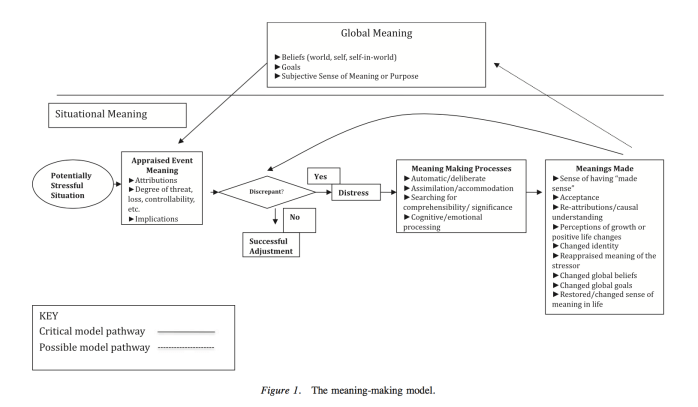
In this blog post, I want to take up the central challenge facing those who aim to study nonreligion or secularity and one that has long plagued scholars of religion — that of specifying an object of study.[i] Although several good suggestions have been made, I think we can do a better job of capturing the range of things we want to study by adapting the meaning systems (MS) framework,[ii] already in use in psychology, for our purposes. The MS framework, which was designed to encompass both religious and nonreligious meaning systems,[iii] allows us to conceptualize our object of study in generic terms. It offers a dynamic framework that has already generated a body of empirical research on the interaction between meaning systems (implicit and explicit) and meaning making in particular situations. Although much of this research has focused on how people cope with trauma, psychologists have extended it to other contexts, including conversion and spiritual transformation.[iv] Here I suggest we can build on the framework’s basic distinction between global meaning systems (GMS) and situational meaning (SM) by elaborating the concept of GMS in light of the literature on worldviews and the concept of SM in light of ‘situational’ elements, such as practices, networks, institutions, and ways of life, that are typically studied by scholars of religion under the rubric of ‘lived religion.’

The Problem

The new focus on ‘nonreligion’ helpfully expands our focus beyond the traditional focus on atheism or ‘nonbelief’.[v] In characterizing our object of study as nonreligion, we are indicating that we want to think about it – whatever it is — in relation to religion. In effect, we are setting up a comparison. But we lack two things: an overarching framework in which both religion and nonreligion fit and specific features that we want to compare. It is as if we set out to compare apples and oranges without realizing that they are both fruits or specifying which features of these two fruits we wanted to compare.

Proposed Solutions

Both Thomas Coleman and Lois Lee have made significant attempts to address this issue. Coleman et al. propose ‘horizontal transcendence’ as a way to characterize experiences that people view as profoundly meaningful and at the same time neither religious nor spiritual.[vi] ‘Experiences that people consider profoundly meaningful’ are an important feature that – I agree – we want to compare, but they are only one potential aspect of ‘nonreligion’. We need something more encompassing. Lee makes a case for ‘existential cultures’ as an umbrella term that captures theist, atheist, humanist, and other nonreligious subcultures and allows us to consider lived existential practices as well as more explicit existential beliefs.[vii] In applying this terminology, however, Lee struggled to conceptualize those she characterized as ‘anti-existential’ (or Schnell as existentially indifferent[viii]), that is, those who didn’t want to think about existential questions. Moreover, in defining ‘existentialism’ broadly in terms of ‘ultimate questions,’ she highlights a feature that – as she acknowledges — has long been associated with the concept of ‘worldviews’.

An Alternative

Although I appreciate these attempts, I think that ‘worldviews,’ as discussed in the philosophical literature, better captures the sense of the ‘big questions’ (BQs) that Lee associates with ‘existential philosophies.’[ix] Not only is the term ‘worldviews’ readily recognizable and in widespread popular use, it has generated an extensive academic discussion in philosophy and the social sciences since proposed by Kant.[x] Within religious studies, some have advocated studying religions as worldviews,[xi] and others a shift from studying religions to studying worldviews more generally.[xii] Within psychology, we find explicit discussion of worldviews in the context of terror management theory[xiii] and equivalents in existential theory of mind[xiv] and in the concept of a global meaning system within a meaning systems approach.[xv]

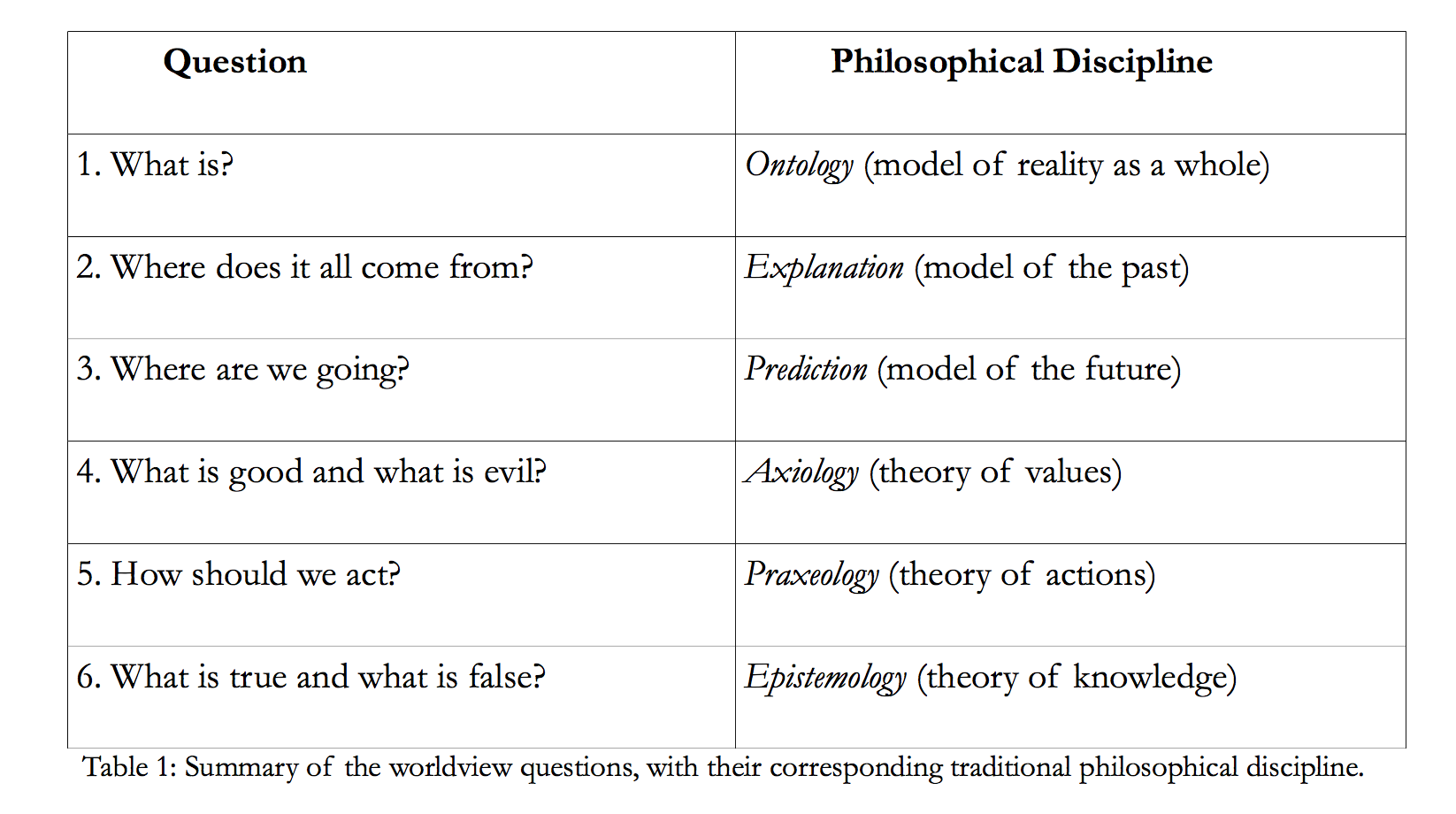
Although there are many different definitions within philosophy, the concept emerged in response to a desire to relativize religious outlooks.[xvi] The interdisciplinary ‘worldviews’ research group led by Apostel and van der Veken explicitly characterized worldviews as offering answers to six fundamental philosophical questions.[xvii]

taves-1

Variations on these BQs have been used to structure world religions textbooks[xviii] and textbooks in the history and philosophy of science,[xix] where they provide a framework for comparison.

Although worldviews can be used to compare elaborate philosophical and religious systems, we do not need to conceive of worldviews as explicit or well developed. They can be implicit or explicit, taken for granted or reflected upon, and surfaced on a need-to-know basis, through interaction, formal dialogue, or active cultivation. Worldviews, nonetheless, still smack of ‘beliefs’ and don’t capture the range of practices, institutions, or everyday ways of life that we associate with religions and spiritualities, nor do they provide a framework for analyzing how implicit or explicit worldviews interact with these other aspects of life.

Here I would suggest that we meld the philosophical and religious discussion of worldviews with the psychological literature on global meaning systems that researchers have used primarily to study coping in situations of trauma, loss, and bereavement. This is a generic framework that can be (and has been) linked with religious meaning systems.[xx]
taves-2

Although the MS literature has been primarily concerned with ‘situations’ that stand out because they are traumatic, we can think of ‘situations’ as the generic context in which everyday or lived meaning is made. The situations or events considered could range from the ordinary to the extra-ordinary, the traumatic to the ecstatic, or the mundane to the highly significant. They would, thus, include ‘experiences that people consider profoundly meaningful,’ some of which, as Coleman et al. suggested may be considered as instances of ‘horizontal transcendence’.[xxvii] Situations and events do not need to be described in the ‘thin’ terms characteristic of psychologists, but can be richly characterized in the socio-cultural-environmental terms that characterize research in history, anthropology, and religious studies.

In characterizing situations more richly, however, humanists should not lose sight of the MS researchers’ interest in dynamic processes, e.g., the role of GMS in the appraisal of situations or events, the interactions between GMS and SM in those contexts, and the way that meaning is discovered and transformed in relation to situations or events. Based on our deeper immersion in the particulars of religious and nonreligious contexts – whether historically or ethnographically – we can seek to identify the factors that make a difference in these dynamics across worldviews and cultural contexts.

Lee’s conception of existential cultures could be assimilated with this approach. She clearly views existential cultures as constituted by the meaning making processes inherent in everyday life. As she observes,[xxviii] ‘thinking of meaning making, not as a narrow, philosophical practice but as something enacted in multiple ways, small and large, in everyday life calls into question the idea that large groups of people can be easily located outside the existential cultural field’. Within both the MS and worldview literature,[xxix] there are those that would push this point farther, claiming that all organisms – not just humans — require a GMS or worldview, rudimentary as it might be from a human perspective, in order to function. If we view meaning systems this broadly, it allows us to think about them within an evolutionary framework, asking why and under what conditions humans have sought to elaborate the explicit worldviews we think of as philosophies and religions.

Further reading

Leontiev, Dmitry A., ed. 2015. Positive psychology in search for meaning. Routledge. Originally published as a special issue of the Journal of Positive Psychology.

Markman, Keith D., Travis Proulx, and Matthew J. Lindberg, eds, 2013, The Psychology of Meaning. Washington, DC: APA Press.


Ann Taves is professor of religious studies at the University of California, Santa Barbara where, among other things, she is designing an introductory course on “Comparing Religions and Other Worldviews” and supervising the interdisciplinary Religion, Experience, and Mind Lab Group.  She is the author of numerous books and articles, including Fits, Trances, and Visions (Princeton, 1999) and Religious Experience Reconsidered (Princeton, 2009).  Her new book, Revelatory Events: Three Case Studies of the Emergence of New Spiritual Paths, is forthcoming from Princeton in October 2016.


[i] Thanks to Tommy Coleman, Lois Lee, and Ray Paloutzian for their helpful feedback and comments.

[ii] Roy F. Baumeister, 1991, Meanings of Life. Guilford; Crystal Park and S. Folkman. 1997, ‘Meaning in the context of stress and coping,’ Review of General Psychology 1, 115-144; Crystal Park, 2010, ‘Making sense of the meaning literature: An integrative review of meaning making and its effects on adjustment to stressful life events,’ Psychological Bulletin 136(2), 257-301; Keith D. Markman, Travis Proulx, and Matthew J. Lindberg, eds, 2013, The Psychology of Meaning. Washington, DC: APA Press.

[iii] Crystal Park, 2005, ‘Religion and meaning’, in Paloutzian and Park, Handbook. Guilford; Crystal Park, 2013, Religion and meaning, in Paloutzian and Park, Handbook, 2nd ed. Guilford.

[iv] Raymond F. Paloutzian, 2005, ‘Religious conversion and spiritual transformation: A meaning-systems analysis’, in Paloutzian and Park, eds., Handbook of the Psychology of Religion and Spirituality. Guilford; Raymond Paloutzian, Sebastian Murken, Heinz Streib, and Sussan Rossler-Namini, 2013, ‘Conversion, deconversion, and spiritual transformation: A multi-level interdisciplinary view’, in Paloutzian and Park (eds), The Handbook of Religion and Spirituality, 2nd ed. Guilford.

[v] Lois Lee, 2012, ‘Talking about a revolution: Terminology for the new field of Non-religion Studies’, Journal of Contemporary Religion 27(1), 129-139.

[vi] Thomas J. Coleman III, Christopher F. Silver, and Jenny Holcombe, 2013, ‘Focusing on horizontal transcendence: Much more than a ‘non-belief’, Essays in the Philosophy of Humanism 21(2), 1-18.

[vii] Lois Lee, 2015, Recognizing the Non-religious: Reimagining the Secular, Oxford: Oxford University Press; Lois Lee and Stephen Bullivant, in press, The Dictionary of Atheism, Oxford: Oxford University Press.

[viii] Tatjana Schnell, 2010, ‘Existential indifference: Another quality of meaning in life’, Journal of Humanistic Psychology 50, 351-373.

[ix] Markman et al. (Psychology of Meaning, 1) acknowledge the key role that existential philosophy and psychology played in reflecting on the BQs in a nonreligious context, but indicate that, while ‘once the province of existential philosophy, existential psychology, and the related clinical literature, meaning is a word that appears with greater frequency within the social, cognitive, and cognitive neuroscience literatures’. The shift from ‘existential’ to ‘meaning’ highlights the issue of central concern for existentialists without appropriating their distinctive self-descriptions, and, at the same time, allows to us to shift our focus to processes of meaning or sense making across a wide range of disciplines, contexts, and even organisms.

[x] David K. Naugle, 2002, Worldview: The History of a Concept, Eerdmans.

[xi] Ninian Smart, 2000, Worldview: Crosscultural Explorations of Human Beliefs, 3rd ed. Prentice Hall; Mark Juergensmeyer, 2010, ‘2009 Presidential Address: Beyond war and words: The global future of religion’, Journal of the American Academy of Religion 78(4), 882-895.

[xii] Christa Anbeek, Hans Alma, and Saskia van Goelst Meijer, under review, ‘Contrast experiences and social imaginaries as spaces for truth-seeking’, in Guido Vanheeswijck and Hans Alma, eds. Social Imaginaries in a Globalizing World, DeGruyter; Andre F. Droogers, and Anton van Harskamp, 2014, Methods for the Study of Religious Change: From Religious Studies to Worldview Studies, London: Equinox.

[xiii] Melissa Landau, Mark J. Soenke, and Jeff Greenberg, 2013, Sacred armor: Religion’s role as a buffer against the anxieties of life and the fear of death, in Kenneth I. Pargament (ed), APA Handbook of Psychology, Religion, and Spirituality, vol. 1: 105-122.

[xiv] Jesse Bering, 2002, ‘The Existential Theory of Mind’, Review of General Psychology 6 (1): 3–24; Thomas J. Coleman III, and Ralph W. Hood, Jr, 2015, Reconsidering everything: From folk categories to existential theory of mind, Religion and Society: Advances in Research 6 (2015): 18-22.

[xv] Park, ‘Making sense’; Raymond F. Paloutzian, 2017, Invitation to the Psychology of Religion, 3rd ed. Guilford.

[xvi] Naugle, Worldview.

[xvii] Vidal, C. 2008,‘Wat is een wereldbeeld? (What is a worldview?)’ in Van Belle, H. & Van der Veken, J., eds, Nieuwheid denken. De wetenschappen en het creatieve aspect van de werkelijkheid, Acco, Leuven, 4.

[xviii] Stephen Prothero, 2010, God is Not One. Harper One; Brodd, Jeffrey, et al. 2016. Invitation to World Religions, 2nd ed. Oxford University Press.

[xix] Richard DeWitt, 2010, Worldviews: An Introduction to the History and Philosophy of Science, 2nd edition, Wiley-Blackwell.

[xx] Park, ‘Religion and meaning’.  [It should have been Park 2013; I am citing the two version of her ‘Religion and meaning’ chapters in the 1st and 2nd editions of the handbooks 2005, 2013.]

[xxi] Park, ‘Making sense’, 258

[xxii] Johannes Quack and Cora Schuh, eds, forthcoming, Religious Indifferences: Between and Beyond Religion and Nonreligion, New York: Springer.

[xxiii] Schnell, ‘Existential indifference’.

[xxiv] Roxane Cohen Silver and John Updegraff, 2013, ‘Searching for and finding meaning following personal and collective traumas’, in Markman, Proulz, and Lindbergh, eds. Psychology of Meaning, APA Press.

[xxv] Dmitry A. Leontiev, 2013, Personal meaning: A challenge for psychology, Journal of Positive Psychology 8 (6), 459-470; Crystal Park and Login S. George, 2013, Assessing meaning and meaning making in the context of stressful life events: Measurement tools and approaches, Journal of Positive Psychology 8(6), 483-504.

[xxvi] Samantha J. Heintzelman and Laura A. King, 2013, On knowing more than we can tell: Intuitive processes and the experience of meaning, Journal of Positive Psychology 8 (6), 471–482.

[xxvii] Coleman et al., ‘Horizontal transcendence’.

[xxviii] Lee, Recognizing the Non-religious, 172.

[xxix] Jordan B. Peterson, 2013, ‘Three forms of meaning and the management of complexity’, in Markman, Keith D., Travis Proulx, and Matthew J. Lindberg, eds, The Psychology of Meaning, APA Press; Raymond Paloutzian and Katelyn Mukai, 2017, ‘Believing, remembering, and imagining: The roots and fruits of meanings made and remade’, in Angel, H.-F., Oviedo, L. Paloutzian, R. F., Runihov, A. L. C., & Seitz, R. J., Process of Believing: The Acquisition, Maintenance, and Change in Creditions. Heidelberg: Springer; Vidal, ‘Wat is een wereldbeeld? (What is a worldview?)’

 

[Research] Post-Secular as an Alternative Tool


In this post, Samantha May challenges the tendency in the disciplines of Politics and International Relations of drawing a sharp line between religion and the secular. May makes a case for scholars in the field to acknowledge much more nuanced reality between the boundaries between religion/secular and public/private. By doing so, she re-introduces the significance of post-secularism as a way of responding properly to the reality that we live in.img_0277

Religious rhetoric appears on the rise yet the divide between the secular and the religious in Western scholarship has left us bereft of useful tools of analysis. From the Archbishop of Canterbury’s meetings with Prime Minister David Cameron (Mendick, 2015) to the Republican candidate Donald Trump calling on a ban of all Muslims travelling to the United States (Pilkington, 2015), religious actors and religious categorisations are repeatedly in the public domain. Thus I call for consideration of the post-secular paradigm which can accommodate and speak to the variety of religious and non-religious positions. Without doubt, this line of inquiry has been apparent in disciplines such as Anthropology and Sociology for decades and more, yet the disciplines of Politics and International Relations (PIR) have remained resistant to the reality of public religion specifically because it challenges the public/private divide which rests at the center of dominant PIR theories.

Post-secularism is an important theoretical position to engage with in PIR precisely because it allows a space for the religious and non-religious to create a dialogue where both positions are respected and neither relegated to archaic practices or private, marginalised domains. It essentially speaks to the empirical reality of our times where both the religious and the non-religious coexist and are mutually dependent even simply in terms of the dichotomy of ‘secular’ makes no sense without its oppositional other ‘religion.’ Additionally it can help us to understand the fluid nature of religion and religious practice which can no longer be contained coherently in the ‘traditional’ boxes of recognised world religions but blur the boundary between the spiritual and the profane. Post-secularism not only adds to the established critiques of secularisation theories but offers an alternative position which allows us all to take seriously religious sentiments and grants the possibility of increased understanding of our contemporary political world. Methodologically post-secularism invites a mutli-disciplinary approach to understanding global political events broadly that can combine existing work from a variety of the social sciences in additional to theological and religious debates. Post-secularism thus opens the gateway for PIR studies to re-engage with religion in the public sphere.

The Hungarian Prime Minister, Viktor Orbán, stated that Muslim refugees threaten Europe’s Christian identity (Traynor, 2015). I do agree with the Hungarian PM that remembrance of our Christian history – the good, the bad and the ugly- is imperative, but perhaps for different reasons than Orbán may defend. To forget impoverishes our understanding, of self, history and the presence of the past. Forgetting endangers repeats of the past which include the crusades, the religious wars in Europe, the witch trials, the ghettoisation of Jewish communities and Jewish programs amongst a plethora of other examples. To forget our religious history creates an assumption that religious violence has always been carried out by ‘Them’ and never ‘Us’. Perhaps more importantly forgetting skewers our memories of the enormous potential religion has for the common good, charitable systems, interfaith dialogue, peace and reconciliation and so on and so on. However, the forgetting of our Christian past cannot be blamed on the Other – the responsibility is Ours.

As many scholars have already articulated, secularism can take many forms. Secularism in Britain has been associated with an accompanying normative and ideological process whereby to be secular was to be non-religious (i.e., rational and modern) (Asad et al., 2014: p.vii). The ideological assumption to this notion of secularisation is that religion is ‘backward’ and thus to retain religious beliefs somehow flies in the face of modern science. Thus to publically discuss religion and religious history in everyday life becomes a social faux pas. The consequences of this normative process have been the growth of a generation largely ignorant of the (debated) ‘Christian’ identity of Britain. The point being, that if non-Christian refugees were indeed a threat to Europe’s ‘Christian’ identity, as Orbán suggests, there would need to be a real understanding of what Christian values and practices actually are throughout the population.

Neither should it be assumed that the history of ‘Christian’ values are shared by all of society. A recent YouGov poll indicated that only 32% of the British population believes in a God (Jordan, 2015). The line that religion in general is in decline in Britain (and Western Europe generally) provides the only piece of evidence that secularism- understood here as a decline in religious belief – is a real phenomenon. Yet, what is considered as “religious” perhaps needs redefining in our contemporary society. The same YouGov poll found that 20% still believed in a higher power albeit not a “god”. Another YouGov poll found that while less than half of the population considered themselves ‘religious’ 1 in 3 (34%) believed in the existence of ghosts (Dahlgreen, 2014). The dichotomy between what is secular and what is spiritual is increasingly (if always) blurred and fluid. According to Asad et. al ‘“secularism does not merely organize the place of religion in nation-states and communities but also stipulates what religion is and ought to be…’ (2013: p.ix).

Post-secularism here should not be understood as the absence of secularism but simply that the religious, the non-religious, the spiritual and the secular coexist and are best thought of as ‘overlapping’ (Falk, 2014: p.34). No longer can we claim with any empirical evidence that religion or belief is absent from the public domain, though its nature may have changed. Post-secularism as both a theory and a methodology assists my own work regarding Muslim charities in the UK and the consequences of political policy as it allows religious practice and theological concerns to be taken seriously which in turn challenge pre-conceived assumptions regarding the motivations of charitable giving, and the distribution of alms: which more dominant theories in PIR cannot accommodate while maintaining the public/private divide and marginalising religion and belief to ‘private’ practice.

Post-secular theory can be considered in at least two ways: the first being simply the recognition of the resilience of religion in the public sphere and the second as a radical critique of secular theory and the emergence of a new intellectual paradigm that questions the empirical reality of the public/private divide (Mavelli and Petito 2012: 931). Importantly, it allows us to understand that neither belief nor non-belief is the default option for individuals in society. A range of options are now available so that non-belief, religion, and spirituality are all now legitimate options amongst many others (Wilson, 2014: p.222). Rather than using the dichotomy of either religion or secularity, post-secularism allows the codependent language of ‘both’/’and’ (Wilson, 2014: 234). As Mahmood has argued, ‘The secular and the religious are not opposed but intertwined both historically and conceptually such that it is impossible to inquire into one without engaging with the other’ (Mahmood, 2013: p.140). Post-secular theory thus allows the breakdown of opposing dichotomies of religion and secular. This then provides a useful tool to examine the abundance of differing perspectives in a world where religion refuses to disappear and is shaped and re-shaped by its co-dependent, the secular.


References

Asad, T, Brown, W, Butler, J & Mahmood, S. 2013.Is Critique Secular? Blasphemy, Injury and Free Speech, Fordham University Press, New York.

Dahlgreen. W. 2014. ‘”Ghosts Exist”, say 1 in 3 Brits’, YouGov, https://yougov.co.uk/news/2014/10/31/ghosts-exist-say-1-3-brits/

Richard Falk. 2014. “Achieving political Legitimacy in the Twenty First Century: Secular and Post Secular Imperatives” pp.41-48 in pp13-38 (eds) Mavelli and Petito, Towards a Post Secular International Politics: New Forms of Community, Identity and Power, (Palgrave Macmillan; Basingstoke).

Jordan, W. 2015. ‘A Third of British Adults don’t believe in a higher power’, YouGov, https://yougov.co.uk/news/2015/02/12/third-british-adults-dont-believe-higher-power/

Mavelli and Petito. 2012. ‘The Post-Secular in International Relations: An Overview’, Review of International Studies, 38.5.

Mendick, R. 2015. ‘Archbishop of Canterbury spoke with David Cameron and to the House of Lords regarding plight of Syrian Christian refugees’, The Telegraph, http://www.telegraph.co.uk/news/religion/11860902/Archbishop-warns-Cameron-over-Syrian-refugees.html

Pilkington, E. 2015. ‘Donald Trump: ban all Muslims entering U.S’, The Guardian, http://www.theguardian.com/us-news/2015/dec/07/donald-trump-ban-all-muslims-entering-us-san-bernardino-shooting

Traynor, I. 2015. ‘Migration Crisis: Hungary PM says Europe in grip of Madness’, The Guardian, http://www.theguardian.com/world/2015/sep/03/migration-crisis-hungary-pm-victor-orban-europe-response-madness

Wilson, E. K. 2014. “Faith-Based Organisations and Post Secularism in Contemporary International Relations” in (eds) Mavelli and Petito, Towards a Post Secular International Politics: New Forms of Community, Identity and Power, (Palgrave Macmillan; Basingstoke).


Samantha May is a Research Fellow at the University of Aberdeen and award holder of the Leverhulme Early Careers Fellowship for the project entitled: “ Zakat in the UK: Islamic Giving, Citizenship and Government Policy”.

[Event Report] SocRel 2016 – Construction and Disruption


The 2016 Sociology of Religion Study Group (SocRel) conference was hosted by Lancaster alisonUniversity, 12th-14th of July. The conference theme of ‘Construction and Disruption: The Power of Religion in the Public Sphere’ offered a wide range of entry points for considering the visibility and role of religion in contemporary society. Papers explored religion in relation to such public realms as education, culture, state and gender and conflict. Of particular interest to me is how different constructions of the concept of religion impact on the concomitant question of what then constitutes non-religion, and how the concepts interact. The papers outlined below offered opportunities to reflect on this.

Religion, the Public Sphere and Law: Construction, Disruption and Reconstitution

Lori Beaman’s keynote set the tone by considering interactions between the law and the concept of religion. Her examination of legal cases explored how the concept of religion is constructed by different people in different contexts, and how distance between state and religion is legally constructed. Beaman’s interest is less in answering the vexed question of what is and what is not religious than in the complexities that are revealed when the question is debated within particular contexts.

She considered three cases in detail: The first, from the USA, involved a school district sued for allowing students to be taught yoga in what was argued to be a breach of the US Constitutional requirement forbidding the establishment of religion. The second, brought by a French citizen to the European Court of Human Rights (ECHR), involved a niqab-wearing woman challenging the 2010 ban on wearing, in public places, garments that cover the face. She argued that the ban breached several articles of the European Declaration on Human Rights including article 9 (freedom of thought, conscience and religion), and article 10 (protecting freedom of expression). The third case was Canadian, and centred on the question of whether opening municipal council meeting with public prayer is an inappropriate interference with the freedom of practice and conscience of attendees.

Each case demonstrates how a given phenomenon can be constructed as religious in nature by some, and as non-religious, cultural or secular by others without any material change in the circumstances under consideration. Although each occurred in different social, cultural and legal contexts, Beaman argued convincingly for a shared relevance located in an examination of the ways in which the different courts involved constructed and transformed the concepts of religion and culture. These processes resulted in yoga being legally determined as non-religious in nature, because its practice is mainstream in contemporary America. Quebec’s court of appeal accepted the same type of reasoning, judging that the use of public prayer reflected a shared cultural heritage rather than an explicitly religious practice (the Supreme Court later over-turned this ruling). While the ECHR concluded that the need to live together in a social/cultural context which understands facial visibility as an aid to social interaction outweighs the individual’s right to express themselves by covering their face. Each decision thus demonstrates the complexity and contested nature of concepts of religious and non-religious, and problematizes the idea of an absolute division between the two concepts.

Existential Cultures in Steiner Schools

Katie Aston and Dan Whisker reported on the initial stages of their research into interactions of non-religious parents and faith schools. The work to date had all taken place in Steiner schools, which base their ethos on Anthroposophy (a spiritual philosophy with roots in theosophy) . Steiner schools engage in ritual as a school community but actively avoid teaching doctrine. Education is individually focussed, with the intention of nurturing the spirit of the child. The schools are non-competitive and emphasise play as a means of learning.

The research involves surveys and interviews with parents, children and teachers. From this data Aston and Whisker identified that none of the parents with whom they spoke were either anthroposophists, or affiliated to any other religious tradition. All identified as either non-religious or spiritual. Most had also been dissatisfied with their own mainstream schooling, and this contributed to their approval of Steiner educational values and their choice of schools for their children.

Aston and Whisker have identified several preliminary avenues of analysis regarding the value of faith schools to non-religious parents. These include the development of existential cultures, processes of sacralising childhood, and distinctions between verbalised meaning and shared experience. For me this offer a chance to explore the practical distinctions between concepts of religion, non-religion and spirituality for self-described non-religious parents, actively seeking education with a spiritual component for their children and choosing a religious school to provide this. The conceptual constructions at play here suggest the complexity and ambiguity of these terms and the ways they interact in a real-world context.

Pluralist Publics and the Scientific Study of Non-Religion

This panel began with an outline of the multi-disciplinary ‘Understanding Unbelief’ project and the sociological shifts underlying academic interest in non-religion before considering some current approaches in the field.

One area being developed by Lois Lee is the emergence of ‘unbelief’ as an analytic term. She represented this as a deliberate shift away from a sole focus on the issue of deity. The term thus has several aspects – relative, indicating unbelief in specific theological claims; positive, relating to alternative existential/metaphysical beliefs; and negative, describing a general absence of metaphysical beliefs. Areas of interest include the distinct cognitive and social phenomena captured by the term, and ways in which ‘unbeliefs’ manifest in/from people’s lives. For me this shift challenges the idea of religion and non-religion as binary, suggesting perhaps either term can be applicable to a given example via the same constructive processes that Beaman’s legal cases employed.

These examples are drawn from rich and diverse range of papers, many of which touched upon non-religion and secularity in similar ways. There are many opportunities to develop the field further in relation to the academic, cultural and personal conceptual constructions of its critical terms , as well as the multivalent complexity of the religious/non-religious spectrum.


Alison Robertson is in the final stages of her PhD with the Open University. Her thesis is
on BDSM as a lived practice of religioning and her research interests include religion and spirituality in relation to self-inflicted pain, trauma and well-being, personalised religious practices, paganisms any other area where the boundaries between what is and is not deemed ‘religion’ become fuzzy. Alison has recently taken over as the Post-Graduate and Early-Careers Liaison Office for the Sociology of Religion (SocRel) research group.